
The Divine Material
Asbestos is a fibrous silicate mineral. On Earth, it was widely used in construction and industrial goods due to its massive reserves and exceptional productivity, requiring only simple processing.
True to its name—Stone Cotton—it looks like soft fluff, but because it is a mineral, it is a divine material. It possesses heat resistance, thermal insulation, electrical insulation, corrosion resistance, and tensile strength and wear resistance that surpass even steel.
Praised as a "miracle material" until the 19th century, asbestos faced a massive controversy in the 1970s regarding the fatal health hazards of its dust, leading to its ban in most countries.
The reason I am going on about asbestos is this:
[Asbestos]
Grade: Rare
Details: High hardness provides a stable structure, and high tensile strength offers excellent resistance to physical force. It has superior mana conductivity and maintains a stable structure by absorbing mana.
Earth's asbestos has weak physical resistance due to its low hardness, causing it to break into fine fibers that float in the air, enter the lungs through respiration, and cause cancer. However, the asbestos found in the Tower is a true divine material without such drawbacks.
Experts predict this difference exists because Tower asbestos becomes more structurally compressed and dense when it absorbs mana.
Wealthy nations and corporations are currently pouring efforts into developing technology to imbue Earth's asbestos with mana. If mana-asbestos technology is developed, wouldn't it trigger a paradigm shift on the scale of the Industrial Revolution?
The characteristics of Tower asbestos are the same, so it can be used to craft superior Cloth Armor (Gambeson).
It can be used as a substitute for fabric in any application and boasts incredible performance. Unfortunately, it isn't an easy mineral to come by and is quite expensive, so I decided to use the points I earned from selling the Black Iron Stone gear to purchase some and upgrade my cloth armor.
The crafting method is simple. Extract the asbestos fibers, layer them, and set them as padding between the outer and inner lining. That’s it.
-Click
-Screeeeeech!
After fixing the asbestos in the metal cutter, the slowly rotating blade touched the surface. Unlike regular metal, which would be cut, the asbestos fibers began to unravel in long strands following the direction of rotation.
A bundle of thin, grayish-white fibers flowed out from the tip of the cutting blade. When I touched the fibers trailing on the floor with my bare hands, the texture was incredibly soft. It felt like 60-count cotton wool. It was thin, white, and shimmered with a subtle silver luster.
When I channeled mana into the extracted asbestos fibers, they absorbed the energy and shrank slightly in size.
After unraveling all the asbestos ore in the same way and channeling mana into it, the threads shrank to half their original size and stopped shrinking further.
Put the asbestos fibers into an automatic spinning machine to draw out the thread, and the spinning process is complete.
-Click-clack, click-clack, click-clack
After attaching the drawn thread to the warp (vertical) and weft (horizontal) of an automatic loom and securing the starting point, I started the machine. The warp and weft threads began to cross over and under each other, weaving in a Plain Weave pattern.
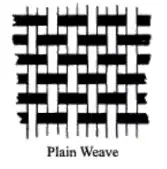
The plain weave structure has many advantages: the front and back look the same, it’s sturdy, and it has good breathability, making it cool. It’s the perfect method for padding inside cloth armor.
I cut the finished asbestos cloth to fit the size of each part of the cloth armor. Since the asbestos thread that has fully absorbed mana doesn't change size, I cut it precisely with sturdy Black Iron Stone scissors and layered it.
Considering the size of my armor, going over 10 layers might be uncomfortable, so I layered it about 8 times.
"I'll put it into the cloth armor I was using before."
I dismantled the outer shell (Century Cloth) of my existing armor, removed the padding used for shock absorption, and inserted the asbestos cloth.
Afterward, I quilted it with the remaining asbestos thread in a tight diamond pattern to prevent the internal asbestos cloth from bunching up, which increases defense and shock absorption.
Finally, I finished it by attaching the remaining asbestos thread for the front closure.
"It looks more like an arming doublet than a gambeson."
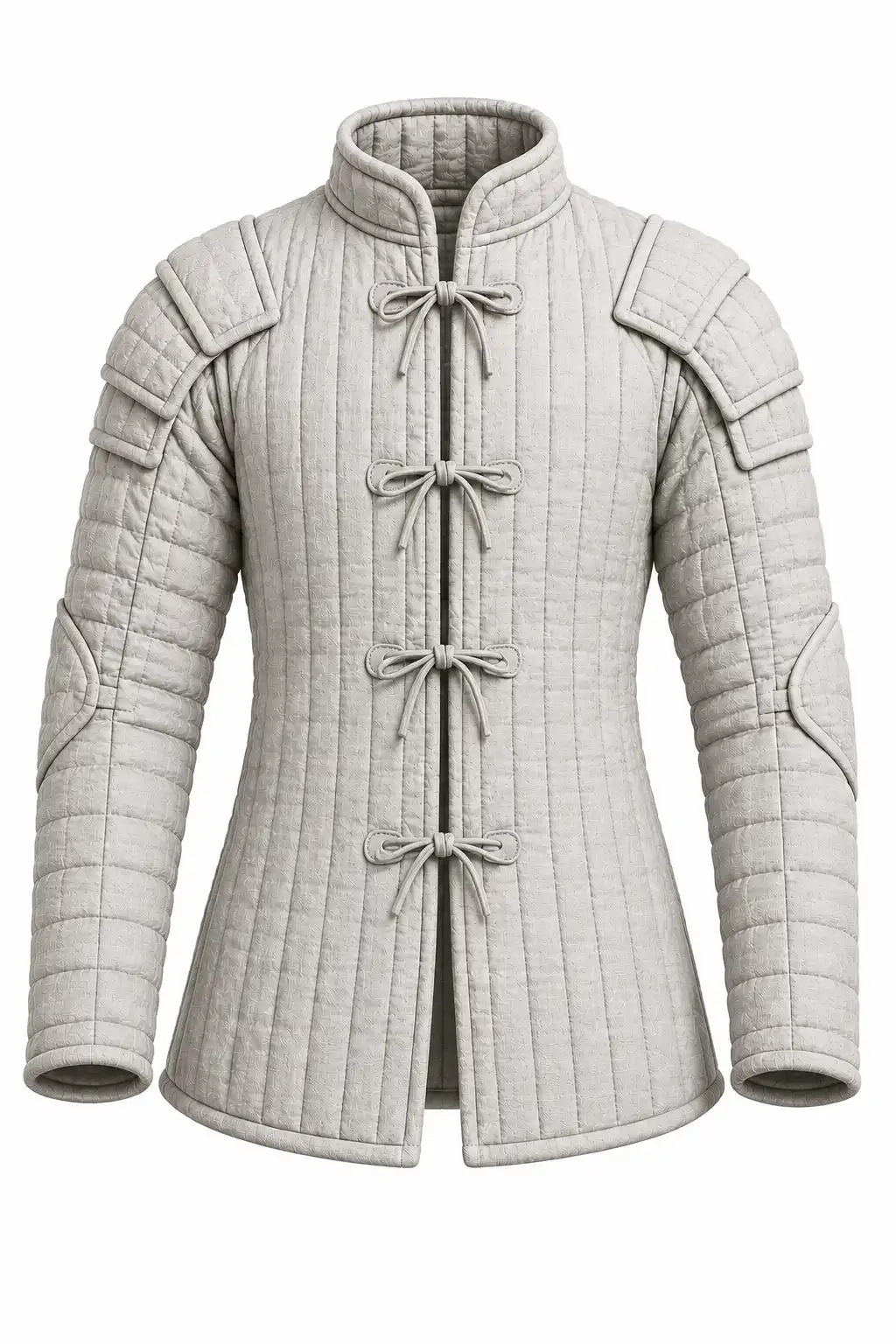
◈ Details: Excellent fit. Absorbs and wicks sweat for easy body temperature regulation. Sturdy, meticulous stitching. Cloth armor created using asbestos cloth as padding. Grants complete immunity to specific elemental damage.
◈ Durability: 64/64 | Defense: 45/45
◈ Heat Resistance: Blocks heat, 100% fire resistance. Exposure above a certain temperature reduces resistance and permanently damages asbestos fibers.
◈ Insulation: 100% electrical resistance.
◈ Inert: Does not react to fluids; immune to poison, acid, and alkaline damage.
◈ Immutable: 40% damage reduction from superior physical resistance.
◈ Dispersion: Disperses impact to prevent physical paralysis.
◈ Recovery: Can recover durability by absorbing mana. Permanently lost fibers cannot be recovered.
◈ Restriction: Strength E, Mana E or higher
"What are these stats..."
It has more than double the defense of standard cloth armor. And the traits are even more broken than the defense.
I replaced the lining inside the armor I wear with the remaining asbestos cloth. Strengthening the armor also slightly boosted its performance.
"At this rate, it'll be hard to even die."
They say you usually have to reach the middle floors to mine special minerals in small quantities, but I’ve already secured an open-pit mine for Black Iron Stone on the 4th floor. It’s a shame it isn't something rarer like Mithril, Beryllium, Asbestos, Orichalcum, or Adamantium...
I took the cloth armor and headed to the test room for a full gear check. The test room is filled with equipment for all sorts of tests.
I fixed the cloth armor to the mannequin in the center of the room and swung a warhammer hard.
-Thud
There was a dull sound, and while the impact point sank in slightly, the armor successfully dispersed the shock.
-Whack
Next, I took out a sword made of Black Iron Stone and struck it. The cloth armor made a dull sound. It effectively absorbed the attack, and there wasn't even a slight tear on the surface.
"Next is the spear."
Since the tests for blunt weapons and swords were done, I wanted to check the defense against attacks concentrated on a single point, which is the cloth armor's biggest weakness.
I stepped back from the armor, ran quickly, and thrust the spear hard into the chest area.
-Thwack!
It was the loudest sound among all the test strikes. I retrieved the spear and checked the impact point; the outer shell was torn very slightly, but the internal asbestos cloth looked perfectly fine.
As expected, it's a bit weak against piercing.
"Well, that’s not really a big deal."
Since it's an undergarment, I don't need to worry too much about piercing.
The highlight of the test is the elemental resistance. I stepped out of the test room, closed the door, glanced at the armor through the transparent window, and pressed the button labeled [Fire] on the control panel, which looked similar to a computer monitor.
-Whoosh!
Long pipes popped out from all sides, and blue flames engulfed the surface of the cloth armor. It was a temperature that would make metal glow red and deform. After 30 seconds of flamethrowing, I waited a moment for the internal temperature to drop before entering the test room to check the armor. It was hanging on the stand without any changes.
The stand is fine, too. What kind of metal is that made of?
Durability: 63/64
The durability dropped slightly, but the surface of the armor showed no changes at all.
I moved back out of the test room and pressed the [Electricity] button.
-Bzzzzzt!!!
This time, electricity erupted from the floor. The voltage was high enough to make the air inside the test room tremble, but to the naked eye, there were no changes to the armor. The current dispersed evenly across the surface of the armor.
Having confirmed perfect immunity to heat, fire, and electricity, it was time to test chemical resistance. I searched for the button for the acid test and pressed [Strong Acid (Hydrochloric Acid)].
-Ssssss
Hydrochloric acid fell like raindrops from the ceiling of the test room. This time, the outer shell emitted white smoke and melted, but the quilted asbestos cloth and the closure strings remained intact.
To check the armor, I pressed the [Strong Acid Neutralizer] button below the acid button. A shower-like device emerged from the floor and began spraying neutralizer evenly over the armor. The application continued until no more bubbles formed, and once the bubbling stopped, several robotic hands emerged from the floor to meticulously wipe the armor with a wet cloth.
After drying the armor with a heat blower, pure white salt crystals fell off the armor. That was proof that the hydrochloric acid had been neutralized by the alkaline neutralizer.
Confirming the [Complete] sign on the control panel, I entered the test room to check the armor.
Durability: 56/64 | Defense: 43/45
Looking at it from the outside, it looked like the armor was heavily damaged with holes everywhere, but the durability and defense hadn't dropped as much as I thought.
Although the outer shell and lining were damaged, the asbestos cloth and closure strings were fine, so the armor's traits hadn't been lost.
It looks like a mess with all those holes, but it means it still performs its role as armor perfectly.
Now for the final trait test.
Even though I had neutralized the acid, it still felt a bit gross, so I carefully grabbed the outer part of the armor and channeled mana into it.
Durability: 64/64 | Defense: 45/45
As I channeled mana, the heavily damaged outer shell and lining began to regenerate, and before long, the restoration was complete.
The outer shell and lining aren't made of asbestos, but it seems that because of the armor's traits, the entire piece becomes brand new as the durability recovers.
"Perfect."
I hugged the perfectly restored cloth armor and left the test room.