
Crafting a Variety of Gear
I had been crafting swords for quite a while, but my skill experience gain had become sluggish. It seemed there was a penalty for churning out identical swords from identical materials, even when using the forge.
"*Yawn*."
I drank a stamina potion to shake off the fatigue and decided to stop focusing solely on swords. Since I had plenty of materials and time, I pondered what else to make and settled on crafting armor that was light and allowed for easy movement.
The equipment I chose to make was a lamellar armor, also known as scale armor. To create a laced lamellar suit, I forged heated Black Iron Stone into uniform pieces.
Since a single suit of armor required a staggering 800 to 1,000 individual scales, I hammered away diligently. I forged them into pieces 2.5cm wide and 7cm long, rounding the edges to prevent them from catching on blades.
I punched holes in the top, bottom, left, and right of each scale to allow for lacing, applied anti-rust oil, and stacked them neatly to one side. For the leather cords needed to weave them together, I decided to process the Owlbear hide I had bought in bulk previously.
"Now, the real grind begins."
I threaded the leather cords through the holes, connecting the scales one by one. While the serpentine lacing technique is common, it lacks the strength to hold metal scales firmly together, so I opted for a side-by-side lacing method, connecting the scales through their lateral holes.
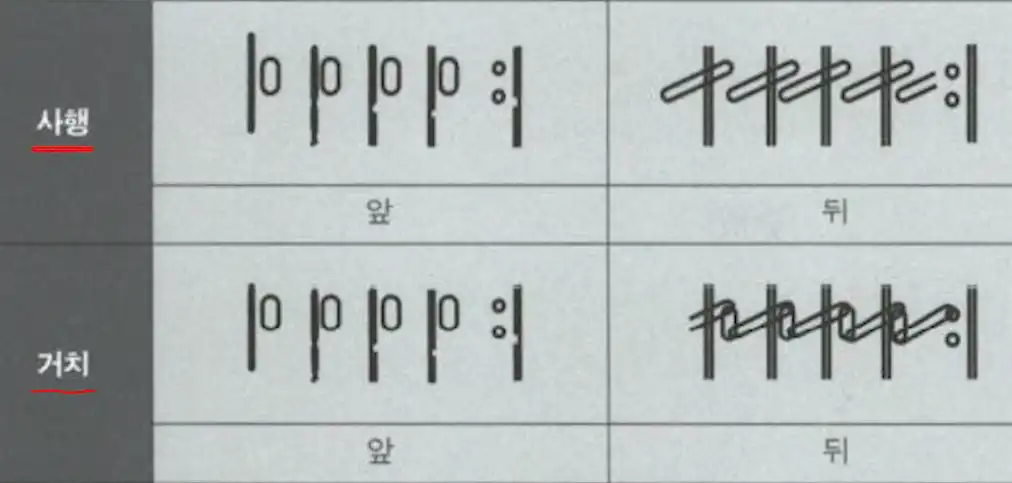
I extended each horizontal row to match the circumference of the torso and repeated the process. I connected the horizontal rows vertically using an overlapping style, while varying the lacing at the joints—like the neck and shoulders—to ensure better mobility.
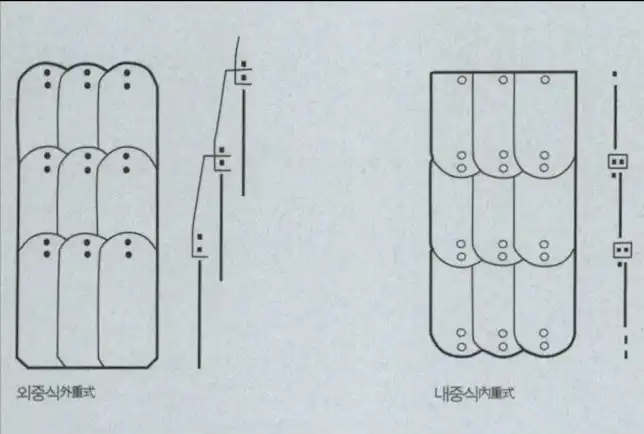

Once I attached buckles to the sides and shoulders so the wearer could put it on and take it off, the body armor and neck guard were mostly complete. After finishing the sections from shoulders to arms and thighs to calves, I wrapped the edges—which are prone to friction—with leather cords and stitched them down to prevent fraying.
Finally, I lined the interior with leather for shock absorption and comfort, and it was complete.
◈ Binding: Effectively defends against blades, reducing damage by 40%.
◈ Dispersion: Spreads impact widely to prevent physical rigidity.
◈ Feather: Extremely light. Reduces stamina consumption by 15%.
◈ Scattering: Smooth surface reduces ranged attack damage by 20%.
◈ Defense: Reduces damage from area-of-effect attacks by 35%.
◈ Focus: Consumes mana to enter 'Focus' state.
"A bit disappointing."
For high-level climbers with superior physical stats, defense is a higher priority than weight, so there wouldn't be much reason to craft this labor-intensive lamellar armor again. Still, for mages or ranged attackers who value mobility, there’s no better armor. Those types are sensitive to weight, so they usually stick to cloth or leather.
I hung the armor on a stand, grabbed a sword, and struck it with moderate force to test the defense. It deflected the blade and effectively mitigated the damage.
"Still, it's a well-made piece of armor."
It was weak against blunt weapons, but otherwise, it was excellent. Leaving the armor stand behind, I pulled out more heated Black Iron Stone and struck it with my hammer.
-Clang!
Climbers who hunt monsters in close quarters primarily use swords for their versatility, but they also use cold weapons like hammers, axes, and spears. In caves where long weapons are cumbersome, they use hand axes, short swords, or short hammers. In dense forests where they must hack through terrain, they use machetes or curved blades.
If a monster is armored or has high defense, they act as weapon specialists: throwing javelins or hand axes from a distance, firing a few shots with a bow or crossbow, and then using spears, greatswords, polearms, or blunt weapons to pierce the enemy's defenses.
Most mid-floor climbers are masters of almost every weapon. Because they climb alone, they have to be exceptional in every aspect.
Anyway, let's make a spear for high penetration and impact.
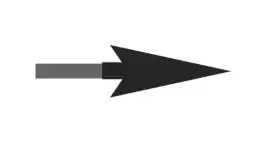
I heated the Black Iron Stone, hammered it, and quenched it in oil repeatedly to shape the spearhead. While it was tempering, I melted the stone into a mold to cast the shaft in one piece. I heated the shaft and head, then hammered them together into a single unit. I added extra Black Iron Stone to the butt of the shaft for balance, shaping it into a sphere. It could probably be used as a hammer in an emergency.
◈ Deathblow: Attack power triples when attacking above a certain speed.
◈ End: If attack power exceeds the target's defense, it pierces armor and ignores defense.
◈ Gravity: Reduces the target's physical stats on hit. Also applies to the user if their strength is insufficient.
◈ Penetration: Ignores 31% of enemy defense.
"This is basically a cavalry lance."
It was a spear that would pierce enemies and kill them instantly with overwhelming power when charging above a certain speed. "The use case is too limited... If it doesn't sell, I'll just melt it down and make something else."
I wrapped the shaft in leather for a finish and sharpened the blade with a whetstone.
"A blacksmith's reward lies in creating good weapons and armor."
-Clatter!
I tossed the spear aside. Piles of weapons and armor made of Black Iron Stone were stacked high around me. Even though my crafting rank had been upgraded to A, the Rare grade was not easy to achieve. It was a grade that could only be reached by hammering with strength and precision while drawing out the unique properties of special materials.
Looking at the Legendary grade bracelet I obtained on the 4th floor, I saw that special mana circuits were engraved into the gems to amplify each other. Sometimes, the equipment I crafted gained similar traits; when I checked the mana flowing through my weapons and armor, they followed a specific pattern. If I learned how to engrave mana circuits, I might be able to specify the traits during crafting.
"I should aim for crafting Legendary grade weapons."
While chewing on a cooked vitality potato from the furnace, I registered all the weapons and armor piled up in the workshop—except for a few Rare items—on the Gallery for sale. My body was exhausted, but my senses were sharpened from all the crafting.
I checked the gear I used on the 4th floor, and it was still in perfect condition. The goblins had hit the armor quite a bit, but the defense was so high it didn't even have a scratch. Realizing I was out of arrows for the crossbow I'd crafted for ranged attacks, I browsed the Gallery.
Stone arrows were basic, made by combining a stone arrowhead with a wooden shaft. They were essential for archers but cheap since the materials were common. Some combat-class climbers even made them themselves, and they still counted as items.
I decided to make my own. I melted Black Iron Stone in the furnace, cast bodkin arrowheads, sharpened them, and attached them to wooden shafts with resin.
◈ Penetration: 20%
"Nice."
They were easy to make, cheap in materials, and sold well as consumables. I crafted a mountain of crossbow bolts out of Black Iron Stone. I'd definitely need them sooner or later.