
262. Autumn Butterfly (4).
Ah— the sea. You had been so cruel to me just to show me this sight.
All the regrets of my past life and the memories I had failed to cast beyond the waves melted away in an instant. Before the unbelievable sight before my eyes.
Flóki and the crew, watching the birth-like scene of an island gradually taking shape from the grayish-white shadow, were all struck speechless.
These rough men who had defied death, waves, wind, cold, and fear showed such sentimental expressions you would never have believed it.
At the head of the hardy sailors, Flóki, more deeply shocked than anyone, felt as if his soul had left his body and bathed in cold icy water. That hot yet tingling feeling. His chest overflowing with ecstasy and joy, and the water streaming from his eyes like a burst dam.
"Ah— Lord Fylkir. My ancestors, Lord Njord."
It seemed this old man had finally achieved victory.
"Land—!"
"This couldn't be Kaupang! Look at that white tree and the shape of the coastline (fjord)! It looks just like home!"
"Kaupang is in the east, and this is the north!"
"Everyone praise Flóki the Raven, who has Njord's full favor! Shout for Hrafn-Flóki!"
"Hrafn-Flóki—! You foul old man! The best old man!"
"Arrrrrr! Awoooo!"
"Let's go! Row!"
If this was a fantasy, I would throw myself into the sea and die. That was what I thought, but the closer we got, the clearer the phantom island became, continually telling me that all of this was real.
His eldest son approached the side of Flóki, who could not bring himself to turn his head toward the crew behind because of tears that simply would not stop.
"Father. You were right."
"Yes. Thank you, son."
Was this why the old folks used to say that when you get old, you should slowly die? The unseemly tears, hearing his son's voice, grew fiercer and escaped Flóki's eyes even more earnestly.
This son had been a great strength, knowingly and unknowingly, throughout this whole expedition. Now that my dream had been fulfilled, wasn't it time to fulfill my son's dream?
After taking stock of the remaining food and water and exploring the island a little, we would return home. And we would spend the remaining time beside my wife with my family.
But before that, I would remember and record everything I saw and heard in this land.
"Father. What should we call this land?"
The son asked, wringing out his hat soaked with seawater, and the father, wiping his eyes, answered.
"Everything in this sea belongs to the Fylkir, and this land rightfully belongs to the Fylkir as well. Let us call it Fylkirland."
"Fylkirland..."
[Swooosh— Swooosh—]
The longship, pushing aside the waves, approached vigorously and finally touched the shore.
It was the end of the fifth month of summer, the tail end of March, 869.
*****
I've had so many things going on, it's been so hard, honestly.
The words of some pirate inspector come to mind and automatically flash through my head.
First, ever since my wife got pregnant, I've realized that parenting is hard and exhausting.
Sigmarr is an angelic baby like none other in the world, a super-duper baby who doesn't fuss over side dishes, doesn't care about sleep or strangers, and doesn't discriminate against anything. But that doesn't mean parenting is easy.
The first reason was that ever since he found out he had a younger sibling, Sigmarr's protective instincts toward Inga intensified, and he kept riding Bokshiri around Inga 24/7, so I had to separate my son from Inga for her sake whenever she got tired.
Once separated, the kid, who had barely turned one last winter, would imitate my morning training with short yelps like 'Yat! Yat!' or wrestle with Bokshiri (the active wolf)...
It had become a daily occurrence at the Árós palace that not only the huskarls assigned to Sigmarr but even the nursemaids and the servants were shocked by his extraordinary growth and caused a commotion every day.
Clearly, at first both Inga and I were proud of Sigmarr like that. But a baby who is strong and tireless, moving around from the moment he opens his eyes until he closes them... honestly it's not easy to handle.
I don't think I was like that. When I listened to my mother, she said there was no baby as dignified as I was in my childhood, though of course Hrolf's eyes became a little irreverent as he listened beside us.
Anyway, aside from the happy event of a second child now growing well in Inga's belly, our Ragnarsson family's celebrations kept coming one after another. Halfdan's wife Botilda's due date drew near, and Refil, Baldr, and Ubba—who had been giving my stepmother Áslaug a hard time—all succeeded in getting married as soon as winter ended.
Really funny guys. My two nephews (actually one year older than me) were teary-eyed at first like sheep being dragged to the slaughter, but after seeing their brides' faces, they couldn't hide their joy throughout the wedding, acting as if the tears had never happened. Refil, who's so rational, and Baldr, like a robot, acting like that—how novel.
Björn, who attended the wedding, sat quietly beside my stepmother, and Örn Ivar, on an expedition that could last up to a year, unfortunately (?) couldn't attend Baldr's wedding.
Still, since he was Ivar's son, I mentioned postponing the wedding to my stepmother, but she shook her head and said she had already waited long enough. So the wedding went ahead. In the end, Ivar avoided my mother's wrath, and Baldr got a fine bride, so it was a happy ending.
Still, I sent word to Vasilikinós, who had returned to Cherson, so somehow it would reach Ivar. Ivar would probably be happy from afar. Second brother, are you doing well over there? Please take good care of Seutorolpeu.
Aside from family celebrations, my subordinates had good news too. Now that I've brought it up, it might be a bit embarrassing, but the women who are to be Seutorolpeu's wives? Wives? Anyway, the women with complicated relations came to Árós.
One from East Anglia, one from Jorvik, and another from Novgorod.
Look! The North Sea's transportation network had developed enough that delicate women could travel the rough sea routes. I'm not sure this is a good thing for Seutorolpeu. Anyway, that's what happened!
Of course, I couldn't heartlessly drive out women who came carrying my precious subordinate's child in their arms. But if I left them in the Fylkir's palace, which had turned into Sigmarr and Bokshiri's domain, it might be hard for the newborns, so I gave them Seutorolpeu's empty house.
I also sent this news to the lord of Cherson, so it would reach Seutorolpeu, who was with Ivar, soon. Worried it might be some kind of fraud, I personally looked at the three women's faces. My exceptional memory brought up mental photographs of Seutorolpeu disappearing into secluded places with these women one by one.
Damn it, Seutorolpeu! Doesn't this leave no way out?
Unlike Gung Ye's mind-reading, my gaze, capable of 100% pure genuine mind-reading, could find no trace of anxiety, nervousness, or deception in the women's eyes.
Seutorolpeu would soon have to face the anger of his father, Oreum, who had come to my palace to apologize.
Aside from these minor scandals, a great many things had happened and were still unfolding in the half-year since last year's Great North Sea Sports Tournament.
But perhaps the most astonishing news of all was that a fearsome great pirate had appeared in the western seas of the North Sea.
A bounty not of 5.5 billion beri, roughly—but rather, some ten thousand Andal Rus silver coins.
Wessex's new Pirate King, Alfred D. Aethelwulfsson, had inexplicably launched a war against the Muslim pirates who prowled the seas off Ireland, and his fearsome momentum had drawn the keen attention of the North Sea's now-peaceful inhabitants.
For the people of this age were not without their hobbies, tastes, or special skills, and so idle men who had never taken to farm work began to drift, one by one, toward Wessex.
Did the Will of D. truly transcend eras and worldviews? Or was the instinct for piracy simply passed down from those most distant of ancestors?
The warriors of Wessex, who I had thought had forgotten how to sail, adapted to sea combat with a speed swift as Moo-Seoul under Alfred D.'s command, and—with only a slight measure of exaggeration—began sweeping away the Muslim pirate bands that littered the coastline as thick as pebbles on a beach.
Taking keen interest, the original North Sea pirate band, Whitebeard (...) Olaf and his son Red Thorstein, joined the fray, and even now, somewhere in the southwestern seas of the North Sea, they were capturing the ships of Muslim pirate bands.
The front line of this pirate war unfolding along the coast was steadily creeping southward. At this rate, it looked as though it would crawl right over the Pyrenees, the mountain range dividing Frankia from Andal Rus. Yet it was all started by the Muslims of Andal Rus, and when they could endure no longer, they would send word on their own accord.
In conclusion, that meant it was none of my concern.
If the situation escalated until, at last, it became my problem, then that would be the time to intervene. It did seem, perhaps, that Björn and the West Frankish Emperor Carolus had their fingers in the pot... but the matter of the Andal Rus Muslims required a bit more observation.
And so, while the west of the North Sea roared with the onset of a full-fledged Great Pirate Era, the heart and east of my empire were gradually settling into a period of stability.
Using the ever-extending influence of the Cult of Hel, the work of disseminating the new rune script crafted by the linguistic genius Kyrillos, and especially of teaching the children, had already reached a steady track.
If one were to analyze it, the fact that systematic education was taking place all across the vast expanse of the North Sea stood as the single greatest miracle of my reign. This unbelievable feat, of course, owed much to the passion of the priests who zealously carried out my will.
But above all else, it was the fervor of the parents that had utterly exceeded my expectations.
The moment a child was born and its mind opened just enough, the parents would seize those tiny hands, seek out the nearest priest of Hel, and knock upon the door—such, I was told, was the phenomenon occurring all across the North Sea of late.
Among the children raised alongside me, the baby-bomb generation beyond any mere baby boom, there were many orphans, and thus many who had grown into priests.
Bound together by a kind of religious sense of mission, these priests were dispatched to the remotest corners of the North Sea, where they erected modest shrines and aided both the dead and the living, swiftly transforming them into vital centers of their local communities.
Of course, my power above all else played the largest role at the foundation, yet it could not be denied that the devoted efforts of these priests were indispensable.
Seen through a cynical lens, you could say that fanatics who had been indoctrinated from childhood to follow me and my mother, steeped in the teachings of Hel and Helgi Ragnarsson, were spreading out across the North Sea to deliver their doctrine.
Of course, I knew well enough that this was not a righteous state of affairs.
For anything carried to excess invariably breeds trouble. I knew that such deification must constantly be kept in check, for my own good and for the good of my descendants. Yet for this present moment, the positive effects far outweighed the negative.
Did the children of the North Sea learn merely letters under those priests of Hel, and then stop? Was the reason parents across the North Sea led their children to the shrines of Hel simply for them to master runes and their pronunciation, and nothing more?
The hope was that children would learn just one more character and thereby dream a greater dream. The hearts of parents, as the abundance of food and living grew ever greater, were the same across all eras and places.
There were, occasionally, parents who seemed less than human, but those were aberrations; maternal and paternal love were like hormones, not easily altered.
In any case, what with handling other weighty matters—such as the construction of the Árós-Uppsala super-mega-metropolitan area, which had officially broken ground and surpassed one percent completion, or the fact that the Romanesque-Norse legal scholars from the Eastern Roman Empire, now firmly established at the University of Árós, had begun drafting the North Sea equivalent of the Grand Codex in earnest—time flew by like an arrow.
It was amidst all this that Hrolf, for the first time in a long while, approached me with a joyful expression and held out a rolled-up parchment, upon which Jarl Rognvald's vigorous prose conveyed a heart-swelling message.
[Fylkir. Orkney and the Faroe Islands are no longer the ends of the earth.]
☆☆☆☆☆Reference☆☆☆☆☆
Tomi Mäkitalo, CC BY-SA 3.0 <https://creativecommons.org/licenses/by-sa/3.0>, via Wikimedia Commons
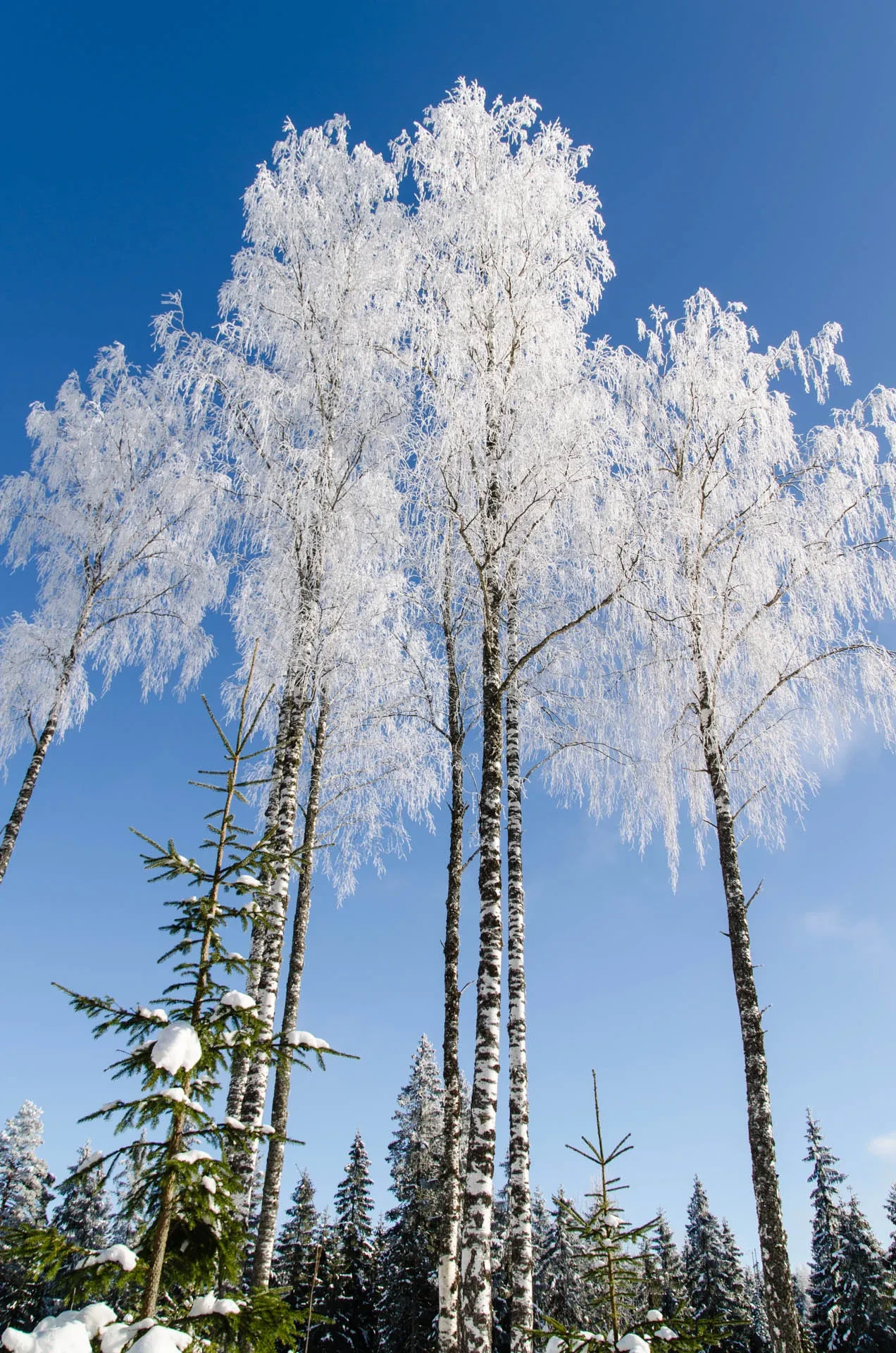
The white tree Flóki and the crew glimpsed in the distance. A birch tree. Crackle-crackle— this is the sound of birch burning. Crackle-crackle—
Haukurth, Public domain, via Wikimedia Commons
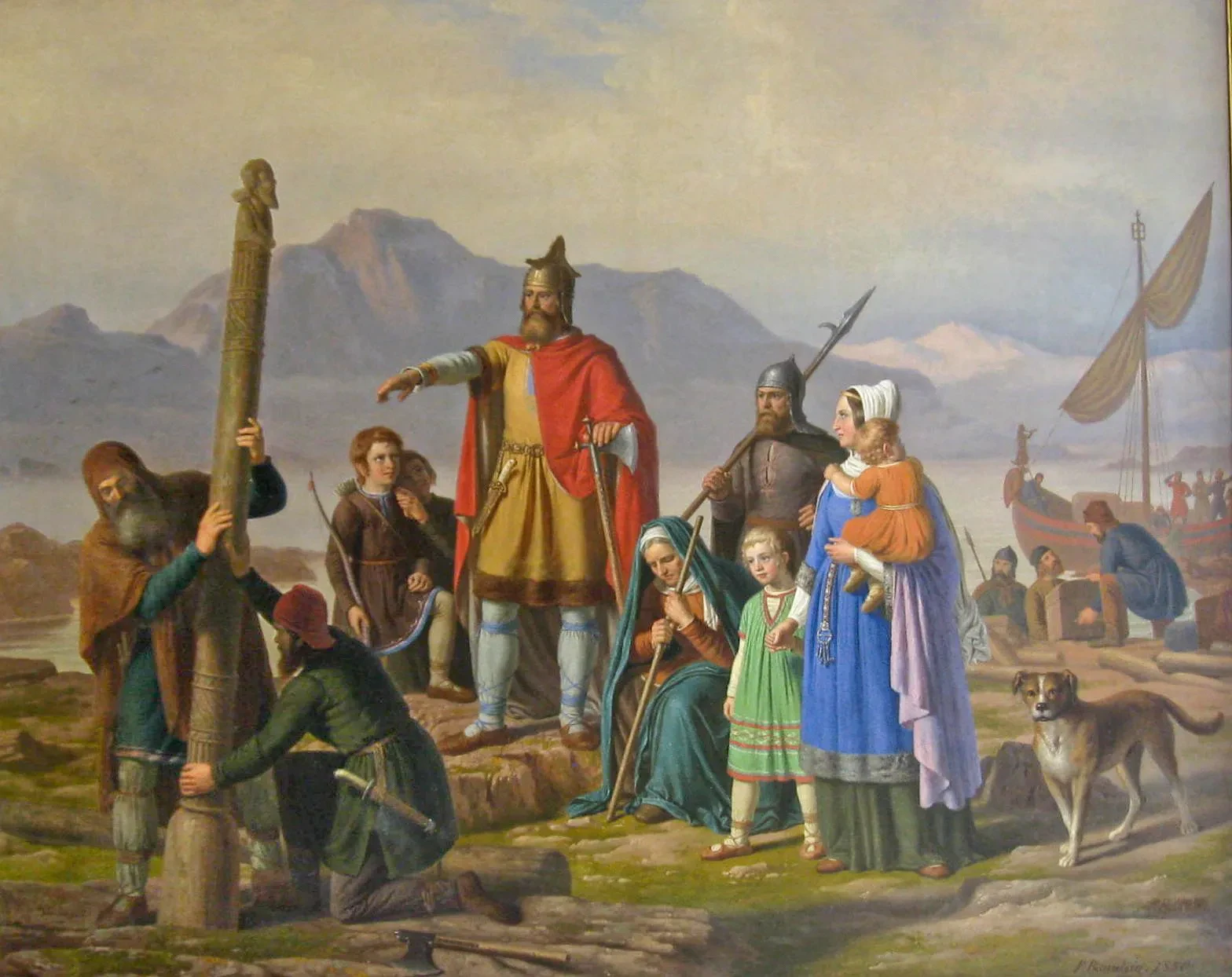
Ingólfr marking his territory. The image of Ingólfr, said to be the first permanent settler of Iceland...! The timing was roughly around 874... Iceland, in fact, had been discovered several times even before Flóki, so perhaps the name of the first permanent settler might be even more significant...!
However, in the original history, it is said that Flóki returned to Iceland in his old age and spent the remainder of his life there.
Willem Blaeu, Public domain, via Wikimedia Commons
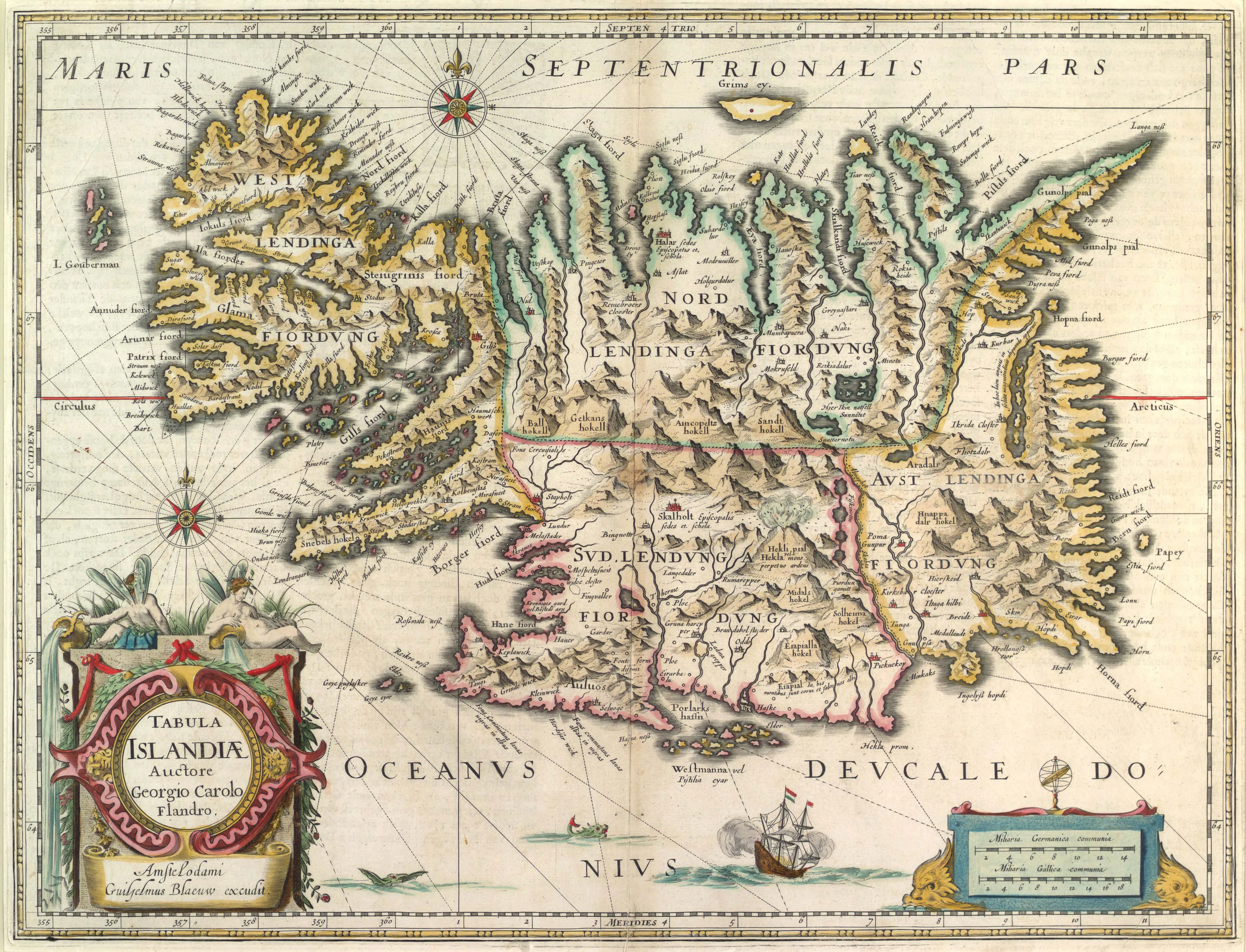
Iceland as viewed in the 17th century.
Jeff Schmaltz, Public domain, via Wikimedia Commons
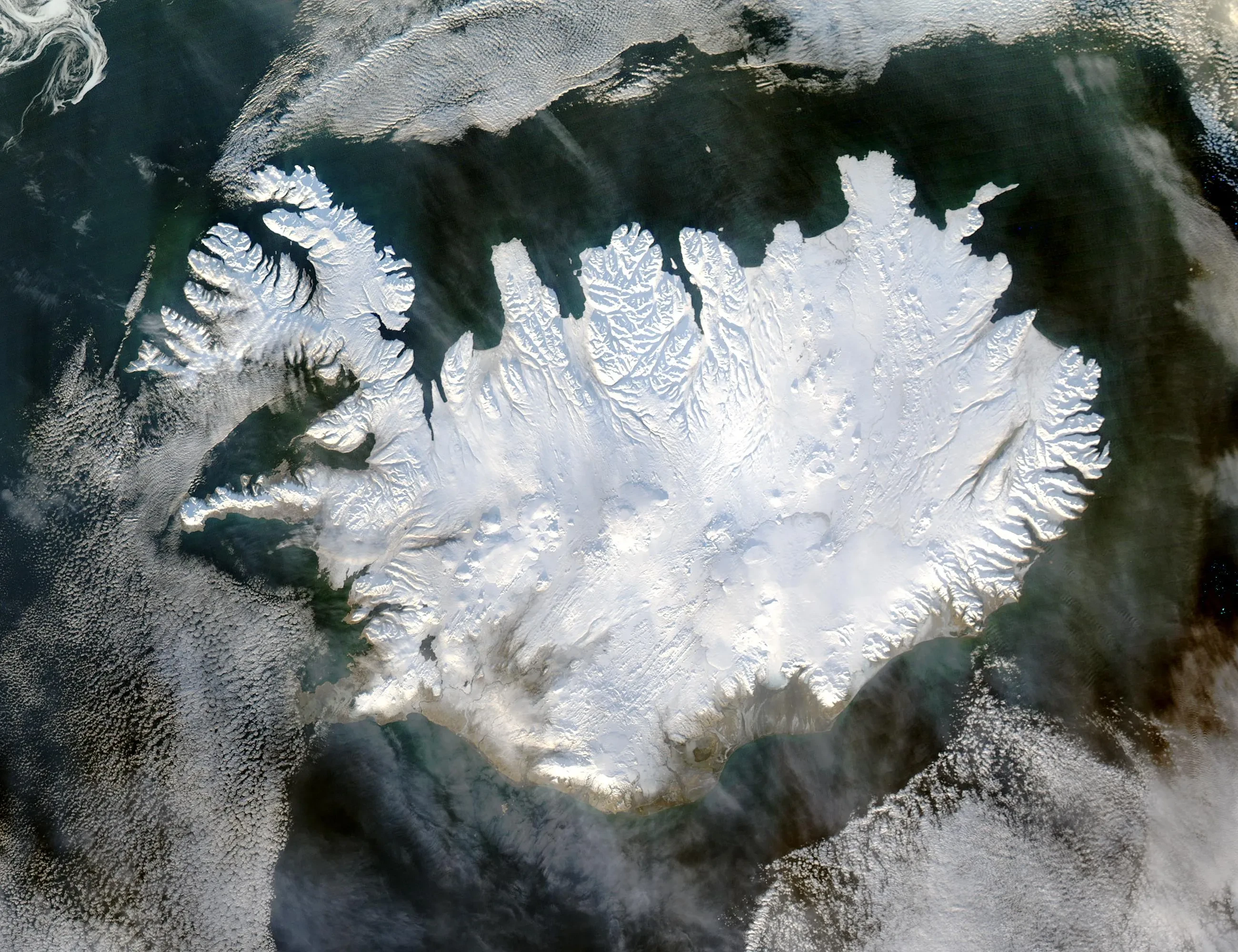
Iceland's winter as viewed in the 21st century.
One can see why they settled along the coastline. There is a reason why the villages cluster particularly in the south and west...!
See page for author, Public domain, via Wikimedia Commons
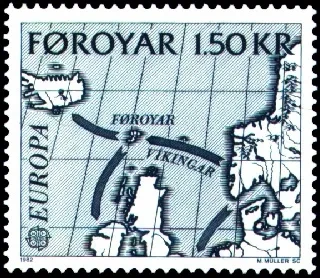
An adorable 1982 Faroe Islands stamp. It shows the migration routes of the Vikings. It being a Faroese stamp, it naturally exaggerates the size of the Faroes while the Orkneys down below are practically invisible, lol.
Max Naylor, Public domain, via Wikimedia Commons
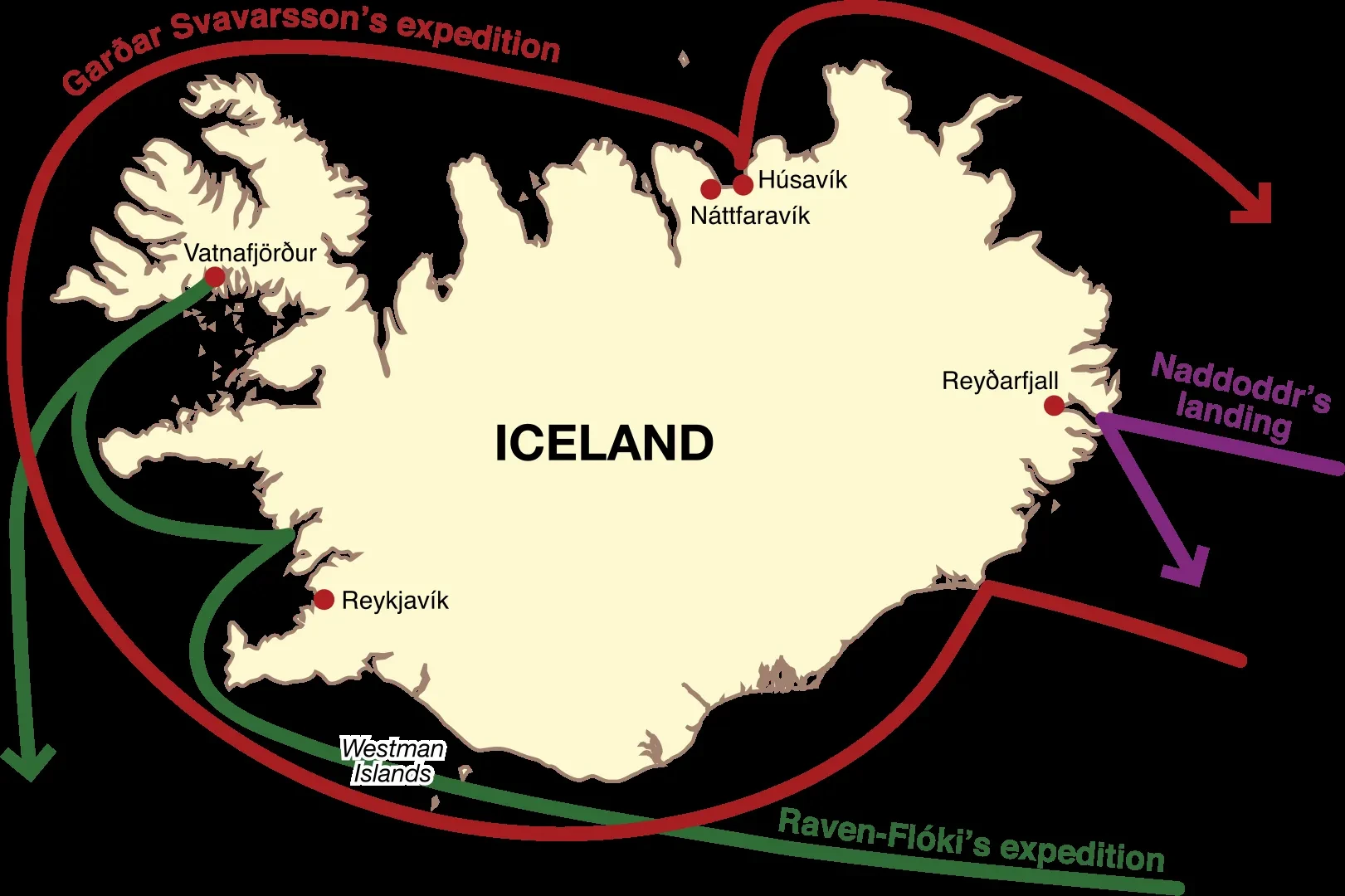
The history of Iceland's exploration.
The green line marks the route of Hrafn-Flóki, Flóki the Raven, but in Helgi's world, many things have already diverged. The route by which Flóki arrived within the story corresponds to the purple line.
Kasa Fue, CC BY-SA 4.0 <https://creativecommons.org/licenses/by-sa/4.0>, via Wikimedia Commons
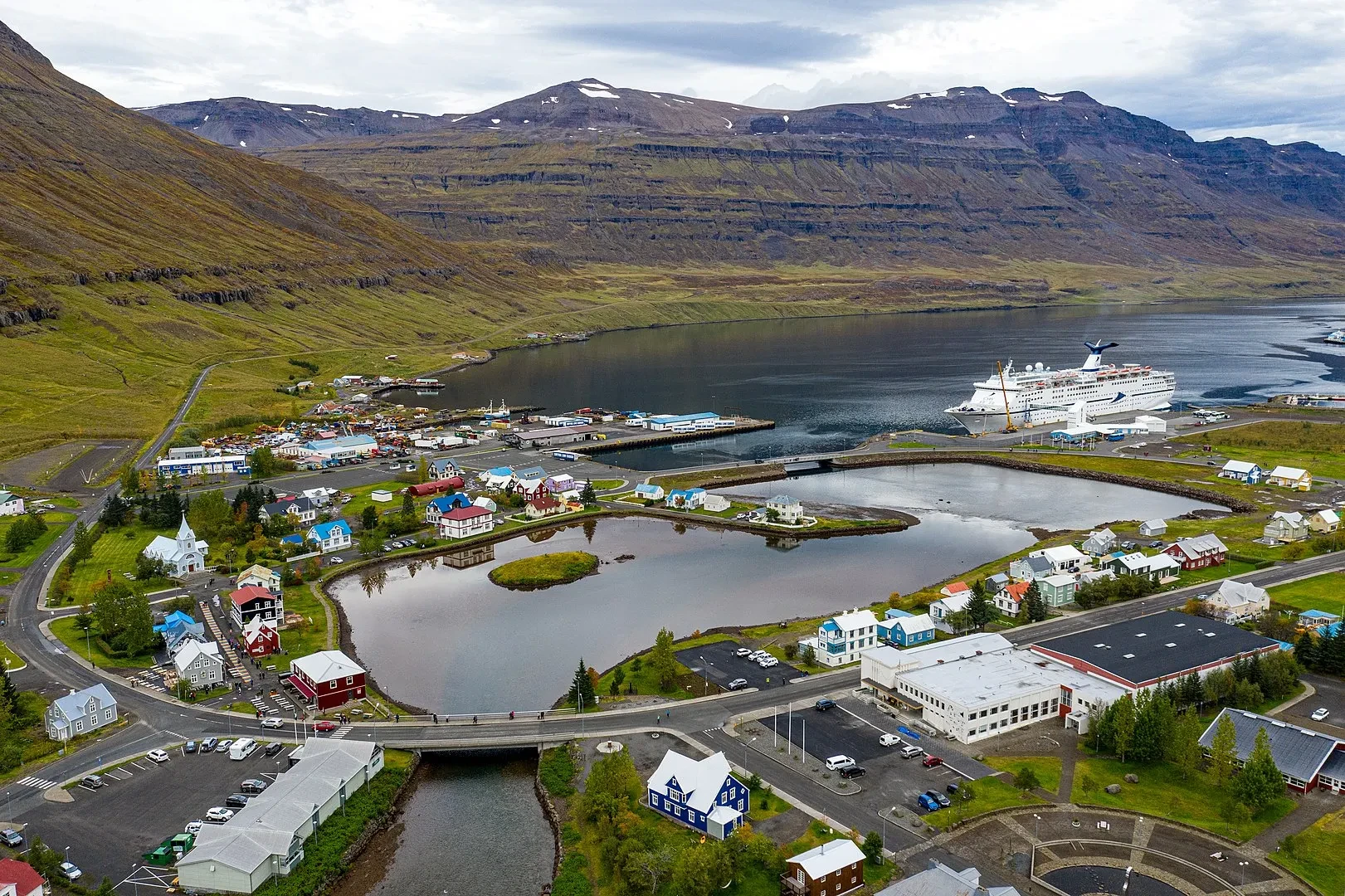
A rough view of an Icelandic harbor. This photo is provided to help the readers' understanding...! It probably looked something like this... just with snow-white trees.
Originally, those birch trees were said to have densely covered the eastern side of the island.
As time passed, the trees all vanished, giving the land its present appearance... but they had certainly been there. To my knowledge, reforestation efforts are even underway in present-day Iceland.
Perhaps deforestation played a part in the cause... but Iceland, in the 18th century? My memory is not exact, but it once experienced a period of intense volcanic activity.
In our own history, I have encountered the hypothesis that cases such as Balhae's downfall were likewise influenced by the eruption of Mount Baekdu... and it seems likely that Iceland and neighboring Greenland could not have escaped the effects of a volcanic eruption. This particular eruption is considered to have possibly influenced the Tenmei famine in Japan, to give an idea of its scale...!