
215. People Dancing in the Meadow.
The wood split the wave.
No, the wood shuddered, tossed about by the wave.
The longship that slid smoothly along made a pleasant sound, and Oleg's expression, fixed as solidly as the hard jaw on the ship, was full of tension as he cast his hardened gaze across the deck.
[Sururu- chalsseok sururu- chalsseok]
If I could catch those Magyars who've been skulking along the Dnieper trade route so much lately—those horse-riding bastards with their weird name—and bring them up on these waves, every last one of them would vomit up their guts, tears, snot, and even their secret camps.
That was how changeable and rough the North Sea's waves were—enough to make even the warriors who commanded the seas of this region spew curses.
The longship pitched up and down, munching through the waves, riding them, and sliding downward with its characteristic flexibility, somehow still managing to push forward. But inside, the warriors who had given up rowing and clung tight to their places scattered chicken and beer here and there to appease Njord, the god of the sea.
And in the midst of that, among the madmen who thought of snatching a mouthful of chicken and beer, Oleg was quietly lost in thought.
'The deadline has been delayed. Battlefields and wars are always said to be full of variables, but this expedition is truly unpredictable.'
The target the Fylkir had initially given was the tribal confederation called the Obotrites, who had always been a thorn in the side of the Northmen from the east of Hamburg while Konungr Bagsecg and the warriors of the Jutes attacked Hamburg itself.
If I looked deeper, Novgorod, where Oleg himself and his older brother Rurik had settled, was also a city built at a ratio of three Northmen to seven Slavs. Of course, now, under the name of the North Sea, not only Novgorod but also Polotsk and Kiyiu to the south, and across Karelia to the north all the way to the Finn-Sámi at the ends of the earth had all become one.
But if you stripped away the name of the North Sea, they were simply different peoples. Seen from outside that group, you could lump them together with names like Obotrites, Finns, Sámi, and Northmen, but seen from inside, they were all different peoples.
Even among the Northmen, they divided into Jutes, Danes, and Geats. And if you looked inside those, they divided again into many clans, and then again...
In other words, they were like finely crushed stone chips and iron shavings.
That was why Rurik and Oleg had agonized so much over exactly where to strike when they planned the attack on the Obotrites.
Having boldly raised the flag of Hel and sailed out of the warm harbor of Novgorod, the eastern elite legion of the North Sea Empire at once ran headlong into trouble.
They were forced to face the fervent hospitality of the Est and Liv tribes right to the west!
The Est and Liv people, who resembled the Finn friends they had fought shoulder to shoulder with in Karelia, seemed to have finally settled on a direction. They seized Rurik and Oleg with the precise wording that they wished to curry favor with the Fylkir of the North Sea and his warriors and held a seven-day feast.
No matter how much the battlefield called, they could not refuse the hospitality of the Est and Liv people, who would be the most crucial region for the future stabilization of the eastern North Sea Empire.
Naturally, Rurik and Oleg gladly gulped down the thick beer madly pressed upon them by the chieftains from all sides. In return, they generously gave away fine weapons, wine, and even the symbol of Hel to those who desired it.
In the process, Jarl Miroslav of Polotsk, who had re-emerged as a member of the massive merchant group called the Marmaros Council, personally moved his busy body, engaged in trade with the Finns, and established trade posts in the lands of the Est and Liv.
Beside Rurik and Oleg, who grew pale from the daily, continuous frenzy of drinking parties, Miroslav wore a stupid grin with an expression that said life was simply too enjoyable. It was exceedingly hateful to see, but there was nothing they could do about it.
In any case, it was a massive fleet of over a hundred new-type longships from Novgorod, crossing the North Sea westward all at once.
Before a fighting force whose professional soldiers, eating, sleeping, and training solely for battle, numbered a full five thousand, the isolationists who insisted on preserving tribal traditions were dealt with internally within their own tribes. Only those who cooperated with the North Sea remained, a smile similar to Mirosław's appearing at the corners of their lips.
Leaving the like-minded to their second round of feasting, this time moving across to Polotsk after the seven-day banquet, Rurik and Oleg, who had traded their physical health for peace, boarded their longships once more and headed west.
This time, the ones who greeted the North Sea army were a new Slavic tribe who called themselves the Rani and their high priest.
With the lands of the North Sea and the lands of the Slavs facing each other across the sea, it was a tribe that occupied a large island named Rugia jutting out between them.
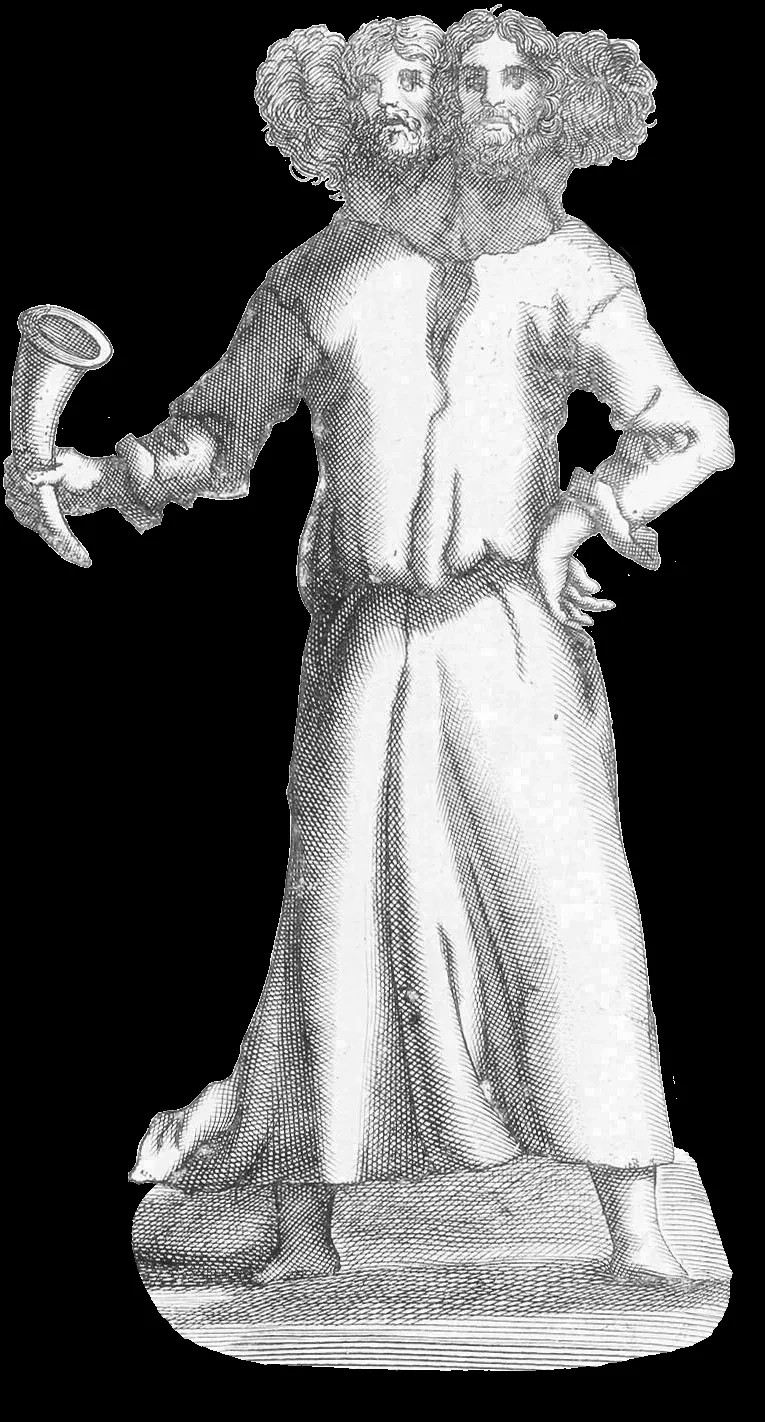
As it turned out, they were a powerful force that served a god named Svetovit, who had four heads, controlled the surrounding Slavic tribes, and collected tribute from them. They had been making plans as usual—sacrificing a white horse, sowing seeds, plotting raids, and scheming how to torment their rival powers in the lower villages—when a fleet of immensely threatening size had appeared far in the distance.
From Oleg and Rurik's perspective, they were just passing through. But given the situation of the Rani people along the advance route, they could not grit their teeth, pretend not to see, and turn their heads away.
Straightaway, the king of this valiant tribe, following the divine oracle of the high priest, led his warriors and blocked the sea route of the North Sea army.
"Strangers! This is the land of the Rani and their gods, granted by Svetovit! You dare not pass through the land and sea of the Great One without permission! Disembark at once and receive our hospitality!"
The king of the Rani, brandishing an iron sword about—likely gained through well-developed ironworking technology or by plundering the surroundings—and threatening them, had fifty ships waiting behind his brave display.
Of course, their size and length could not possibly compare to the North Sea longships, which had been continuously improved as Eastern Roman technology flooded in. But their fighting strength, carrying thirty to forty warriors each, was quite impressive.
Thinking there was no need to needlessly increase enemies on this sea, Rurik ordered the fleet to halt. Soon, guided to every corner of the island to anchor, Rurik and Oleg met with the high priest of the Rani tribe.
"My name is Nako. Northmen."
Given its geopolitical position, there was no way the Northmen, who stuffed their ships into any waterway and looked around, would simply pass this island by. Naturally, small-scale trade had been carried out, but this was the first proper meeting.
Of course, the high priest of the Rani, as well as their king and Rurik and Oleg, were somewhat tense. But no sooner had a few cups of thick beer and wine been emptied than the atmosphere grew warm.
The language of the Rani was similar to the Rus' language yet different, and Rurik and Oleg struggled with it. Fortunately, the high priest Nako was fluent in the North tongue, and no particular misunderstandings arose.
According to Nako, half the reason they had forcibly stopped the passing fleet was to solidify their position among the surrounding tribes and to please their god.
And the remaining half was because they had been nervously curling up, unable to help but see and hear the emergence of the North Sea Empire, since they had eyes and ears.
Deep wrinkles carved themselves into Rurik's forehead at the high priest's sly words wishing for an expansion of trade, but it was none of Oleg's business, as he was in charge of the eastern military might of the North Sea.
Was that not why they sat him in the seat of Knyaz? He was now a Konungr of the North Sea Empire, greater than Rus, so his elder brother would have to do his duty too.
Yet even Oleg, lifting his cup carefreely, could not escape the ceaselessly pressing call of duty.
"So, you mean the Fylkir of the North Sea is at this moment in a great fight against those Frank bastards who believe in those crossed wooden splinters they've woven together, and Konungr Rurik intends to strike the Obotrites bastards?"
Nako, shaking his head fiercely as though imitating the god they served, Svetovit, even had a kind of madness in his eyes.
"This is a holy war! If you are going to strike Liubice, then let our warriors join you! That region is thick with forests and the waterways are tangled, easy to get lost in. But our warriors move through it as if coming and going from their own home, so they will certainly be of help."
Did the Rani bear some grudge against the Obotrite tribal confederation?
No, a foolish question.
A space where many fragmented tribal societies bordered one another—in other words, it was like a collection of grievances great and small.
What mattered was not the trivial details of those grudges or where they began, but whether they could be of use to us.
I would have to observe a little longer, but in any case, the fact that good guides had joined the campaign against Liubice, the core city of the Obotrites, was a heartening development.
[Surururu— Zabun!]
"Stop! For Njord's sake, stop! It's really no fun anymore!"
"Ah— I think I'm going to be sick!"
"Hang in there! I can see the end of the storm!"
"If you can't handle waves like this, don't call yourself a warrior of Fylkir anywhere!"
Just then, the rough waves that surged in and made the longship dance swept away Oleg's brooding thoughts with the seawater.
Instead, what filled the air was the sound of warriors laughing raucously and trading jokes even in the midst of it.
After several strong waves that made rowing pointless passed, the buffeting wind and spray gradually weakened—surely the dark clouds were passing.
He would check the status of the men and equipment after landing, but Oleg wasn't too troubled because these waves were something the enlarged longships could easily endure.
What Oleg, standing in for Rurik who remained at the Rani village to have deeper talks with the high priest, cared about was the precise direction in which to bring down these fierce, strong axes of Fylkir.
Oleg grabbed a Rani who, like himself, had been drenched by seawater and resembled a drowned rat, and shouted loudly to ask.
"Hey there! How much farther must we go!"
"Wait just a moment!"
The Rani guide, who had learned the Northern tongue oddly and spoke strange words, managed to balance on the swaying ship, stood up, furrowed his brow deeply, and stared at the white land unfolding beyond the dark clouds.
"There! That place! We go!"
[Pika! Dokaan!]
At the end of the Rani guide's outstretched finger was a land thick with forests.
Just then, the flashing sky briefly illuminated Oleg's vivid blue eyes and then vanished.
*****
The second reinforcements arrived in Britain.
In truth, it was mostly timber, food, and luxury goods rather than combat troops, and consisted mainly of carpenters, farmers, and monks who had remained on the island of Britain and wished to cross to Frankish lands, so calling them reinforcements was strange.
Anyway, supplies had arrived, so the morale of our army, bivouacked near the fortress of Rouen, had soared even higher.
"Fylkir Helgi. This is the first time I have seen you in person. Alfred of Wessex greets the Lord of the North Sea."
"Alfred Cyning! Welcome. You've crossed the sea in person—a difficult journey you've made."
Unlike my subordinates, who tossed aside the unpopular olives and reached ravenously for delicacies like apples and grapes, I first felt a sense of surprise.
Alfred? What on earth was the Cyning of Wessex doing here?
I had received Ubba's letter beforehand saying he was sending various supplies, but I had never imagined that Alfred would be leading that fleet.
Was this Ubba's idea of a surprise? What was Alfred thinking, coming here? Had he not been informed that I was at war with West Frankia? As I understood it, Bishop Ceolnoth of Kent was so fiercely Catholic that it was said he was more loyal to the Pope in Rome than to the Cyning of Wessex.
Was this man all right?
"Now, let us go inside."
Naturally, my expression betrayed no agitation as I guided Alfred into the command tent.
Instead, the faces of Björn and Ivar twisted at odd angles; my brothers, who had fought fiercely against the Anglo-Saxon kingdoms of Britain, regarded Alfred with a look that said nothing could be more astonishing.
On the other hand, Refil, Seutorolpeu, and Guthrum—who had begun his career as Ivar's retainer—merely stared with curiosity that the Cyning of Wessex, once an enemy, was here. They felt no complicated emotions.
"Helgi Ragnarsson, lord of Tamworth in Mercia, Beodericsworth in East Anglia, and Jorvik in Northumbria. Wessex wishes to call you Bretwalda; please accept this."
The words Alfred spoke with a composed tone after taking his seat were as surprising as his appearance.
☆☆☆☆☆Reference Material☆☆☆☆☆
Skäpperöd, CC BY-SA 3.0 <https://creativecommons.org/licenses/by-sa/3.0>, via Wikimedia Commons
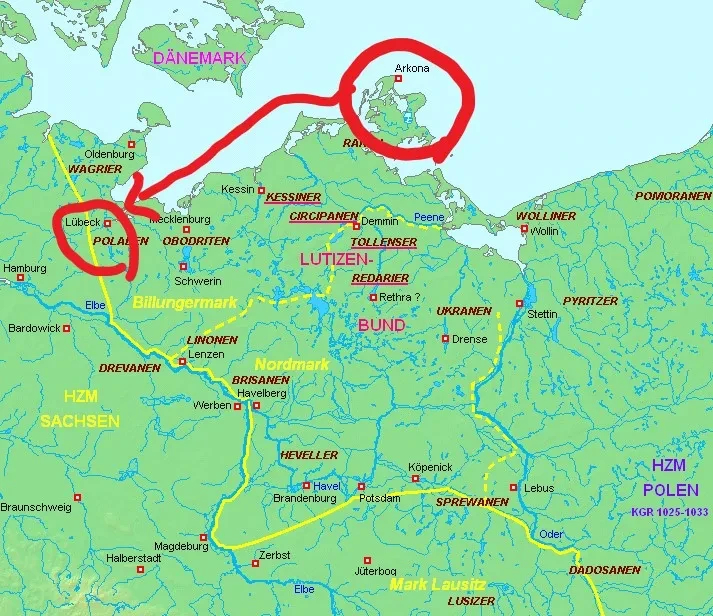
West Slavs in the 900s. Distribution of the Polabians or Wends. And the movement route of the Rurik-Oleg brothers...!! They moved along the coast from the east, and on the circled island of Rugia they met the Rani...!!
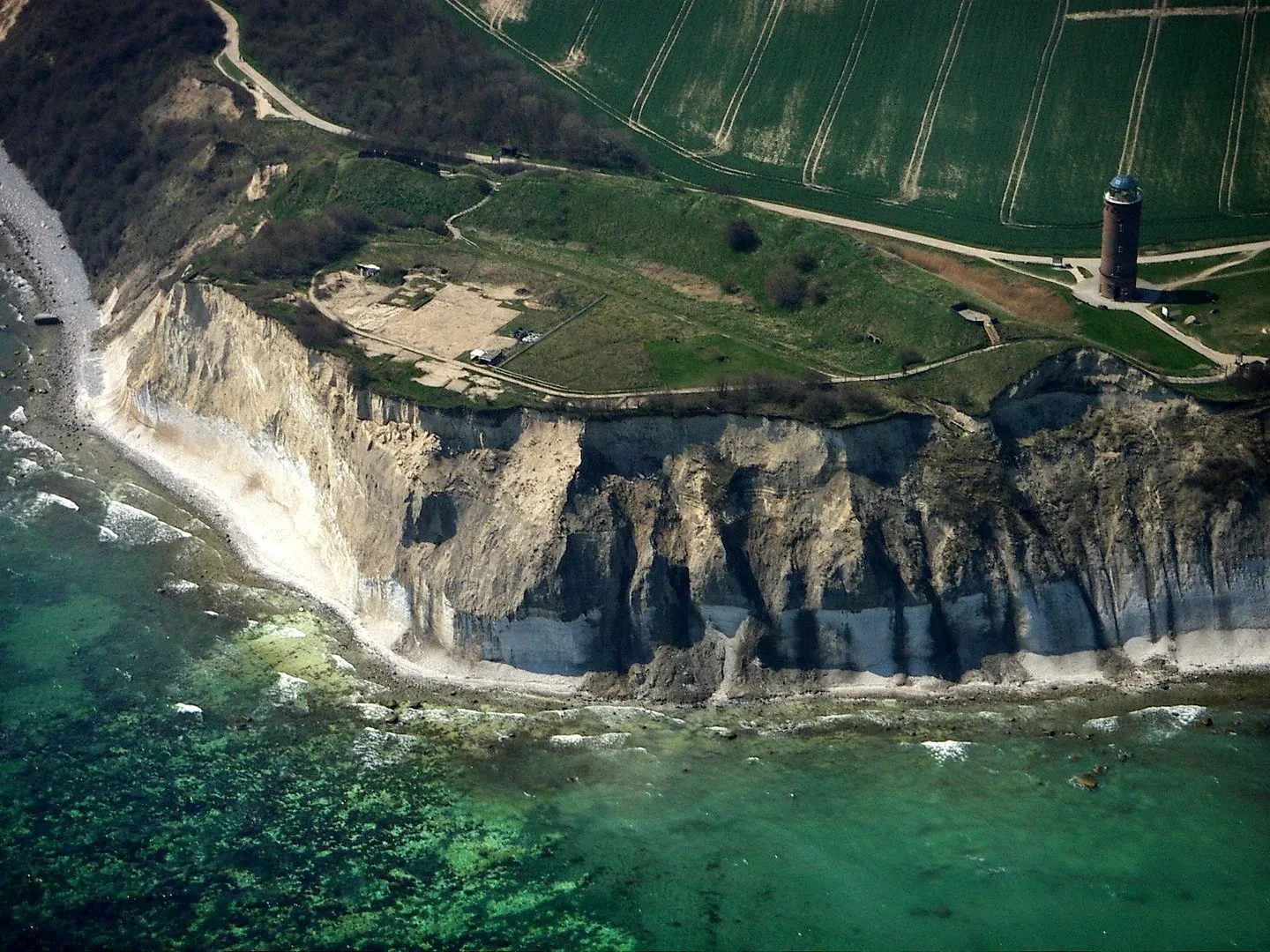
Stefan Klatt, Public domain, via Wikimedia Commons
The place where Rurik and Oleg met Nako. Cape Arkona.
Cape Arkona.
You can see the white cliffs—just like the white cliffs of the island of Britain, they're famous for being chalk (limestone) cliffs...!!
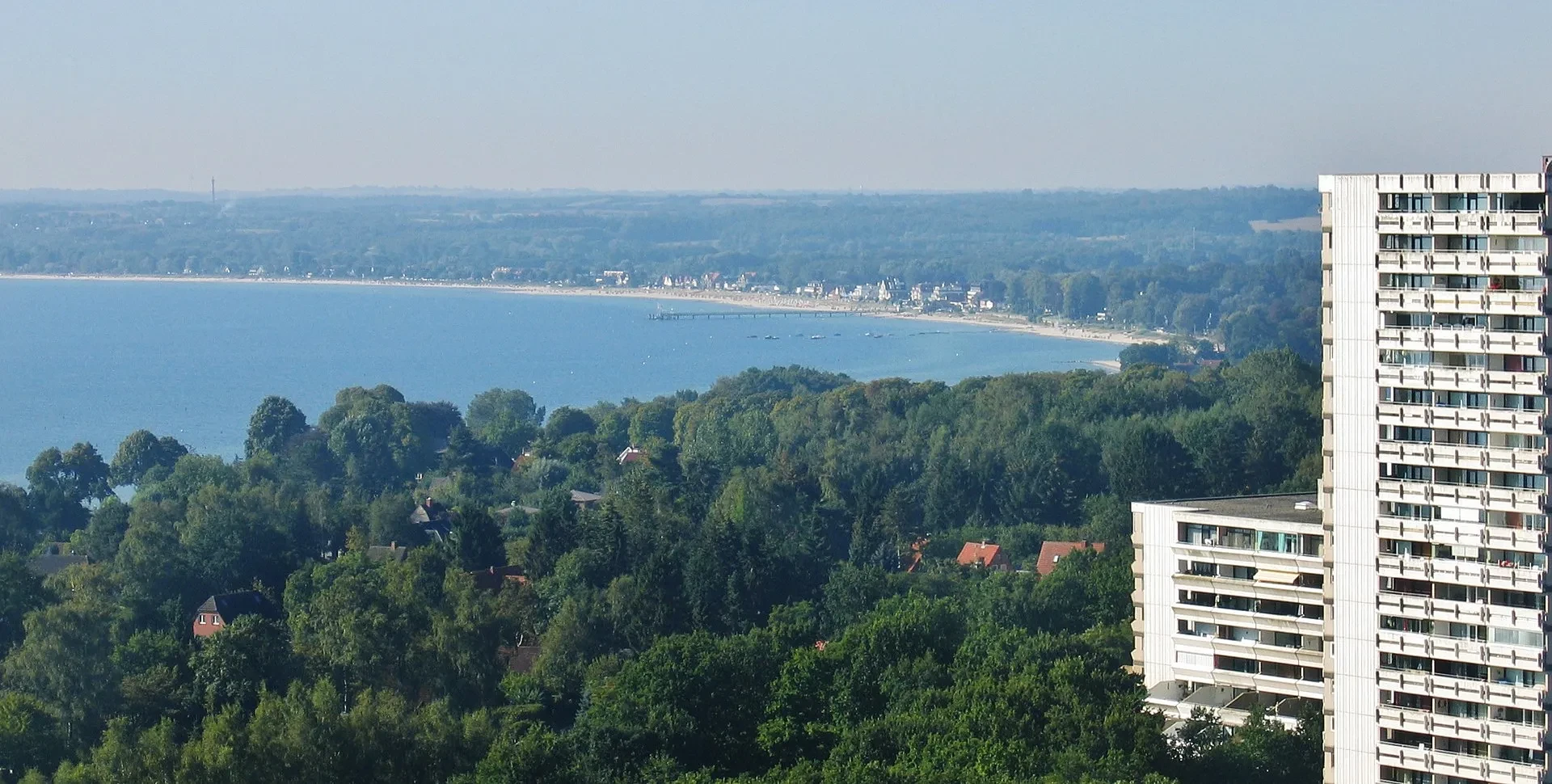
qwesy qwesy, CC BY 3.0 <https://creativecommons.org/licenses/by/3.0>, via Wikimedia Commons
View of Lübeck Bay.
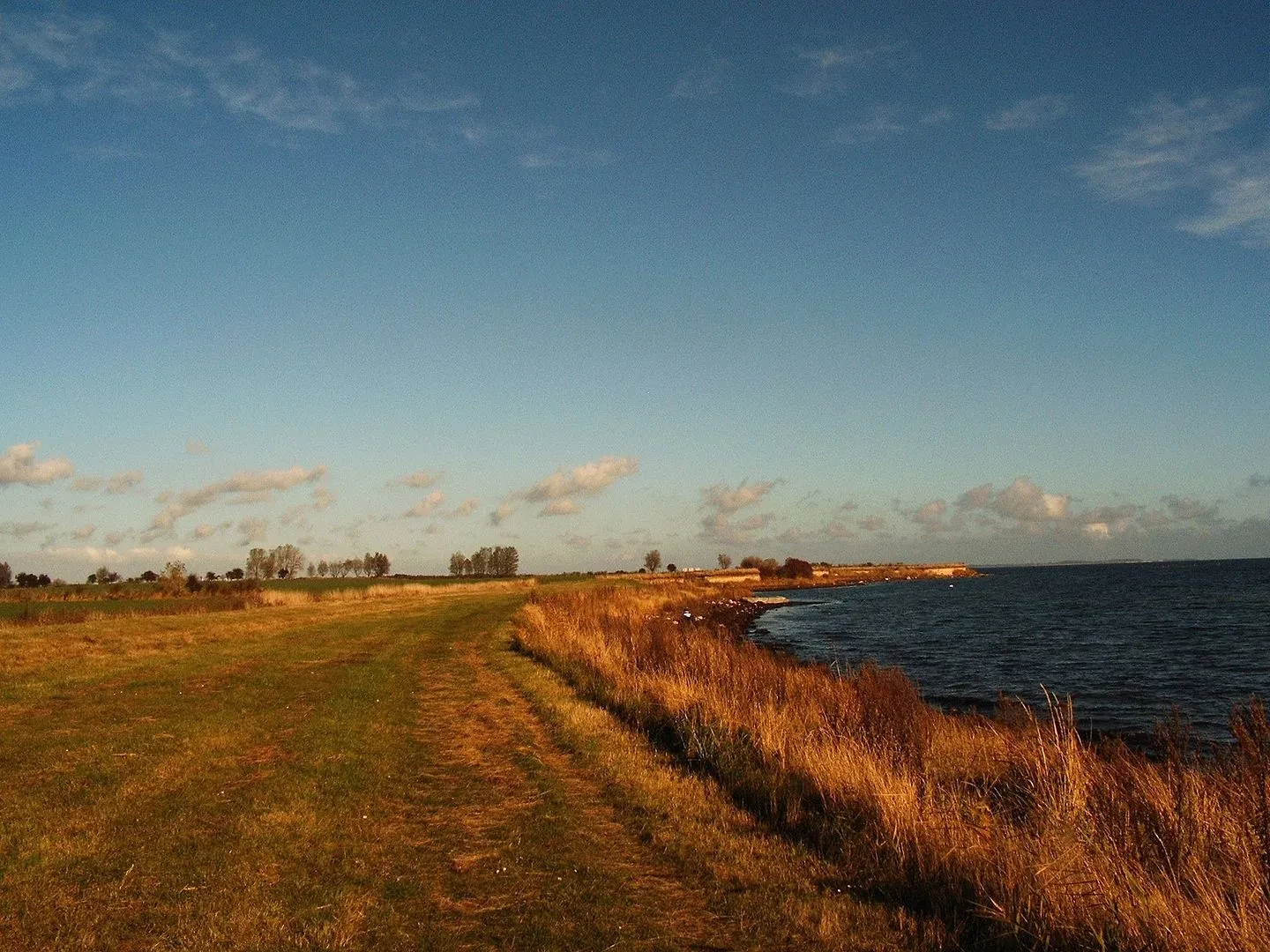
S.moeller, Public domain, via Wikimedia Commons
Lübeck Bay. Second one.
Like most bay areas around the world, it's just a ridiculously perfect natural harbor...!!
RonnyKrüger, CC0, via Wikimedia Commons
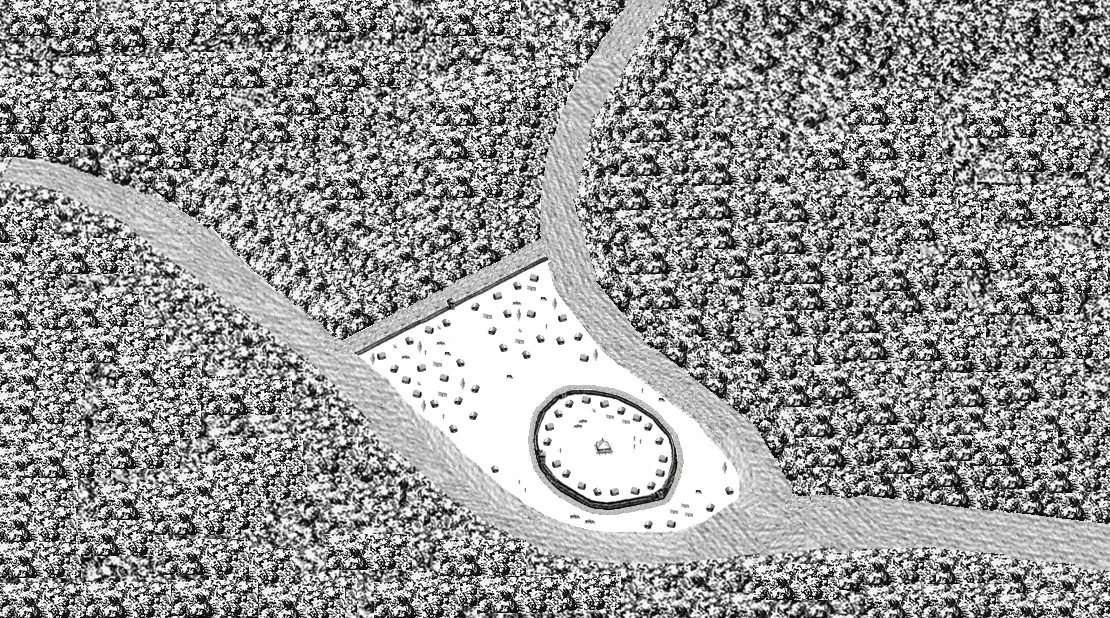
Alt Lübeck. An imaginative depiction of Liubice.
It was situated at the place where two rivers merge and flow out toward Lübeck Bay. Naturally, you can tell it dominated the trade of the region...!!!!
The circular fortress is impressive...! Do you see that dense forest...! It's breathtaking... the air is so good...!!!!!
Original: W. Dollese; Derivative work: Sławobóg, Public domain, via Wikimedia Commons
The four-headed god of the Rani and other West Slavs, Svetovit...!
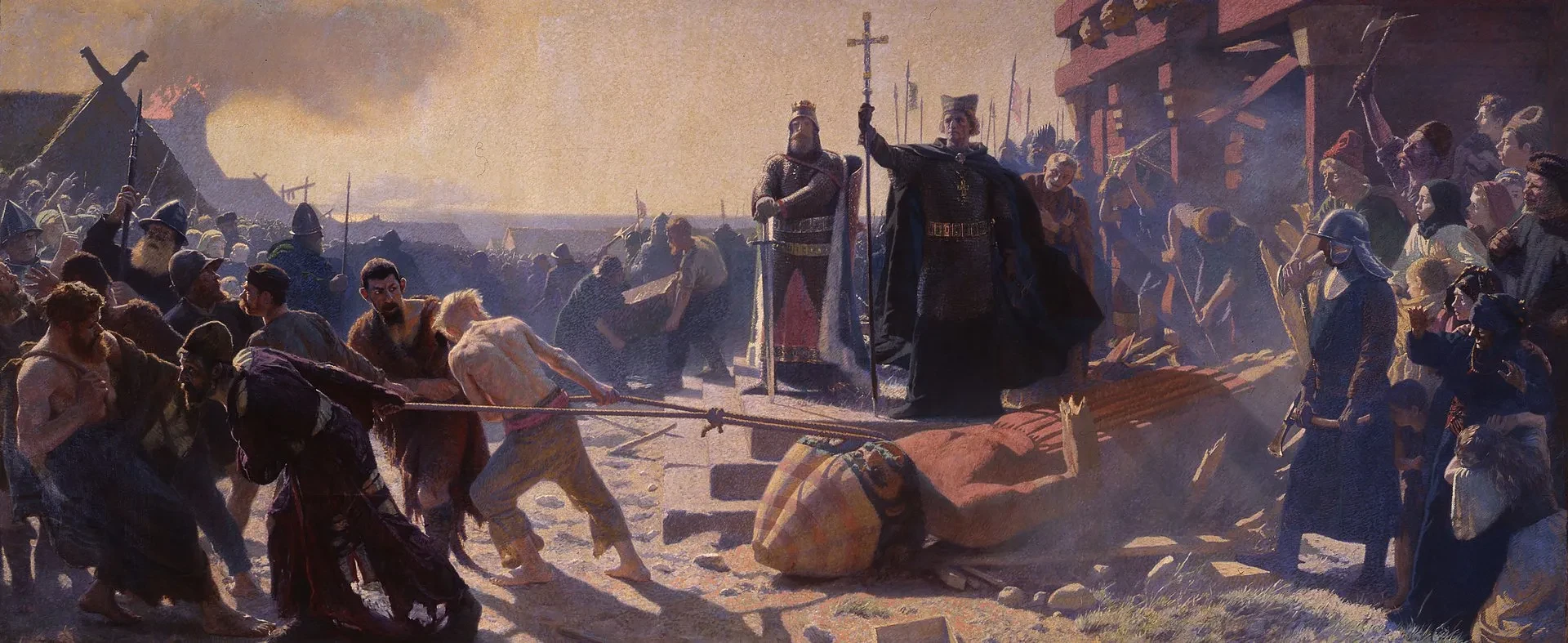
Laurits Tuxen, Public domain, via Wikimedia Commons
This is a depiction of Bishop Absalon pulling down Svetovit at Cape Arkona in later times. A religious victory achieved...!
He was the god of the sword, white horse, and eagle, and presided over fertility and war. Truly, wasn't that everything in a tribal society...!!
His name can be interpreted as something like 'strong lord' or 'sacred lord'...! There are so many different gods...!!!
See page for author, Public domain, via Wikimedia Commons
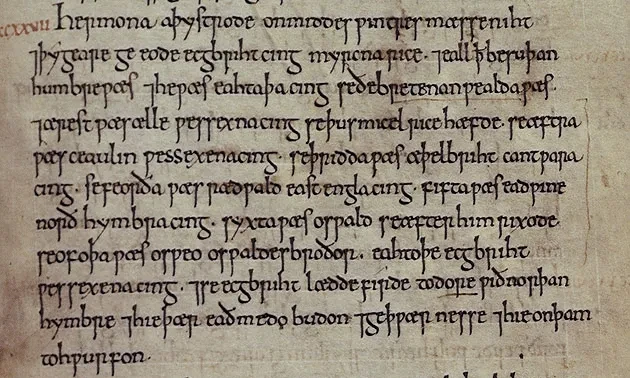
The Anglo-Saxon Chronicle of 827.
The document where Bretwalda is first mentioned. Since Mercia was the most powerful in the history of the Anglo-Saxon kingdoms in Britain, the names of Mercian kings are written a lot!