
Chapter 5
Gaia's fingertip pointed at Mount Olympus.
“First things first.”
She smiled sweetly.
“This Olympus must be abandoned.”
“What?”
Metis practically screamed.
I almost shouted the same thing.
This was the mountain we'd only just claimed after toppling Cronus. The palace was half in ruins and didn't even have proper doors, but it was still the place where I sat on the throne right now.
And her very first words were to throw it away?
“Lady Gaia, this is the place we've only just won after defeating Cronus!”
Metis shouted what I was thinking for me.
“It's the mountain where the authority of the Divine King will be established—how could you toss aside a sacred place overlooking all of Achaea like a worn-out shoe?”
Then Gaia smiled faintly and said:
“Unnie.”
"..."
Taking Metis's silence as assent, she continued calmly.
“Setting aside the fact that I have no fond memories of this place.”
Gaia pressed her fingertip against Olympus on the map.
The mountain on the map was high.
Majestic.
And terribly, stubbornly disconnected from everything around it.
“It is tall, to be sure.”
“Exactly, so—”
“And therefore, what can it accomplish?”
Metis faltered.
Gaia went on as if she'd been waiting for exactly that.
“The mountain paths are treacherous, and in winter they are buried under snow. There is no great river, no wide plain. It stands far from any sea where ships might come and go.”
She gave the mountain a light push with her finger.
“Just as it is difficult for enemies to climb up, so it is difficult for us to descend.”
“Even so, it is a safe dwelling for the gods.”
“Is your purpose, then, for the gods to hole up atop a mountain and live in safety?”
"……"
“Or is your purpose to make humans call upon our names, offer sacrifices, and live within our order?”
The audience hall fell silent.
I stared at Olympus on the map.
High.
Safe.
Sacred.
But if you asked whether it made a good capital?
…Yeah, it's pretty useless.
By twenty-first-century standards, it was even worse.
No transport network.
No port.
No great plains.
Mountain roads blocked in winter.
It might work as a tourist destination, but as an administrative capital? Forget it.
What really stung, though, was that I'd thought that at all.
Why am I evaluating capital site selection while possessed by a myth?
Gaia's finger swept slowly across the Mediterranean.
“Behold this sea.”
The Aegean and Ionian seas, the Adriatic and Tyrrhenian, lit up one after another. Golden lines bloomed along the sea lanes humans had yet to properly chart. Island linked to island. Tiny coastal villages transformed into port cities.
Grain and wine.
Copper and tin.
Timber and marble.
People and faith.
Countless things flowed along those golden lines.
“This shall become our heart.”
Gaia said.
“Mare nostrum.”
I flinched.
Wait a second.
Melisseus and Poseida both frowned, clearly not understanding the words.
Gaia, a beat late, raised the back of her hand to her mouth.
“Ah.”
An elegant gesture, as if she'd merely made a trivial slip of the tongue.
“That is a word that does not yet exist.”
The blood drained from my face.
That's Latin.
Rome didn't exist yet. This wasn't even an era in which the word Latin existed.
And yet Gaia had said Mare Nostrum.
Our Sea.
The very words the Romans of a distant future would use for the Mediterranean.
Is this really the Gaia I know?
The Gaia of the original myth was a being who raged at Uranus and pushed Cronus forward to strike him down. Who raged at Cronus and pushed Zeus forward. And when Zeus imprisoned the Titans in Tartarus, she birthed the Gigantes and Typhon all over again to try to overturn Olympus.
That Earth Mother Goddess was now lecturing on maritime trade networks and the heart of an empire.
No way.
Is someone from another era inside her, like me?
Alexander? Augustus? Justinian?
Every name imaginable flashed through my head.
Gaia, pretending not to notice my confusion, continued.
“We shall have to say it in our own tongue, then.”
Greek letters glowed at her fingertip.
“η θάλασσά μας.”
(i thálassá mas)
And she added, with great helpfulness:
“Our sea.”
“Hold on a moment!”
Poseida shot to her feet. Seawater swirled at the tip of her trident.
“Why is the goddess of the earth reaching for the sea as well?”
Gaia blinked.
“Reaching for it, you say?”
“If you call the Mediterranean 'our sea,' what does that make me, the goddess of the sea?”
“You are mistaken, Poseida.”
“Mistaken about what, exactly?”
Gaia's hand brushed across the map. A sigil of Poseida's trident appeared above the waters, and from it, hundreds of blue rays spread outward, linking every sea lane and every port.
“If the empire takes the sea as its heart.”
Gaia looked at Poseida.
“Then who shall be the one to make that heart beat?”
Poseida fell silent.
“Every time humans load their grain onto ships, they will pray to you. When kings wish to move their armies, they will seek your permission. And the richer the cities grow, the taller your temples will rise.”
The trident sigil blazed brighter.
“I am not trying to take your sea from you.”
Gaia smiled gently.
“I intend to make you, who would remain merely the goddess of the Aegean, the goddess who holds the veins of us all.”
Ah.
Only then did I grasp what Gaia was doing.
She wasn't taking anything away.
She was growing it.
Instead of shrinking Poseida's domain, she would make the entire empire depend on that domain. Making it impossible to refuse.
Looking at Poseida's expression, I could tell I wasn't the only one who'd caught on. She should have been angry—but the future unfolding before her was so dazzlingly attractive that she couldn't get the words out.
“So where exactly are we going... unnie?”
Metis asked.
Gaia's finger moved northeast.
From Achaea, across the Aegean, to the narrow strait where two continents faced each other. The throat connecting the Black Sea to the Mediterranean. The place where the lands of west and east pressed together.
On either side of the strait, two stars rose.
“Constantinople.”
My shoulder flinched again.
That's twice now.
Gaia tilted her head slightly.
“No—not by that name, not yet.”
Her fingertip pointed to the star on the western side of the strait.
“Byzantium.”
And the star on the east.
“Scutarion.”
A golden line was laid between the two cities. Grain ships descending from the Black Sea passed through the strait. The ships of the Aegean split north and south. Merchants from Asia and warriors from Europe met in the markets.
Walls soared. Ports opened. And not on top of a mountain, but in the very center where sea met land, a resplendent divine palace rose.
“This shall be the new Olympus, Your Majesty.”
Gaia declared.
I found myself staring holes into the map.
I was no historian. But I knew exactly why Constantinople mattered.
The Bosporus. The Black Sea and the Mediterranean. Europe and Asia. The seat of empire for over a thousand years.
This is insane.
No—
It was so sane it was the problem.
But then Gaia dropped a bombshell.
“And if Your Majesty were to release her from Tartarus, my dear daughter Cyclopeia—a treasure beyond price—will gladly build this new Olympus with her own hands.”
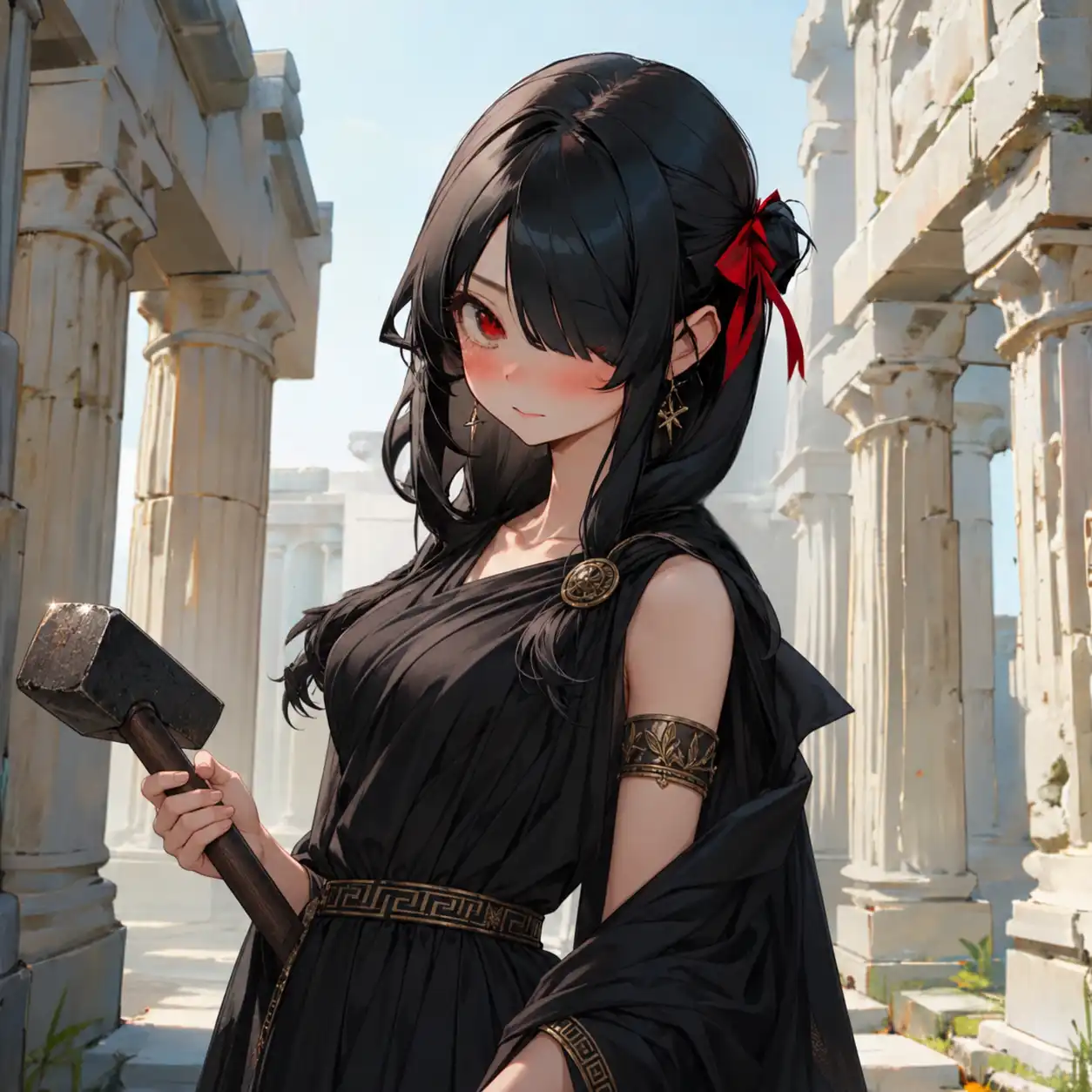
Where the one-eyed goddess brought down her hammer, stone and metal interlocked, and a new divine palace rose in place of the ruined one.
“So take me as your First Wife, Metis as your Second—and Cyclopeia as your Third.”
“I and Metis shall reside with Your Majesty in the imperial palace of Byzantium, and Cyclopeia may dwell in the villa across the water at Scutarion.”
At that, Metis and the other goddesses shrieked.
“Hold on—why am I only the SECOND wife?!”
Metis demanded first.
“You're appointing someone I haven't even laid eyes on as the third wife, just like that?”
Demeter stomped her foot.
“A woman who didn't even fight in the battle that drove out Cronus gets to be the third wife? Then what does that make me?!”
Poseida slammed her trident into the floor too.
Oh great, another fight...
Before I could open my mouth to intervene, Melisseus cautiously raised his hand.
“Mother.”
“Speak, Melisseus.”
“My daughters and I came all the way from Crete to attend Your Majesty.”
“So you did.”
“We crossed the sea and climbed the mountain ranges.”
“You have toiled hard.”
“And so if the capital is moved.”
Melisseus's voice trembled.
“Must we pack up our belongings once more and travel all the way to Byzantium and Scutarion?”
His three daughters held their breath.
Gaia seemed to consider this for a moment.
Then she smiled the most benevolent smile in the world.
“Well, what can be done about it?”
"..."
I looked at Melisseus's face.
It was the face of a dead man.
No.
I couldn't just nod along because it was a reasonable statement. What was strategically correct and what was possible right now were two different problems.
Also—Cyclopeia?
Weren't there originally three one-eyed giants who forged Zeus's thunderbolts? The Cyclopes? Why is she a woman, and why is it down to just one?
Whatever. Let's just salvage this somehow.
I took a deep breath.
“Whew.”
I looked at Gaia.
“Nunim.”
Getting the title out still required a considerable amount of courage.
“I understand the importance of Byzantium and Scutarion.”
Gaia nodded with satisfaction.
“As expected of Your Majesty—you have a discerning eye.”
“But relocating the capital right now is not possible.”
Gaia's smile stiffened, just a hair.
Metis looked at me. Poseida raised her trident.
I did not run.
“We have only just toppled Cronus.”
I folded down my fingers one by one.
“We have no proper palace. No army. No temple network. Even the relationships among the people gathered here have yet to be sorted out.”
My gaze swept across the goddesses and the three nurses.
Who was a wife. Who was a sister. Who was a god, and who was an ally—it was chaos from square one.
“If we move the capital first, we won't be founding a new nation—we'll simply be setting everyone adrift on the road.”
Melisseus's eyes suddenly glistened with emotion as he looked at me.
Why are you that moved?
“Byzantium we will secure, without fail.”
I pointed to the strait on the map.
“Scutarion as well.”
Then I looked back at Olympus.
“But we will not discard Olympus immediately.”
Gaia said nothing.
“We establish order here first, build footholds in Byzantium and Scutarion, and then move slowly.”
“And Lady Cyclopeia shall be freed from Tartarus.”
“However, marriage is a separate matter. We shall meet each other face to face, and she and I will judge together.”
“I will not bundle her release, the palace's construction, and a marriage into a single bargain.”
The earth was silent.
No one dared breathe loudly.
Gaia stared at me for a long while.
Finally—
She laughed.
“Very well.”
I blinked.
“You accept?”
“Because Your Majesty has not refused my will.”
Gaia took a step closer.
“You understood my design, and merely rearranged the order of it.”
Her eyes held a deeper interest than before.
Did I... pass?
Why did I feel like I'd just been through a job interview?
But I did learn one thing. Gaia was not the type to take offense when someone pushed back on her words. If it had utility, she listened. If the logic held, she accepted it.
That was a relief.
...It is a relief, right?
I eased my tension slightly.
“Then as for the rest, we can take our time—”
“Your Majesty.”
Gaia cut me off.
“Yes?”
“The matter of the divine consorts has only just begun.”
"..."
I froze.
Melisseus froze too.
Metis, Poseida, Demeter, and Hestia all looked up at the map at once.
Gaia's hand moved south.
Sicily and southern Italy were washed in gold. Further south still, a single blue line was drawn through Egypt and the narrow strip of land that cleaved the Red Sea. At the far west, a colossal Titan stood guard over the strait between two continents. And along the northeastern shores of the Black Sea, a giant with a hundred arms revealed himself.
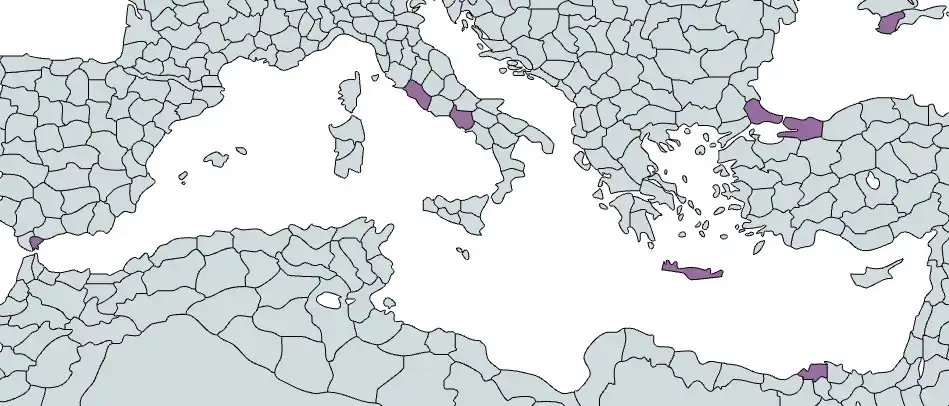
And across every corner of the map, the names of gods surfaced one by one.
Demeter.
Prometheus.
Poseida.
Hera.
Aides.
Hecatoncheires.
Atlas.
Hold on.
That wasn't a map.
That was a personnel appointment chart.
Gaia smiled elegantly.
“Surely you did not imagine it would end with a single relocation?”
Only then did I understand.
The person I was dealing with was not a goddess coveting the seat of chief wife.
Under the pretense of marriage—
She was a monster who had designed an entire empire, down to the last stone.