
The Past
My father went missing when I was still in middle school.
He had been a deep-sea fishing boat crewman. Once he put out to sea, he would not return for months at a time. In the memories of my childhood, Father always carried a briny smell—the scent of seawater, of cigarettes, of work clothes worn far too long. On the days he came home, that smell filled our little house completely. I loved it. It meant he had come back alive.
Then one day the phone rang with news that the ship had lost all contact. It was right after a typhoon had passed. The coast guard began searching, and a few days later it even made a brief appearance on the news: missing vessel, all crew unaccounted for. Mother could not leave the television for days. Every time the phone rang she would nearly fall over herself rushing to answer. But Father never came home. They never even found a body. Not death—missing. Those two ambiguous words kept Mother waiting for him for a very long time. A knock at the door would make her hope; a call from an unknown number would set her hands trembling. Waiting, however, does not keep a person alive. It only eats them away, little by little.
After Father disappeared, Mother took every job she could find. Restaurant work by day, factory shifts by night, cleaning on the weekends. Her finger joints swelled thick and her lips cracked and bled, yet she never rested.
“Mom’s fine,” she always said. “As long as Do-yoon keeps going to school, that’s enough.”
I believed her. Or rather, I wanted to believe her. Because she said she was fine, I told myself she really was. It made things easier for me. Even when I came home beaten from school, I never said a word. I did not want to make things harder for her too. The truth was I was ashamed. I did not want her to know that her fat, weak son was being tormented. At school I lived as the bullies’ bread shuttle; at home I ate my meals as if nothing were wrong. That life continued until the winter of my second year of high school.
That night, too, I came home late. One of the bullies had wiped out on his motorcycle and ordered me to come up with the repair money. It was an absurd demand, but I could not refuse. Wondering whether I should try to find a night shift at a convenience store, I returned home.
Creeeak—
I opened the front door and found the house strangely quiet. The lights were off.
“Mom?”
No answer. The rooms were cold. On the dining table lay a single sheet of paper that looked as if it had been folded and unfolded countless times.
I’m sorry.
It isn’t because of you.
Mom is just too tired.
Do-yoon, I’m sorry.
For a long while I could not read that paper. The letters were clearly Korean, yet their meaning would not reach me. The memories that followed came only in broken fragments: me pounding on the door and screaming, the neighbor from next door rushing over, someone calling 119, the wail of sirens, a white sheet, the police, a hospital corridor. From that day on I was truly alone.
The relatives only kept in touch for the first few months. They had their own hardships. No one could take me in. I barely managed the rent with government support and survivor benefits. When living expenses ran short I worked part-time jobs—convenience store, gas station, logistics center, flyer distribution, restaurant dishwashing, factory packing. Anything I could do, I did. I scraped through high school graduation. The ones who had tormented me laughed at me right up to the ceremony.
“Hey, pig Duruchigi. Congrats on graduating. Finally free, huh?”
One of them clapped my shoulder and grinned. Bae Si-yeon, thankfully, did not show up that day. I simply pretended to smile at them. I did not even have the courage to get angry.
Even with my circumstances I entered university. I chose a place where my grades and the support programs would let me in. It was not because I had some grand dream. Stepping straight out into the world after high school terrified me; I wanted to hide a little longer behind the identity of “student.” University, however, was no different. Crowded lecture halls left me breathless. If anyone laughed, I was certain they were laughing at me. During group projects I stayed silent for fear of becoming a burden. At after-class dinners I only drank water. There was almost no one I could call a friend.
The real problem was Bae Si-yeon. The long-haired blonde girl who had tormented me most cruelly in high school had enrolled at the same university.
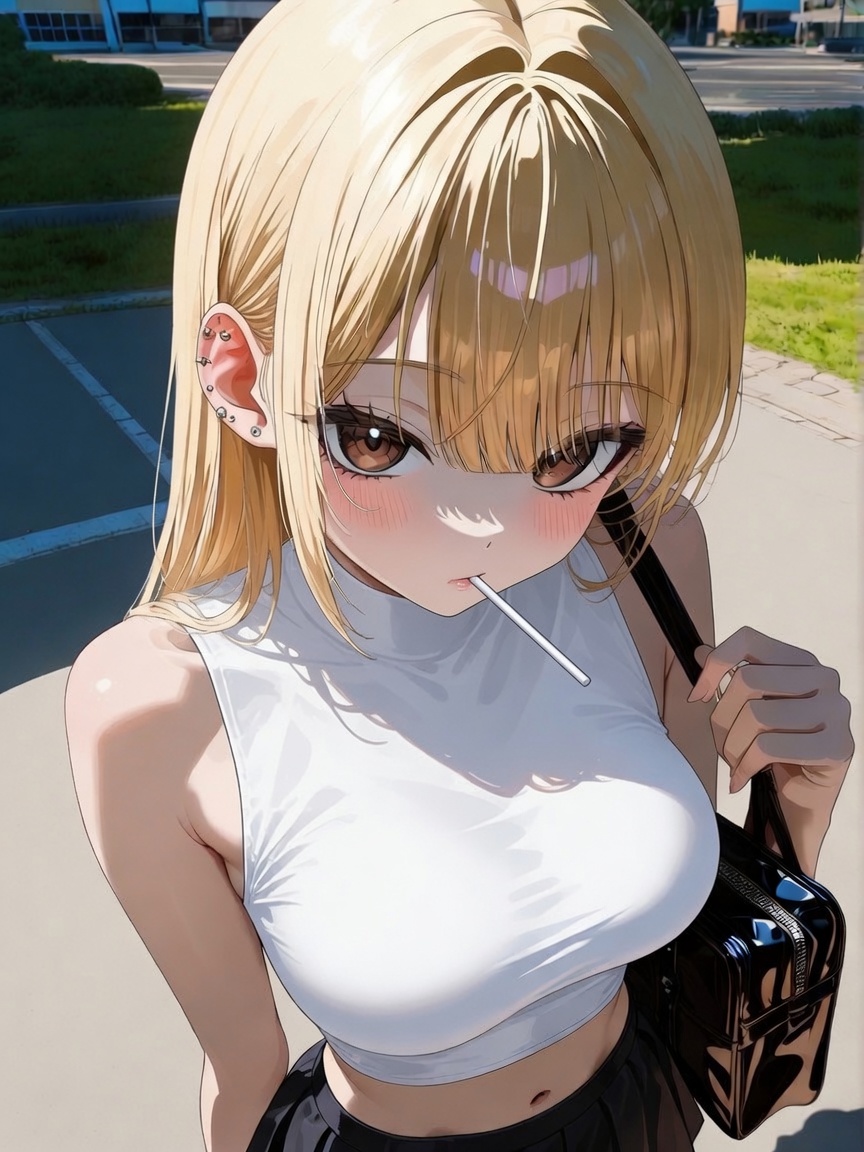
It felt like returning to hell. At first she pretended not to recognize me, as if she meant to bury her high-school days as a delinquent. Then, at some point, strange rumors began to circulate.
“That guy’s an otaku pervert.”
“He stares at every girl with these weird eyes.”
“Apparently he just lives on porn in his room—disgusting.”
“I heard he’s been famous for chasing girls since high school. Bae Si-yeon from the beauty department said so—they went to the same school.”
There were not many overweight men on campus, so the rumors spread through the entire department in no time. From freshman year I became a quiet outcast. I was left out of group projects; empty seats naturally formed around me in lecture halls. The female students, especially, made no secret of avoiding me.
There was, at least, one girl who spoke to me first. Yoon A-rin. Same major. Her long black hair fell in soft waves with bangs lightly framing her face; every time she moved, the glossy strands brushed across her shoulders and the swell of her chest. Her face was gently rounded yet her features were clear and vivid, large eyes with natural double lids. Her full pink lips moved softly whenever she smiled, and faint dimples appeared. She always dressed in a pure, innocent style, yet that pure clothing could not hide a body so glamorous it stopped men in their tracks. In a sweater or a dress the full line of her breasts showed plainly; her waist was so slender that the contrast between upper and lower body was striking. Her hips and thighs, too, held soft, rounded curves. Altogether she was a girl who looked approachable and kind, yet possessed a rich feminine beauty that seized every male gaze at first sight.
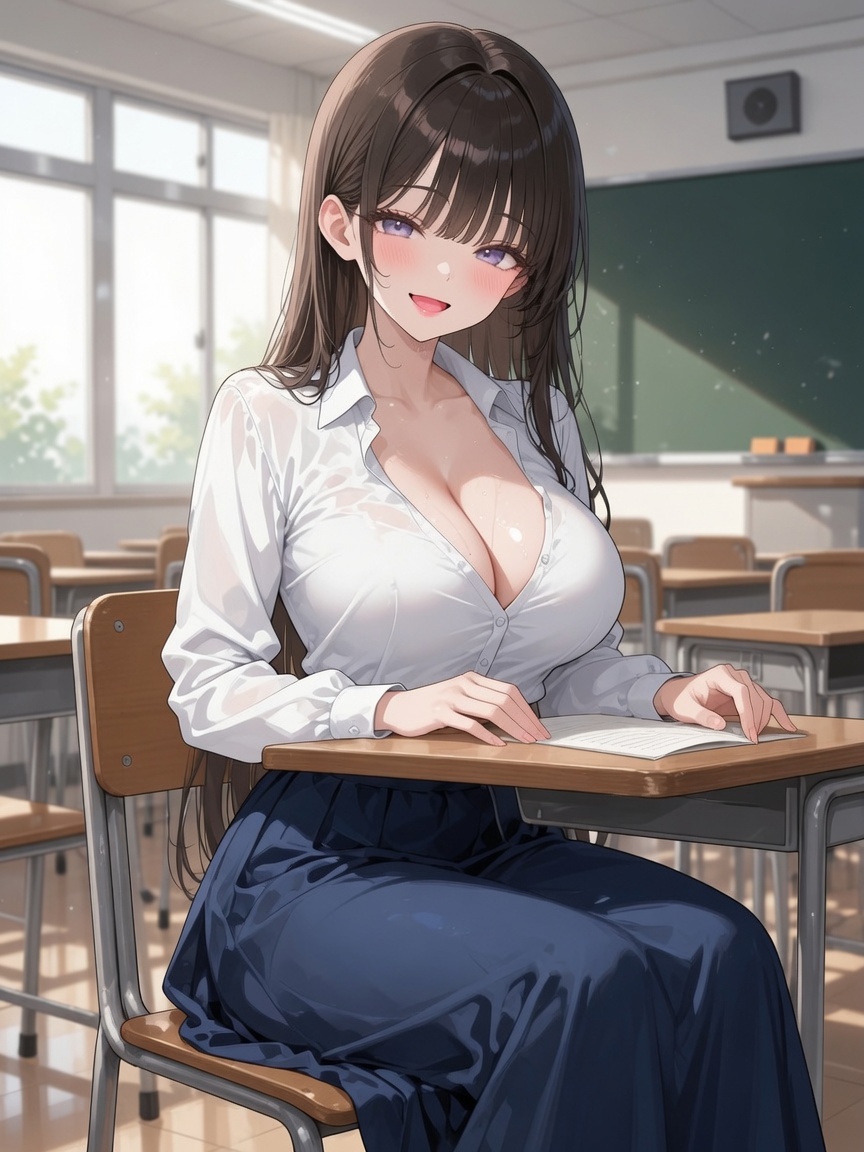
A beauty like that paid no mind to the rumors about me. One day after class A-rin came carefully over to my seat.
“Do-yoon, have you eaten? I don’t like eating alone… want to join me?”
On another day she handed me printed class materials with a smile.
“You were absent yesterday, right? They said this part is important, so I printed a copy for you too. If there’s anything you don’t understand later, just ask. I’ll explain.”
When it came time to choose teams for group projects, even while the others talked as if I did not exist, only A-rin turned her head toward me.
“Do-yoon, want to do it together?”
I mistook that small kindness for love. For someone like me who had nothing—someone already whispered about as an “otaku pervert”—she was the first girl who had ever spoken first. I liked her alone. I hoped alone. And I collapsed alone.
One day, in the corner of my lecture notes, I doodled A-rin’s face the way one doodles without thinking. I even scribbled the words “A-rin…” There was no special intention; I had simply moved the pencil in a daze. Eyes, nose, lips, even the slight smile. A male classmate from the same major found the notebook.
“Hey… what’s this?”
He could not hold back his laughter as he snatched it away.
“Ha… stop it…! Give it back…!”
Ignoring me, he spread the page wide in front of the others.
“Guys, look at this. Looks like Do-yoon has a thing for A-rin.”
Laughter rolled through the lecture hall.
“Hahaha. Kang Do-yoon, she’s not even someone you get to look at, is she? Aren’t your dreams a little too big?”
I could neither lift my face nor run nor make any excuse. The rumor reached A-rin’s ears almost at once. From the next day she began avoiding me. When we passed in the hallway she turned her head; during group projects she no longer asked for my opinion. The invitations to eat, the materials she used to bring me—all of it vanished. Only then did I understand. A human being like me did not even have the right to dream.
After that incident A-rin started dating a senior from the same department—handsome, tall, from a good family, the kind of man who got along with everyone. From a distance I watched the two of them walk hand in hand. From that day on I was the one who avoided A-rin first. After graduation even the contact was cut. That was my one and only one-sided love.
Before I knew it I was a sophomore. One by one the male classmates from my major began enlisting in the military. I… received an exemption. Severe obesity. Depression. Social anxiety. When I got the results I was honestly relieved. The fact that I did not have to go to the army made me glad. There was no way I could have endured a place where people lived pressed together twenty-four hours a day. Yet as I grew older that exemption became another source of inferiority. Whenever the men started talking about the military I shut my mouth. If someone asked where I had served I fled to the bathroom. When they said I was lucky I forced a smile. Had I ever been lucky even once? Father vanished at sea. Mother left me behind and left the world. At school I lived by being beaten. My body and mind were so broken I could not even go to the army.
After graduating from university I drifted through several jobs. None lasted long. If a superior raised his voice my hands trembled. If a phone rang my heart pounded. When people gathered and laughed I was certain they were mocking the sight of me. I avoided people more and more. Days I could not go to work increased; eventually I quit. After that I cycled through day labor and short-term part-time gigs. When the money ran out I worked. When a little accumulated I hid inside my room—curtains drawn, phone switched off, lying down all day long.
And so I turned forty-nine. I had never even dated, let alone married. I had never held a woman’s hand. No one celebrated my birthday. There was no one to tell when I was sick. Perhaps, like a solitary old man living alone, I would only be discovered long after I died—when the landlord opened the door over unpaid rent, or when the floor below reported a smell…
Sometimes that fact frightened me. Sometimes it simply felt natural. An ending of that sort suited my life.