
Sample Mammoth Carpaccio
The moment she returned to the Mage's Tower in Coldon, Mary first set about unloading and organizing the cargo that packed the carriage and carts.
Their original luggage and supplies. On top of that, the rewards for joining the siege of Afterglow Fortress and distinguishing herself there. And then the mountain of carefully butchered mammoth meat and all its assorted byproducts.
It was already the ragged edge of autumn, temperatures well below freezing, so spoilage was no real worry. Freezing solid was harder to prevent, but the bigger issue was simply that there was an enormous amount of stuff.
Of course that was no problem for Mary. If anything, the more the better.
Shuk, chak. Shuk, chak.
Unleashing her full house-spirit magic, Mary shuttled between tower, carriage, and carts; the mountain of goods was sorted in no time. Without so much as a pause she then scoured the tower that had been only half-heartedly kept while she was gone, cooked and portioned out the mages’ lunch, and even handled a request from Catherine before finally returning to the kitchen.
All right, then.
She set the heavy chunks she had been cradling in both arms down on the table.
Thud!
The solid weight made the wood vibrate.
How am I supposed to cook this?
It was mammoth meat—part of Catherine’s and Karem’s share. Gordon might have melted into the tower’s daily life almost overnight, but he was still an outsider. Unless he asked her himself, a guest’s property was not to be touched or used.
Mary drew a deep breath, staring at the pile of mammoth cuts, then slowly let it out. At a glance they looked like pale boulders, but Narke had already thawed them; they were ready to sear whenever she liked.
One by one she peeled away the wrapping cloths. Meat a deep, vivid pink—far richer in color than ordinary beef—emerged.
Huh? What is that smell?
Mary flinched. A unique, powerful aroma rolled over her even from a distance. Nothing like the scent of ordinary meat. It was closer to… cheese. No—it was cheese itself.
The thickly marbled cuts gave off the sharp, full tang of Icelandic Dane. The leaner ones carried the bold yet mellow perfume of Kingsland Somerset. Where white fat bloomed like a meadow, a delicate Serbianus mozzarella whispered. From still other pieces rose a bright, mouth-watering sourness that had nothing to do with spoilage.
Every cut laid out on the table breathed its own delicious fragrance. Close your eyes and you would have sworn you stood in a cheese cellar or a specialist shop rather than a kitchen. No house spirit alive could keep a still heart in the face of that perfume.
“I’ve never heard of it smelling like this…”
The scent was nothing like the faint textbook knowledge Mary possessed of mammoth meat; bewilderment came first. No one at Afterglow Fortress, not even the celebrated gourmet Iona, and certainly not Mary herself, knew that the world contained a technique called dry aging—an artificial fermentation that half-rots meat like cheese under carefully controlled cold, humidity, and airflow. In a land where gorging on fresh meat was privilege, power, and proof of strength, the notion that meat on the brink of spoiling could be the most delicious of all was simply unimaginable.
Wariness still prickled.
They said it was safe, but…
Well, of course. Who in their right mind would try to eat something that had been undead?
Mary hesitated, yet the undead-aged meat before her was perfectly safe for human consumption. Beyond the permafrost mountains the cold and dry air never let a corpse rot. Instead, the mammoth carcasses, steeped in winter’s ice-aspected mana, had been jolted awake by sudden necromancy; what should have decayed had only fermented—aged, in a fashion. Their time as undead had been short, and holy water and priests had purified them thoroughly. No risk of food poisoning remained.
…Right. Certainty and guarantees are in place. It’s safe.
She swore by Titania’s name that she had absolutely not surrendered to the chorus of cheese aromas now flooding the kitchen.
Conclusion reached. Time to taste. For cooking’s sake she had to know the flavor itself. And the most primitive, most certain way to taste meat was one: raw.
Mary lifted a knife, checked the edge, then let only her eyes roam the cuts until she chose her target—the lean piece that sang loudest of Somerset. With almost no fat visible it had to be tenderloin.
The ever-keen blade sank in. Mary’s brows twitched. The sensation traveling up the knife was different. Had it not thawed properly? No—the springy resistance under the steel said otherwise. It felt exactly like slicing slightly frozen butter.
The meat clung so tightly to the blade that the far side showed translucent. She raised the knife and sniffed.
…Definitely Somerset cheese—
She could not hold back. Mary caught the thin slice between her lips and took it in one bite.
The moment it touched her tongue the fierce perfume of Somerset cheese bloomed. Heat only intensified it—yet, curiously, the softness intensified too. That signature Somerset progression, bold at first then melting into gentleness, married perfectly with lean meat that still held a quiet meaty fragrance.
Driven by a scent no house spirit could resist, Mary’s teeth moved of their own accord—and she was startled all over again. Raw meat, even sliced paper-thin, should have been chewy. Instead it parted the instant her teeth met, soft and yielding. Whether from the friction or the newly exposed interior, a pure meat aroma surged past the cheese and struck her nose. Softer than beef yet stronger, clearer than pork yet without a trace of gaminess—an aroma she had never known—joined the cheese and flooded her mouth.
Chew, chew, chew.
“…Good heavens.”
The shreds had already vanished down her throat, leaving only that fierce perfume behind. Suddenly urgent, Mary started to slice another wafer-thin piece—then her gaze snagged sideways.
Salt and pepper. The foundation of all spice.
She took the shakers from the rack, dusted the meat like snow, rolled it, and popped it in. Salt, oldest and most primal of seasonings, flaunted its long history without mercy. The saline bloom melted on her tongue’s heat and raced outward; the pepper’s sharp heat woke every sleeping bud. With her palate fully alert she tasted every deep, silken note nested between the fibers.
The flavors themselves were the same—beef’s meatiness, pork’s richness, Somerset’s umami—yet salt had dragged every hidden potential into the open. Taste and aroma both rose a full octave, swirling through nose and mouth.
“I-I can’t keep going like this… not like this…”
On the verge of a third slice, Mary slapped her own cheek hard and dragged herself back. At this rate tasting would become dinner—and she would devour every scrap of raw meat before it ever saw a pan.
To ignore the lingering aftertaste she forced her mind back to purpose.
This one I can sear like tenderloin in a little oil. Finish with butter—
Then the damp little desire that always lived in a corner of her heart whispered, clear as day: If you want to taste meat properly, it has to be steak, doesn’t it?
Her eyes found the last cut still waiting classification—a massive piece marbled with white fat like a flower field, ribeye if ever she had seen one.
Gulp.
Mary swallowed hard. Ribeye is the cut every meat-lover praises and longs to eat in quantity; the only reason they cannot is scarcity. Even a large steer yields at most three servings. The aurochs itself—ancient symbol of power and size—is said never to give ten. And here sat several slabs that could easily feed dozens.
…Even so, for tasting, steak is better than raw, right?
Offering a scrap of excuse to the desire cheering “That’s it!” inside her, Mary took up the knife again and cut thick—first a finger-joint’s width. The newly exposed face released a gentle Serbianus mozzarella perfume; regret pricked her. She wanted a full thick steak. She crushed the urge. This was tasting only; it must not become a meal. She might cook a proper dinner later with the already-thawed meat, but not yet.
So she allowed herself the pan on the stove and the precious lump of mammoth butter she had been saving.
Thud—sizzle—
The solid butter dropped heavily and, unlike ordinary butter, melted in silence as the pan heated. When it lay liquid as molten gold and the first smoke rose, Mary laid the mammoth ribeye in.
Sizzle—bubble-bubble-bubble—
The instant it met the butter-coated iron the surface began to boil and glide. The light-pink flesh freckled with pure-white fat faded, then browned into something mouth-watering. At the contact line, melting ribeye fat and butter erupted together. A bright sourness closer to yogurt or cheese than to milk climbed the air with the rich meat and the toasting cheese-crust perfume, filling the kitchen.
Mary shuddered.
“So this is why mammoth meat is said to be precious…”
She knew steak timing by thickness to the second, yet the familiar wait crawled a hundred times slower. The sound changed—bubble-bubble, sizzle, creak.
Ah… ahhh…
She flipped it and shuddered again. Sizzlezzzz—creeeeak— The uncooked face vanished; what filled her eyes and ears made her chest swell. She had felt this only when gazing on desserts heavy with cream and custard. The golden-brown crust, glossed with mammoth butter, caught the kitchen light and sparkled—gorgeous without vulgarity.
Then the hellish wait of resting.
At last she transferred the rested, juice-laden, crackling mammoth ribeye steak onto the board with reverent care.
Calm down. Calm down. It’s only steak. Not custard cream, not whipped cream.
It was not even the legendary nose tip, just ordinary ribeye that every animal possesses a little of. True, a prepared nose sat among the other cuts on the table, but she honestly had no idea how to begin with it. A blunt triangle of meat with two holes—what was one supposed to do with that?
She gave the nose a brief, baffled poke and forced her attention back.
No. Right now the steak matters more.
The mammoth nose could wait for Jigmeser’s advice and a joint session with Karem. The steak before her was cooling.
Before it lost another degree she raised the knife.
Bang!
The swing door crashed open. Mary clicked her tongue softly and turned.
“Hm? Contractor? And—though I half expected it—those clothes—”
“Yes? Mary, it’s me.”
“Guest, you are rude upon first meeting. I have never encountered so exotic a person in Winterhome.”
“Ah—I’m Karem. Karem.”
“I’m joking. Who do you think made the clothes you’re wearing?”
Mary flipped the steak, then raked her eyes from head to toe over the young man who had followed Catherine and Olivier through the door.
“I heard the story, but it’s true—you really did grow.”
“Are you saying I lied?”
“If you suddenly come home demanding clothes because ‘Karem Hubae’s body got a bit oversized,’ a person is allowed a little suspicion.”
Catherine, still out of sorts, could not deny it and only grumbled.
“Quiet. The kid needs food and the timing is perfect.”
“How done shall I cook it?”
“A shade less than what the mercenary usually eats. Make enough for us as well.”
“Understood.”
While Mary set more steaks to the pan, Olivier leaned his staff against the wall, tilted his head, and chuckled at Catherine.
“You took a hit there, Kitty.”
“Don’t you start. Hi—hachoo! Old geezer.”
“Oh? You think I’ll miss a chance like this? Of course you’ll need medicine and a proper rest first.”
“Kuuuuuuu—shut up!”
In full health she would have blasted him with magic without a second thought; right now she could do nothing of the sort.
“Now, Lady Atanitas. Shall we postpone revenge until you’re fully recovered? For the moment, why not take a seat?”
“Karem, don’t you think you’re being a little hard on this old man?”
“But Lady Atanitas is my employer.”
“This old man is going to cry.”
Catherine, pretending reluctance, obeyed. As he said, she could always take her revenge later.
— Carpaccio —
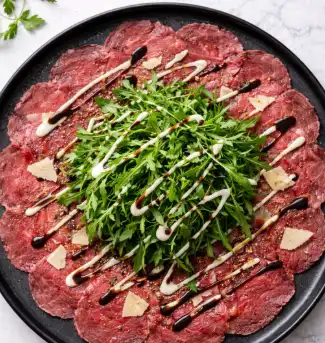
This is a picture drawn by ChatGPT.