
Eisenwald Beer and the Farewell Feast (On the House)
It felt strangely thick—nothing like any beer he had ever tasted before.
Karem, who was drinking beer for the first time in ten years counting his previous life, had that thought while gulping it down in big swallows.
Come to think of it, he seemed to recall hearing that old-fashioned beer had none of the familiar pure-white foam, and that rather than being crisp and refreshing it was denser and more viscous than even a stout.
Hadn’t the original ancestor of beer been something you drank through a straw, carefully avoiding the dregs that settled at the bottom?
Beer itself had originally been closer to a grain soup made from bread—more a meal substitute than a drink—though of course drinking enough of it still got you drunk.
Karem felt he finally understood why people of that era had used beer as a stand-in for food.
As the bottom of the mug began to show, a heavy fullness settled in his stomach, as if he had just eaten a dense loaf of bread, even though all he had done was drink beer.
A rich, nutty aroma rose up through his throat.
If he hadn’t felt the liquid sloshing around in his empty stomach after he had opened his throat and poured it straight down, he might have mistaken it for having just polished off a nutty loaf of bread.
When Karem clamped both hands around the oversized mug and tipped his whole head forward as if he meant to dive into it, Hammerson smiled with deep satisfaction.
“Ha. A man’s first beer is something you never forget.”
“A memory you simply can’t erase.”
“But Lady Catherine—ah.”
Karem caught a faint note of melancholy in her voice and realized she must have recalled something unpleasant.
Hammerson had been about to ask why she alone wasn’t drinking when everyone else was, then remembered her curse a beat too late and winced.
Right. I got completely distracted by the beer. Karem drained the last of his mug in one go and quickly snatched up the glass sitting in front of Catherine.
The moment the glass came close she gulped it down, emptied it in an instant, and the second Karem pulled it away she let out a long, deep sigh.
“Pahhhh—! Well, at least my throat’s wet. Let’s get something to eat.”
“The glasses are empty. Mister, three more over here!”
“Of course they’re empty!”
“Ah—before we order—well, he’s already gone.”
Hammerson left with the mugs, and while Gordon was still staring longingly at the bare table and smacking his lips, a beautiful elven waitress approached as if taking Hammerson’s place and set down bowls and plates of food from her tray.
We didn’t even order. How is food already coming out? At Karem’s reflexive question the elf answered in a bright, bell-like voice that somehow still managed to sound like a perfectly mechanical automated response.
“The drinks and the meal have already been settled by Master Hammerson.”
“So that means it’s free?”
“That stubborn old Hammerson showing consideration? This is new.”
“Lady Mage, just what kind of debt did you rack up with a dwarf who charges even the people who save his life that he’d give all this away for free?”
Gordon asked the person responsible for the free food in a half-accusing tone, looking thoroughly flustered.
Even though Karem had spent his life trapped in the tiny world of Moston Village, he knew perfectly well what dwarves were like as a race.
According to a thoroughly drunk priest, when money was involved dwarves never forgot even the tiniest debt no matter which country they were in, and they collected it regardless of the other party’s circumstances.
Other things the priest had said came back to him as well.
One city had underpaid for its walls by a mere ten shillings; the dwarves had held a grudge, sold the wall’s weak points to a rival city, and gotten their ten shillings back through war.
Everything else he had heard about dwarves had been in the same vein—urban legends that all boiled down to them swimming naked in lakes of coins.
While Karem was brushing those half-remembered priestly tales aside, the table became shrouded in steam rising from the dishes.
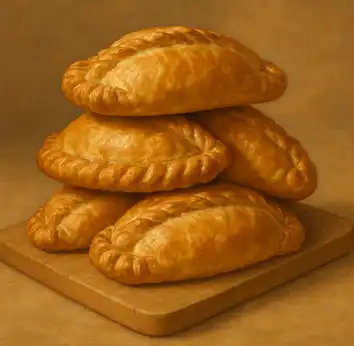
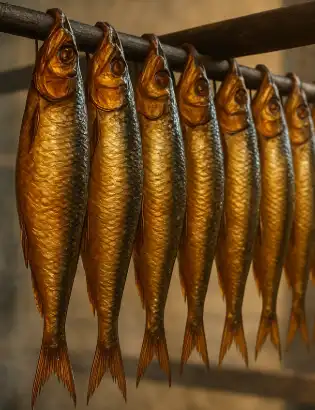
A pyramid of small hand-pies, smoked herring that had been boned and stuffed with onion and green onion, skewers of some unidentifiable meat, and a bowl of slightly pale rye bread that looked as if a little wheat flour had been mixed in all took their places in the center of the table.
“Uh, but there’s no dessert?”
“Dessert takes a little time, so please wait.”
“Ah, well, if that’s the case.”
After answering Gordon, the elven waitress finished setting out utensils and bowls of thick brown stew in front of the three of them.
A rich, heavy meat aroma. Karem had been a little worried his stomach was already full from the dense beer, but that worry proved meaningless.
His stomach rumbled loudly, demanding food, and without thinking he picked up the nearest pie.
“Huh. This is pretty hard.”
“Well, it’s a pie. Of course the crust is hard.”
“Ah, right.”
Before the modern pastry most people knew had been invented—before the age advanced enough that even commoners could eat butter with any frequency—pie crusts had been insanely hard things used as edible bowls.
The hardness that traveled up through his hand really did feel about as solid as ordinary stone.
Only a few months ago he would have torn into it somehow or other simply because there was nothing else, but now…
Karem adjusted his grip on the pie the way Gordon was doing, and Catherine scooted a little closer to him.
Having spent so much time feeding her, Karem understood at once.
He lifted Catherine’s spoon, scooped into the pie, and the rich umami that had been trapped inside by the crust rose with the steam and hit his nose.
The filling looked to be mostly onion, carrot, and beef cooked so soft its fibers were falling apart, all tossed in a dark brown sauce.
From the thick butter and meat aroma, Karem was certain it was gravy.
He brought the spoon to Catherine’s lips; she immediately closed her mouth around the steaming spoonful as if it weren’t hot at all.
“There’s no rush—let it cool a little first? You’ll burn the roof of your mouth.”
“Over something this mild? Besides, food tastes best when it’s piping hot.”
Catherine’s words weren’t merely correct; they applied to almost every dish worth eating, so Karem found he had no desire to argue.
Roasted meat developed a gamey smell once it cooled, and soup just turned salty and greasy. Most hot foods were like that, so he had no choice but to keep feeding her in silence.
On the road to Borderster, meal times had often brought him the chance to hear Catherine and Gordon heap abuse on Seophon Kingdom’s cuisine that bordered on urban legend.
Every single story had sounded like the usual stereotypes people used to mock British food, simply transplanted into the Middle Ages.
The poor supposedly caught the slimes that lived in the capital’s sewers, boiled them whole in water, and ate them once they set…
Well, Karem could understand that much. City poor weren’t much better off than serfs; of course they ate whatever they could find.
But boiling hunted meat without even draining the blood and then just sprinkling salt on it was a bit…
He had also heard that almost no Seophon noble failed to hire a foreign cook.
Karem was seriously starting to wonder whether the kingdom of his birth was just a fantasy version of medieval England with the name changed.
Yet the scene unfolding before his eyes right now was something else entirely.
“Ha. For something this small, the pie is packed with flavor.”
“You can feel it falling apart the moment your teeth touch it—must have been cooked a long time.”
“Let’s try the skewers next… mm, that smell. I can’t hold back.”
“This is… snowrunner.”
Thanks to Karem the two of them had been eating well outdoors, but civilized food eaten indoors was special in its own way.
Gordon and Catherine focused so intently on the meal that half the food on the table vanished before they came up for air.
Of course Karem was kept just as busy matching Catherine’s pace.
He stacked the empty, sauce-smeared pie shells to one side, cut the smoked herring into bite-sized pieces and fed them to her, pulled the meat of the creature Gordon had called a snowrunner off the skewer and sliced it, tore bread and fed her that as well.
While she was devouring everything, Catherine finally noticed that Karem himself hadn’t eaten a bite; she used Hammerson’s return with fresh beer as an excuse to pause for a moment.
Sensing the quiet consideration, Karem immediately picked up the pie in front of him. He really had been hungry.
“Wow. This is actually pretty good.”
He finished the first pie in no time and grabbed a second.
The thick gravy inside carried a deep sweetness that suggested a huge amount of onion had gone into it.
Meat cooked so long it fell apart, vegetables that crushed under the mere movement of the tongue.
And above all, the acidity that cut through gravy’s usual greasiness.
The herring stuffed with onion and green onion, which had looked like it would be overwhelmingly salty, instead released the savory depth of dried fish the more he chewed.
He still had no idea what a snowrunner was, but the meat was a little dry from lack of fat and yet completely free of any gamey smell—like slightly dry beef.
Overall, for the first time since reincarnating into this other world, Karem’s tongue was thoroughly satisfied with food someone else had cooked.
“The bread is… well, soft enough, but it’s just bread.”
“What did you expect from rye bread with a little wheat flour mixed in?”
“No, it’s just that the two of you badmouthed the food so much I had a prejudice. Everything I saw in the village was more of the same.”
“Badmouthed? Prejudice? Ah—you mean the whole ‘Seophon cooking is all terrible’ thing?”
Karem nodded at once, confirming Gordon’s guess.
“The pie, the smoked herring, the skewers and the stew… oh right, I forgot about the stew.”
He immediately dug into the stew in front of him. In their focus on the main dishes, all of them—including Karem—had forgotten it was there. Yet the stew was thick, full of ingredients, and rich with flavor.
“Everyone said Seophon Kingdom’s food is all bad, but even this stew that’s cooled a bit is delicious.”
“Well, of course it is.”
“Of course?”
“Because the cook isn’t from Seophon.”
Catherine nodded as if stating the most obvious fact in the world.
“No matter how terrible Seophon food is supposed to be, if the cook isn’t from Seophon it turns into normal cooking. And if my memory hasn’t failed me, the cook is Hammerson’s wife.”
“His wife? Ah—the one he said he wanted to introduce to Lady Atanitas?”
“That’s right. Hammerson’s wife, Veronica.”
“She’s from another country, then?”
Karem asked while cutting away a charred fin from the smoked herring.
“Both Hammerson and Veronica are from elsewhere. And Veronica is from Berseingeto, a place famous for staking its life on food.”
“Whoa, Berseingeto?”
Gordon’s eyes went wide with admiration.
“Is that even possible—no, wait. Now I’m looking forward to this.”
“Yes. The custard pie I had back then was the best of my entire life.”
When someone who had lived for centuries said something like that, even Karem felt anticipation begin to bloom.
I have no idea where this Ber-whatever is, but if someone who’s lived that long calls it the best of her life, just how good can it be?
But as someone once said: it’s precisely because you expect that you get betrayed.
“Aaaaaaaaaaah!!!”
“Veronica!”
“Don’t panic! Go get the midwife right—”
Just as their expectations were swelling, a scream that clashed violently with the lively atmosphere rang through the tavern.
Attached Materials
— Small Pie (Pasty) —
— Smoked Herring —
These are pictures drawn by ChatGPT.