
Christmas (1): The Holy Grail of Molecular Biology
Kary Mullis tossed the stack of papers he’d brought back from the conference onto his desk. The directors at Cetus looked at him with puzzled expressions.
“I found it!”
The Holy Grail of molecular biology.
This was the Stanford University library.
The case report on Legionella had successfully made it into The Lancet in the meantime.
That was incredibly fast. Still, when a new bacterium and disease are discovered, delaying publication could cost lives. That simply wasn’t acceptable.
Since starting medical school, this was my ninth paper accepted by either Nature or The Lancet. I was already working on another.
I was drafting a paper that proposed the basic principles and potential of the PCR machine.
A short letter would probably suffice, right?
First, I needed to track down the existing literature.
There had to be a paper on the DNA polymerase from thermophilic archaea that could withstand high temperatures. I rummaged through the stacks at Stanford.
The paper Mullis had been looking for…
Ah, here it is.
DNA Polymerase Isolated from an Extremely Thermophilic Bacterium. 1976. Alice Chen et al.
I scratched my head. The enzyme Mullis had been searching for. It was a paper published just last year.
The silver bullet the researchers at Cetus had been hunting for had already been successfully isolated.
Mullis was going to love this.
It was a little ironic.
Dr. Chen probably had no idea this research would change the history of molecular biology. She must have simply thought she was studying an unusual bacterium.
I picked up my pen.
Specific Amplification of Genes In Vitro Using Archaeal Enzymes: A Reductionist Approach
This was the paper I had agreed to co-author with Dr. Mullis. It only had a few paragraphs so far. I wondered what I should write to make people say it was brilliantly done.
As I was racking my brain over it, a cup of coffee appeared beside me. I looked up. Alice was watching me, holding her own cup.
“Long time no see?”
“Hey.”
Alice set her book down and plopped into the seat next to me with a rustle. It was a thick internal medicine textbook.
She slid the coffee toward me.
“Coffee for you.”
“Ah, thanks.”
She was still wearing her white coat from the hospital, a light blue blouse, and khaki pants. Her green eyes looked slightly sleepy, as if she were tired.
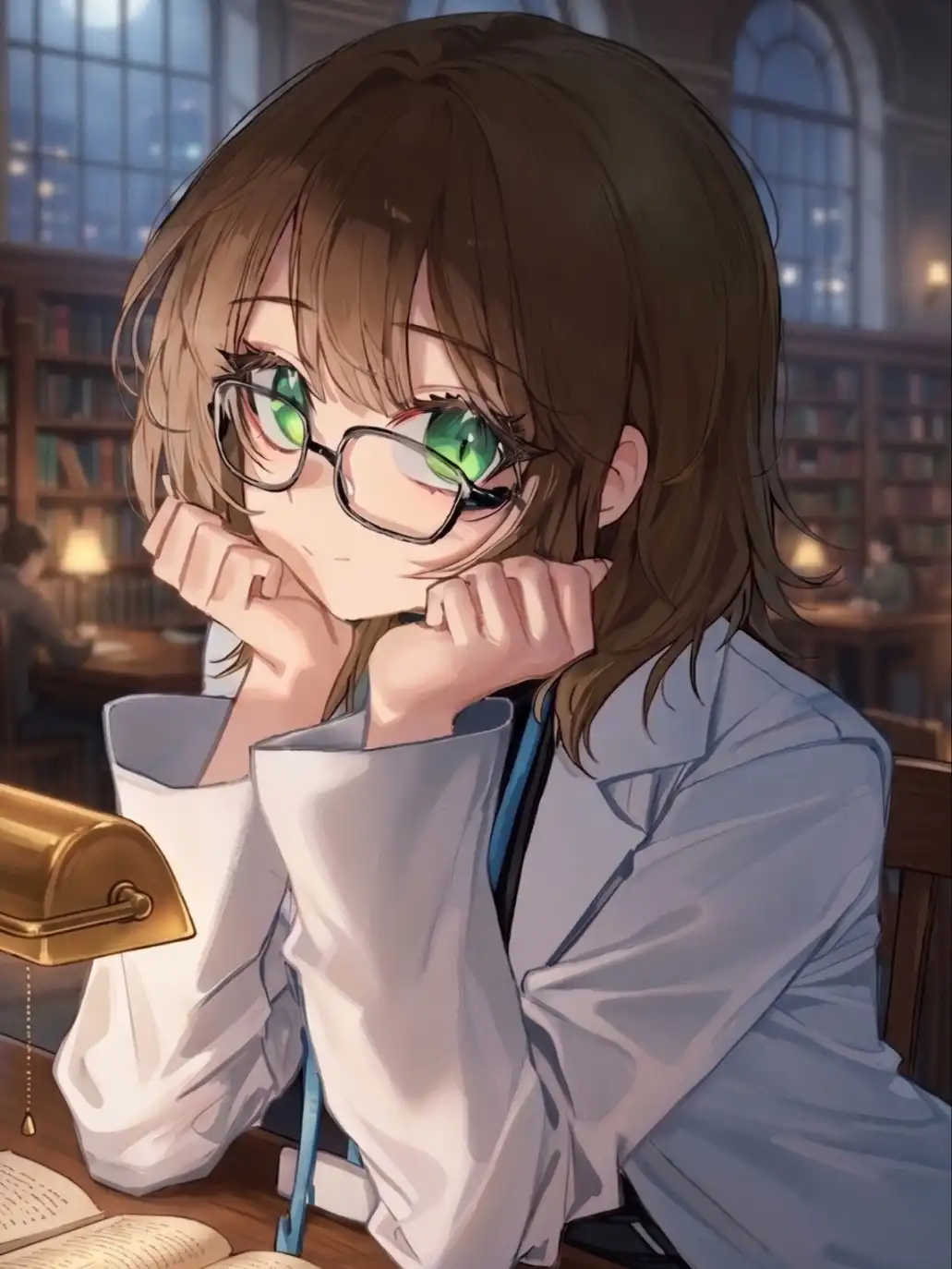
“I heard you went to a conference this time?”
I nodded.
“I attended a session on gene synthesis methods. They presented a newly discovered technique.”
I showed Alice the title of the paper I’d been reading. Coincidentally, one of the authors shared her first name.
Alice tilted her head.
“Hmm.”
She seemed to be wondering what rare bacteria living in hot springs had to do with medicine.
“I’m preparing for my next paper presentation.”
Alice took a sip of her coffee.
She must have left the hospital early today. Or maybe they’d given her a short break to study.
“What’s the paper about?”
“New infection control guidelines came out. It’s nothing groundbreaking. I just want to get it organized quickly…”
Alice sat there, fiddling with her pen.
“I want to finish fast so we can go have some fun.”
The Stanford library was noisy. There were plenty of people debating or students who had simply come to chat. I flipped through a few more papers.
There were three denaturation steps.
Alice glanced at the paper I was reading and tilted her head again. As if to ask, What is this?
“Wait, are you writing another paper already?”
I nodded, and Alice stuck her tongue out in disbelief.
“Yeah.”
“Wow. How on earth do you… How often do you even write these? Not many people read that much, let alone write.”
That was true.
“I deliberately only pick topics I can write and submit as quickly as possible. Things like hypotheses about the mechanisms of specific diseases or case reports.”
I avoided complicated statistical studies that required long-term observation or research papers that involved time-consuming experiments.
Case reports could be written based on actual treatments I’d performed, and hypotheses about mechanisms could just be written out based on what I already knew.
“I guess that makes sense.”
Alice scratched her head.
“Ugh, I wish we could finish presenting soon and go out. Do you have any plans for the end of the year?”
“Not really.”
“You’re just going to hole up in your room writing papers again, aren’t you? At least take a break over the holidays.”
I turned to look at her.
“How did you know?”
“It’s obvious. You always do that. Let’s go out for the holidays anyway. Once we wrap up the year-end presentations and everything.”
Alice smiled faintly.
She was right. The end of the year was already right around the corner.
Christmas, the most important holiday in America, was approaching along with it.
It was the season when calls from home came frequently. The season when my family kept pressing me about Christmas and year-end plans.
This year was no exception. I answered a call from home.
It was predictable. When are you coming home for Christmas?
We’ve prepared food, and a ton of family and friends are coming. That kind of conversation. My mother’s voice came through the receiver.
“Yes. I’m on duty on Christmas Day.”
“Then when are you coming home?”
“I’ll come the next day. That’s how my schedule worked out.”
My mother muttered something. Even if it was hospital work, didn’t I need holidays too? Didn’t doctors have human rights?
Well.
What can you do when people get sick on the days everyone else is resting? I let out a sigh.
On American Independence Day, when people set off a lot of fireworks, dozens of patients whose fingers had been blown off by fireworks flood into the hospital.
I’d seen it multiple times.
No matter how many times the news warned people to be careful with fireworks, not to use strange ones, not to use big ones, it was always the same.
Christmas was similar.
Around Christmas, people who collapsed from drinking too much or from allergic reactions to new foods poured into the emergency room…
It was actually busier than usual.
“Seriously. Is someone going to die if you don’t show up for work?”
Yes. They might. It was an obvious fact, but I didn’t say it out loud.
“I’ll come as soon as I can.”
“Then you won’t make it to the family gathering.”
“I can’t come on the actual day.”
A sigh came from the other end of the line.
Our dog must have been sitting next to the phone, because after my mother spoke, I heard barking. It seemed to have been listening to my voice.
“Oh, right. Let me put the dog on.”
“Huh?”
There was a brief rustling sound. Then came loud barking through the receiver.
Our dog barked into the phone as if it had something to say. Probably telling me to come home soon. That was about all a dog could say.
“Ah… Are you doing okay? I’ll be there soon.”
Woof woof. The call ended like that.
I really did need to go home.
I let out a small sigh. Either way, I had to be at the hospital on Christmas Day. I wanted to get back home quickly.
Time passed like that.
Christmas Day.
As expected, the hospital was extremely chaotic.
Outside, the city was in full festive spirit. Inside Stanford University Hospital there was some Christmas atmosphere too, but a hospital was still a hospital.
Regardless of the season, sick people always came to the hospital, and people were always dying.
The clock spun quickly.
This is going to be incredibly busy.
I sighed inwardly as I opened the door to the emergency room. That aside, what kind of person would come to the ER on a day like this?
They must be feeling pretty miserable.
Patients were already flooding in.
“Doctor! Code Blue!”
It meant there was a patient in cardiac arrest. Naturally, many medical staff had taken vacation for Christmas, and on a day like today, there was a shortage of doctors.
I ran to the emergency room. Several nurses were performing CPR on the patient.
I wasn’t too late, was I?
At least CPR had already started. That was a relief. I turned my head toward the ER station.
“Epinephrine. Defibrillator. Oxygen tank.”
The nurses scattered to gather the items as soon as they heard me. Supplies were being prepared.
I immediately ran to the patient lying on the bed. The moment I saw the patient’s face, a shock like being hit in the head with a hammer washed over me for a moment.
Ah…
There were types of patients you never got used to.
People die someday.
It was an unchanging fact. Doctors who frequently saw serious illnesses inevitably became somewhat desensitized, but no matter how many times I saw patients younger than me, I could never get used to it.
They were probably a college student from a nearby school, or maybe they had collapsed during a Christmas gathering.
My stomach churned. I tried not to imagine what this person had been doing before being brought in, or who their guardian might be.
Anyway.
Stay calm.
Fortunately, we hadn’t missed the window for resuscitation. It seemed the cardiac arrest had occurred after arrival at the ER.
The epinephrine syringe was ready, and the oxygen mask was in place. Oxygen saturation was at 80%, and the patient was still in a resuscitable state.
The ECG showed…
A classic myocardial infarction pattern.
It was questionable why someone this young would have a classic myocardial infarction, but that was something to worry about after we brought them back.
Epinephrine had been administered.
I stood in front of the patient holding the defibrillator.
CPR was still ongoing.
“ECG… showing pulseless ventricular tachycardia. I’ll defibrillate at 200 joules.”
Beep—
The sound of the defibrillator charging. I placed the paddles on the patient’s chest.
“Clear!”
Boom!
If only the heart would start beating again. Then I could save this person.