The Duke of Yan (4)
By using what could only be described as his personal “stamp-it-for-me” machine, Dong Zhuo had appointed Gongsun Zan as Duke of Yan. As word of this spread far and wide, the anti-Dong Zhuo coalition that had pushed all the way to Hulao Pass, right on Luoyang’s doorstep, suddenly found itself in a decidedly awkward position.
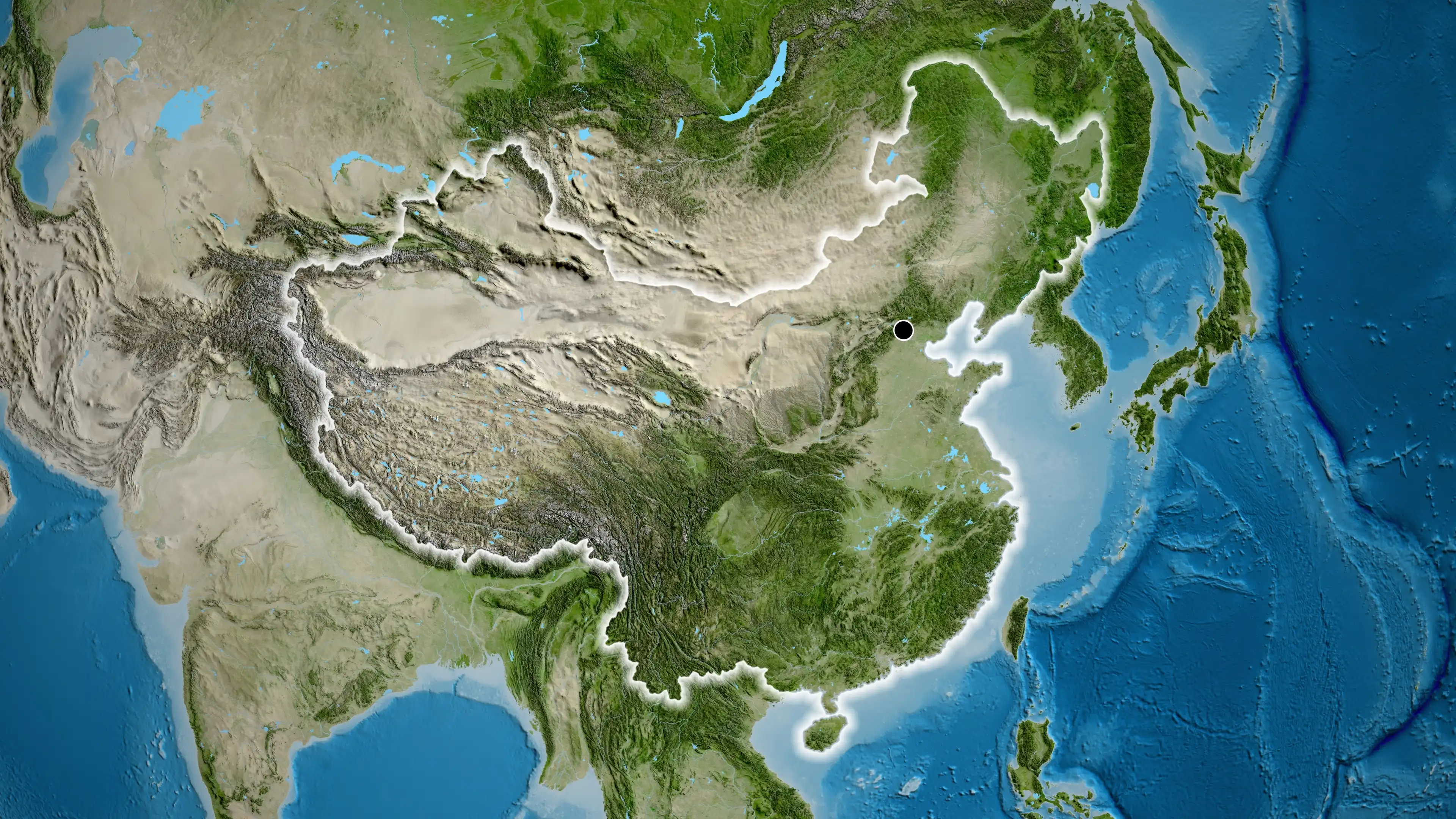
No matter how vast the land of China might be, the transportation of this era had clear limits. The country was surprisingly mountainous, and everything south of the Yangtze River remained undeveloped swampland. The amount of soil that could actually be farmed and expected to yield a harvest was far smaller than most people imagined.
Of course, “far smaller” was measured against the yardstick of the Han Dynasty at the height of its Pax Sinica, but the statement was not entirely wrong.
At any rate, Ji Province was one of the few great plains that received the Yellow River’s bounty directly. It was essentially the empire’s granary. Even the pseudo-cult leader Zhang Jue had begun his rebellion by stirring up the farmers there. The strategic importance of Ji Province could safely be ranked right after the capital province itself.
Most of the eighteen warlords were quietly competing for the soon-to-be-vacant post of Governor of Ji Province. The strongest candidate was, naturally, Yuan Shao, Colonel of the Western Garden.
In the original timeline, Yuan Shao had successfully seized Ji Province. He then engaged in a brutal, soul-crushing rivalry with Gongsun Zan, who held the Liaodong plains, and thereby claimed the initiative in the early years of the chaos.
But history was a patient forever suffering from the chronic illness known as “modern-person intervention.” Because of that intervention, the board had been completely upended. The State of Yan that Gongsun Zan had swallowed in a single gulp—both You Province and Ji Province—had become the largest and most populous territory among the twelve provinces of the late Han, with the greatest capacity to sustain people.
Whether a domain larger than twenty-first-century Germany or Poland could truly be called a mere “fief” was debatable, yet if the Emperor declared it so, that became the “common sense” of the age.
The common people, under the spell of the Emperor’s hypnosis app, welcomed their new Governor and Duke of Yan, Gongsun Zan. The Clean Stream faction—or rather, the local magnates who possessed the mental fortitude to resist the hypnosis—used the convenient excuse that they “could not agree with Dong Zhuo’s conspiracy.” Behind closed doors they waited with bated breath for the Übermensch who would supposedly emerge from their own ranks.
The fact that they were pining for a superhuman eventually reached the ears of the anti-Dong Zhuo coalition. The allied army, now drooling at the sight of Yan Province—an obvious heavenly paradise—decided they would rather look for an easier path than continue bashing their heads against Hulao Pass. Aside from the handful of fanatics whose only thought from the beginning had been to kill Dong Zhuo, the rest chose to return home and bide their time.
At least for now, Dong Zhuo, who held the military power of Xiliang, Bingzhou, and Luoyang firmly in his grasp, could not use the hypnosis app on the Emperor as he had in the original history. The spare parts of that seal-stamping machine were in Gongsun Zan’s hands. So he was behaving like a fairly standard warlord by the standards of the time.
Surprisingly, his support among the common people was not all that low. Even more surprising, the aid the anti-Dong Zhuo coalition received was far less than what they had enjoyed in the original timeline.
The massive shipments of military grain that should have come from Ji Province had simply vanished. The grain from the fertile Ba-Shu plains of Yizhou “evaporated” while crossing the rugged mountain ranges. The supplies coming up from the jungles of Jiangnan sank to the bottom of the river.
Of course, courier services in this era had no tracking system like modern deliveries, so no one could be certain what had truly happened. In any case, the coalition soldiers were left to starve at Hulao Pass, missing the harvest season in their home villages.
Local warlords with progressive commanders watched enviously as others marched home. Their own troops grumbled: Why isn’t our commander returning to his fief? Is he staring at that damned Hulao Pass because he has a mistress hidden in Luoyang? All sorts of rumors flew. Yet every era had its achievement hunters burning with desire to claim the “Dong Zhuo World First Kill” trophy, and every era had its possibility seekers who would shove their heads into any gap they saw, even without a clear path to victory.
“Graaaah! I’ll kill you all!”
It was around that time that Lu Bu, having had every last metal fragment pulled from his face and recovered from his wounds, reappeared on the battlefield.
The trauma to his face must have been severe. He now wore his helmet and face guard without fail. Since his beloved Red Hare could no longer run properly, he rode a horse that was essentially its offspring. Still, Lu Bu was Lu Bu.
The pain of his injuries had not fully subsided, so his martial prowess had dropped considerably. After the violent shaking of his inner ear at Hulao Pass, his hands trembled so badly he could no longer draw a bow. Nevertheless, Lu Bu was still Lu Bu.
The locust of Hulao Pass. The terror of the rebels. The guardian deity of Bingzhou. The greatest thinker of the second century, who preached the Three Fathers Principle instead of the Three People’s Principle. An extreme pragmatist who would stab even his own father in the back if necessary.
That same solemn, tragic Lu Bu.
The remnants of the anti-Dong Zhuo coalition who had lingered at Hulao Pass hoping to scavenge even the breadcrumbs were torn apart by the wounded locust and forcibly driven back to their own territories. The new rising stars of the Clean Stream faction who had fled earlier promptly stole their homes. The displaced lords could only spit in frustration, “I really hate sharp-eyed brats like you.” But history never remembered the defeated.
When a great war draws to a close, the season for rearranging the board always arrives. It was a pattern repeated dozens, even hundreds of times throughout history.
I left the defensive line in my master’s hands and returned to Liaodong together with His Highness the King of Bohai.
Thanks to the newly introduced threshing machines, the harvest in Liaodong was completed several times faster than in previous years. In the remaining time, everyone focused on extracting a little salt from the salt fields for personal use or on making and storing tofu.
Rice, if stored properly, would keep for years. Tofu, once thoroughly dried, could last for months. It was the perfect season to stock the granaries while waiting for winter.
Households that had harvested more than their families needed sold me their surplus produce in exchange for salt. That surplus was then ferried across the river to the people of Ji Province.
With my appointment as Duke of Yan, the King of Bohai’s household had been merged into the Liaodong domain. As a duke of the Han, I now bore the duty of acting as His Highness’s guardian.
I was not sure whether that had been the original arrangement, but my master said it painted a good picture, and I felt far more at ease keeping the boy in the safety of Liaodong rather than leaving him in the dangerous lands of Ji Province.
The staff at the Yan Research Institute had organized the crop reports in my preferred style—the same document format used by the South Korean military in the twenty-first century. They had also included their own ideas on how to generate even more surplus.
Since I knew next to nothing about farming, I decided to test a few new methods on my own fields next year. I also ordered an experiment to see whether rubber could be extracted from the sap of the dandelions we had planted in spring.
“As you instructed, we dried the sap until soft precipitates formed. We then mixed in soybean oil to reduce the viscosity and tested it on carriage wheels. The wheels are certainly lighter and more useful… but after subtracting the labor costs of collecting the dandelion sap, the numbers do not look promising.”
“I see… Hmm. Still, keep the dandelion fields exactly as they are. Continue researching ways to extract larger quantities of this rubber—this white precipitate—in higher quality. It doesn’t matter if we see no profit for several years. Experiment with different additives, observe what happens, and record everything. It will prove useful later.”
It had worked.
Natural latex had been produced.
The quality was nothing to boast about, but the important thing was the proof that the techniques once used by our Soviet friends could be replicated in this era.
Even if we had rubber right now, there was little practical use for it. At best we might attach crude tires to carriage wheels. The material was nowhere near good enough for shoes; a few days of wear would surely leave it full of holes.
Unless an age arrived in which gunpowder technology spread widely and cannons could be manufactured, rubber would simply remain one more lost technology common to this period.
“How much did you manage to extract?”
“Yes. A considerable amount was lost during trial and error, but we still obtained roughly fifty geun—about thirteen kilograms.”
“That can’t be helped. And what of the hot air balloon and the parachute?”
“Ah, Researcher Wenhe took personal charge of those. Hey! Mr. Wenhe! Come show His Grace the Duke at once!”
“Ah, yes! Yes!”
Jia Xu came running.
“Don’t run! You’ll get hurt!”
“Ah, yes!”
Running inside the research institute was strictly forbidden.
There were blacksmiths everywhere, heavy lumps of metal, bookshelves, and experimental materials. One wrong fall and these precious brains could easily die screaming.
…Though I supposed the man who sent those same researchers up into the sky on hot air balloons of unproven safety might be the craziest one here. Still, the researchers themselves had volunteered, claiming they wanted to fly instead of wasting soldiers. If I had refused, their motivation would have crashed to the ground. We tied safety ropes to the ground anyway, and since this was an era without proper observation instruments, the only way to learn anything was for the researchers to experience it themselves. So I had reluctantly given permission.
“We have successfully raised it to approximately one li—roughly two hundred to two hundred fifty meters. Once launched, it remains aloft for about half a shichen until the fuel in the brazier is consumed. After the fuel burns out, the air inside cools gradually and it descends over another half shichen. We have confirmed it can easily support up to seven hundred geun—approximately one hundred sixty-three kilograms.”
“Not bad. And the parachute?”
“Yes. It is safe enough that some of the researchers have taken up jumping as a hobby.”
“Has anyone been injured?”
“Not yet… Ah, Researcher Jeong Gang-seong broke his leg while insisting on conducting an experiment.”
Skydiving in this era was not actually that dangerous a sport.
One might call that nonsense, but it was a cliff that the local beach children frequently jumped from for fun every summer.
Of course, the training ground used by soldiers for high-altitude drops would turn a man into a flattened rice cake if he jumped without equipment. The space permitted to the scholar-researchers, however, was low enough that even a bare-body jump carried no great risk.
“Broke his leg during a parachute test… Did he sever the lines in mid-air?”
“H-how did you know?”
“…It really happened?”
“Yes. The experiment was meant to test how long a parachute could remain functional. The stitched sections tore apart in the air and he fell into the sea. Fortunately the torn parachute still provided some effect; only his leg was broken.”
“That’s a relief. Still, nothing is more precious than a human life. From now on, make certain you pay attention to the safety of all the researchers as well.”
“Yes!”
…Their eyes were burning with unsettling enthusiasm.
There was something. Definitely something.
The gazes of every person in the research institute were far from obedient.
I would need to send someone to investigate, but the short autumn day had already settled behind the western mountains.
In an era when the only artificial light came from torches, my official duties were finished for the day.
“Winter is going to become rather busy. Steel yourselves.”
“Understood, Your Majes—Your Grace!”