
300. An Irresistible Force (2).
When I just watched them, I couldn't help but feel that the Romans were truly masters of feng shui.
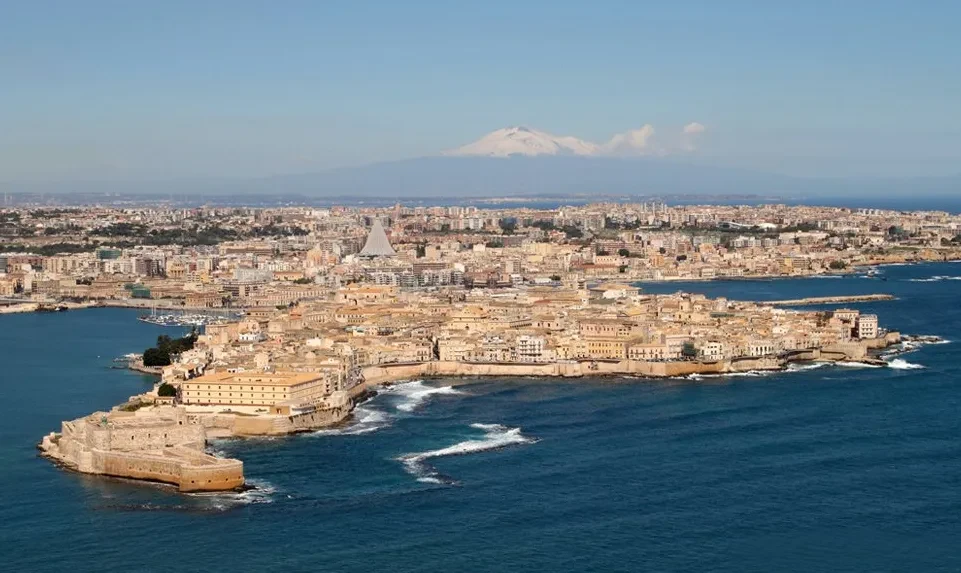
Combining the word Rome with feng shui gave off a hybrid cultural feel of East meeting West, but this was the impression that came to mind when I first saw Syracuse.
First, this city had an unbelievably good location.
"That is our loyal city of Eastern Rome, Syracuse—the front line of Sicily and southern Italy. Fylkir."
Since the battle of Crete, I had felt that the gaze toward me had changed a little, not only from the warriors under my command but also from my Roman comrades who had fought back-to-back with me. Even the stern and dignified old admiral of the empire, Niketas Ooryphas, was clearly restraining himself a great deal in my presence.
Well, he had seen a man flying around and making things explode right before his eyes. It was the unavoidable karma of my own doing, but it left a slightly bitter taste. Was this loneliness? Xiang Yu! Richard! Cheok Jun-gyeong! O sword masters of history! Did you too feel this loneliness?
"When the rebel Basil, whom you felled, Fylkir, was still alive, this city's strategos was once caught sending a letter that sympathized with him. Later, he stated that he had done it to draw our empire's support in the face of the Muslims' increasingly fierce attacks. Naturally, that lord was removed from office and his property confiscated, but from that moment, the emperor began to turn more attention toward the west of the empire."
Now Niketas quite unhesitatingly laid out the empire's secrets one by one before me. In my opinion, on top of that, Michael must have also grown certain that the Black Sea region had truly stabilized.
First, he had Petronas, who was thoroughly versed in the political dynamics around the Black Sea, at his side, and the Khazar Khaganate and the North Sea were the Eastern Roman Empire's two inseparable friends.
Of course, the Khazar Khaganate of Sagarya Khagan, who did not choose coexistence with me, was now gone—but its spirit would live on as one within the heart of our North Sea.
Anyway, a Roman general, then as now, could never be divorced from politics, yet Niketas Ooryphas was, unusually, a type of general more faithful to the empire than to his own ambition.
Was that why? After the battle of Crete, Niketas kept hovering around me, spinning some good word for the empire, some piece of imperial information, some imperial secret—whatever he could manage. Thanks to that, I could easily obtain information about the importance of this island of Sicily, the history, defense, and surrounding environment of Syracuse.
To begin with, the walls set upon land that jutted out toward the sea were high, and the defenses of the walls, refined over long centuries in every possible way, clearly demonstrated just how impregnable a city sealed on three sides by the sea could be.
'Mortal, you dare attack me? Go ahead, try it.'
The walls seemed to speak like that, but ultimately even they were made and maintained by men, so their weakness was clear: if you sealed off the sea and blocked the only wall open to the land, Syracuse would surrender. At most a year, maybe two if it held out well.
No matter how high the walls and how merciless the terrain to an attacker, the city did not boast the overwhelming size of Constantinople, and the number of people crowded inside looked to be fairly large.
[Waaaaah!]
[Basileus (Roman Emperor)! Fylkir! Rome and the North Sea forever!]
[Lord! Christ! Bless these warriors!]
To greet our fleet as it slowly approached the soft earth of Sicily, the people of Syracuse had tidily emptied a grand-scale harbor, and my ears were nearly deafened by the cheers of the soldiers in Eastern Roman colors and the people beyond them.
How many mouths could be fed in such a sealed state? I understood why Michael took an interest in this city and island. This land definitely had potential, and if Eastern Rome could securely hold the island of Sicily, southern Italy right next to it would also firmly coalesce under the empire's influence.
"Fylkir! Lord Fylkir!"
"Brothers! Over here! Here!"
"Aoooooh~"
I was wearing a satisfied expression together with Niketas and gazing at the approaching city and its people when, from somewhere, a familiar speech and a beastly howl caught my ear.
When I turned my eyes toward the source of the sound, sure enough, warriors of the North Sea wearing the standard equipment of the North Sea army had gathered in one place and were yelling until their throats burst.
"Wraaaaah~! Lord Fylkir! Gate Destroyer! Ship Destroyer! Human Destroyer! World Destroyer! Death Destroyer!"
The amusing thing was that around the North Sea warriors who were shouting, not a single person from Syracuse stood nearby. Even I wouldn't want to go near a group like that. Every one of them was huge in height and build, yet their behavior was unmistakably that of barbarian warriors.
At the head of the North Sea warriors, who looked as if they might grab someone and beat them to a pulp at any moment, stood a welcome face: Oleg.
North Sea's Jarl, who called me the destroyer of all things and waved a sword with a faint green glow this way and that above his head.
What the hell was 'Death Destroyer'? Just what did they think I was?
Thinking I'd better shut Oleg's mouth quickly, I raised my hand and waved it grandly, and right after, Syracuse exploded in response and sent up even more fervent cheers.
[Hiiyaaaah~!]
[Helgi Heracles! Helgi Heracles!]
Probably the people of Syracuse, who had been able to make out my appearance more clearly, were going wild because my build was so much broader and larger than they had vaguely imagined.
Riding that wave, the warriors of the fleet that followed behind the longship Niketas and I were riding shouted my name as well, and Niketas, quietly watching the scene, spoke to me in a low voice.
"If I gave in to my heart, I would also shout out the name of Fylkir with all my might. Helgi Heracles Ragnarsson!"
"Please, don't."
Niketas burst into laughter at my reply, then, with his face flush red, called over his excellent adjutant—who was doing his best to rein in his emotions—and ordered him to prepare to enter the harbor. Right afterward, the sound of horns and brass instruments rang out all at once, but the voices of the people calling my name like a chant showed no sign of dying down.
*****
What was this feeling? First, the joy that filled my chest likely came from the belief that this bloody war could now truly be ended.
And beside it lurked fear, resentment, regret—such messy things mingled together, forming an emotion that could not easily be named. It was as if a single dark, swirling great ball, a round sphere, had filled Edmund's chest completely.
"Fylkir! Fylkir Helgi~!"
"Helgi Heracles~!"
Did these people really know how fearsome the existence was whose name they were shouting themselves hoarse over? Even if the Muslim warriors they had faced so far were never inferior to Edmund's own Anglian warriors—tempered in countless battles—or to the North Sea warriors or the Roman soldiers, did the people of Syracuse know that those foes were not as terrifying as the single figure of Fylkir Helgi Ragnarsson?
Edmund, unfortunately, knew that fact all too well.
"Aoooooh~!"
"Destroyer of Yggdrasil! Destroyer of gods! Nature's Destroyer who slew even the sky beyond land and sea!!"
Jarl Oleg and the North Sea warriors shouting like madmen up ahead were exactly the fearsome warriors he had always known, and when they joined battle, they were like pursuit hounds who used every possible method to shake the enemy and gnaw at them tenaciously.
As opponents, they were endlessly terrifying, but when you fought shoulder to shoulder with them, there were no warriors as reassuring as these.
They liked drinking, ate a lot, chased women, and spent an absurd amount of time combing their hair, but after spending time alongside them, he had found them unexpectedly full of laughter, fond of singing, and given to strange dances. People who seemed to enjoy things with indifference yet subtly cared about the eyes around them.
The only difference was the gods they believed in; they were not really so different from us—but when these people met that ruler called Helgi Ragnarsson, they transformed into warriors more fearsome still.
Edmund still could not forget the fighting power of the Northmen that Konungr Helgi Ragnarsson had led. The strength of the Northmen, who had rather pushed back the combined army of himself—once the Cyning of East Anglia—and Mercia's Cyning Burgred. The strength of Helgi Ragnarsson.
Perhaps that was why he felt, alongside joy, such messy emotions as fear, resentment, regret, longing, and remorse.
Edmund was now no longer an Italian comes (lesser lord) but had become an Eastern Roman strategos (governor), yet his heart still remembered East Anglia.
[Swaaash~ crash! Swaaash~]
The ships of the North Sea and Eastern Rome, slowly approaching along the surging waves. Even to Edmund—who could now say that he had left the small frontier kingdom of East Anglia and taken in the wide world to some degree—the sight was imposing and majestic.
Should one call it a sight as if a messenger of God, an angel of God, were appearing from that distant sea?
Edmund, who had ridiculously lost all faith in such fairy-tale beings the moment his own kingdom fell, found that as he now gazed upon that gigantic being descending from that great ship, all the tales of all kinds of fairies he had heard in his childhood came back to life in a corner of his mind.
'Helgi Ragnarsson.'
Just as Jarl Oleg had shouted, that demigod was indeed the destroyer of all things in the world, and at the same time its savior.
Was the man who had destroyed East Anglia now saving an Eastern Roman strategos from a city in southern Italy, Reggio?
Feeling the irony, the paradox named life with his entire body, Edmund moved his limbs that had stiffened as if turned to stone, and walked toward the man who had calmed the fervor of Syracuse simply by setting foot on land.
The local governor of Syracuse, bowing and trembling, or the envy-filled eyes of the Roman commander Nikephoros could no longer enter Edmund's world of awareness.
His steps, which had felt as heavy as if he had loaded a hundred aurochs onto his head, slowly regained stability. The closer he drew, the more his pounding heart and leaping emotions gradually subsided.
The realistic hardships he had passed through, the bitter sense of defeat that had gnawed at his heart, the despair. In the end, those frustrations had instead tempered a man named Edmund into strength.
Like a brilliantly shining golden helm, Edmund's radiant heart took in and melted down all the old grudges, the resentment toward himself, the resentment toward God—all of those feelings.
And so, at last, Edmund could stand with dignity before Helgi Ragnarsson.
"Fylkir of the North Sea, Helgi Ragnarsson. Edmund, strategos of Reggio, offers his greetings."
It was good to meet you like this again. My destroyer.
Before those green eyes that shook a man, he could not bring the rest of the words to his lips.
No matter how firm his heart was, Edmund was still human, so his trembling body could not be hidden.
The demigod of the North Sea, who had looked down at Edmund for a moment, finally put on a smile.
"Strategos Edmund of Reggio. Fylkir of the North Sea, Helgi Ragnarsson, offers his greetings."
Edmund grasped the Örn arm that Helgi Ragnarsson extended toward him.
Now that he had clasped it, he knew for certain. The last lingering attachments and resentments completely vanished. Touching this arm that was like a tree root, he could faintly feel the enormous power pulsing roughly within.
Edmund's body no longer trembled, and he was able to bring a smile to his face.
"Syracuse, Reggio, all the Catholic brothers of southern Italy, and the Romans welcome the Fylkir. And I am no different. Helgi Heracles."
"You are a truly strong person, Edmund. Let us defeat those turbaned ones together."
Helgi Ragnarsson looked at Edmund's shining heart and admired him, and the Anglian and Saxon warriors under Edmund, who had been watching with bated breath, finally shook off the dregs of their emotions.
☆☆☆☆☆Reference☆☆☆☆☆
cc-by-2.0, Attribution, via Wikimedia Commons
The location of Syracuse.
Bavarian State Library, Public domain, via Wikimedia Commons
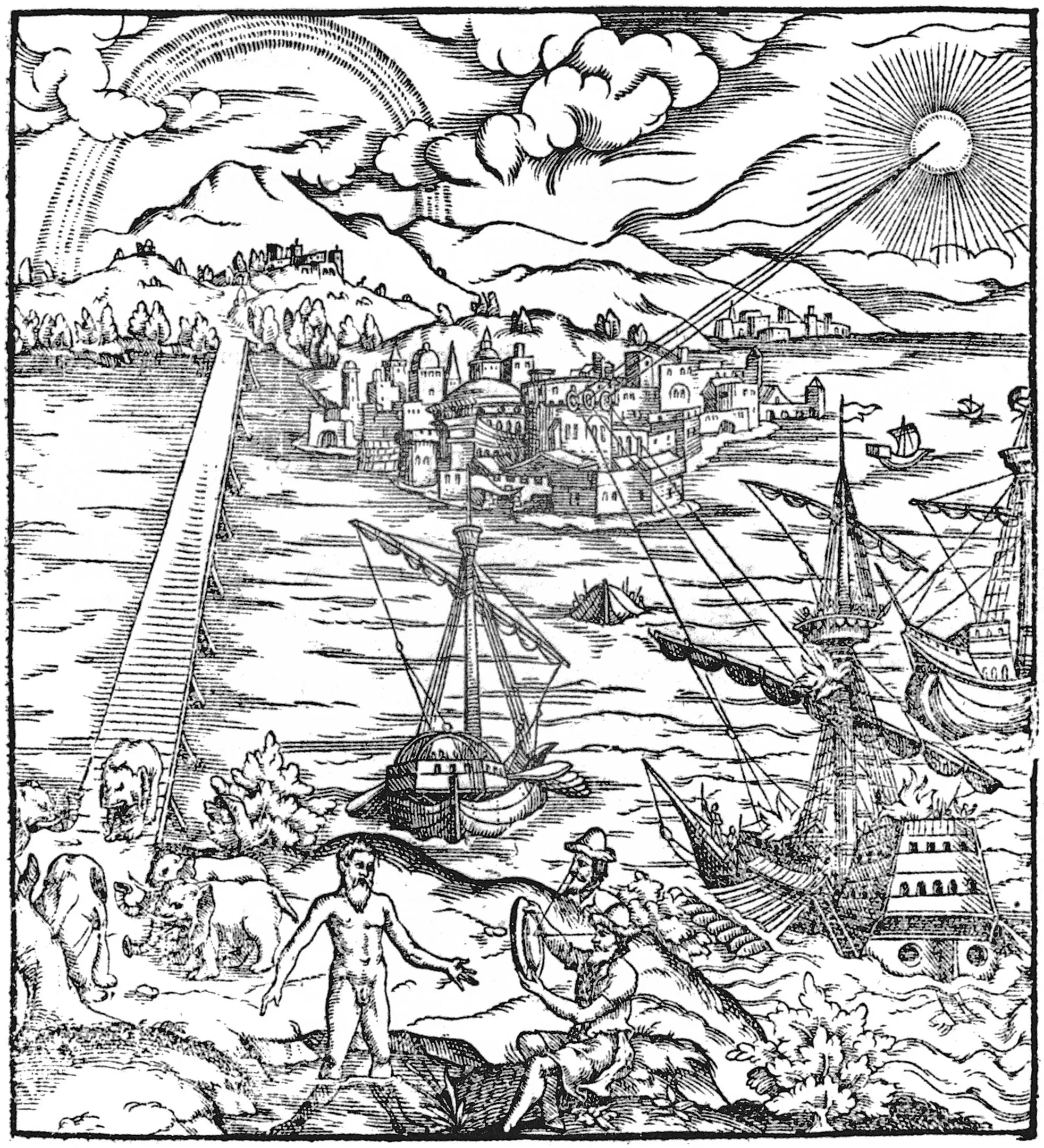
Rome's siege of Syracuse in the 2nd century BC.
Syracuse is the English pronunciation and Siracusa is the Italian pronunciation...!
It was a natural harbor and also the city of the widely known Archimedes!!! Archimedes was famous for building various defensive weapons against Rome, the thug that dominated Italy and its surroundings at the time!!!!