
283. The Distant Eyes of the Grassland.
"Welcome! Great men of the distant sea. I am Itaz, Khan of the Alan people!"
"It is an honor to meet you, Khan. I am Dir, Jarl of the North Sea. Khan Itaz."
Through the tearful efforts of the Jewish merchant Manasseh, who worked diligently interpreting and translating between them, men of two worlds—different in appearance, way of life, stature, and even manner of fighting—took each other's measure.
The Khan of the Alan people, who had clearly dressed for the occasion of meeting a Jarl of the North Sea Empire (whom they understood as something akin to a chieftain) whose great fame had spread even to this distant steppe, wore all manner of splendid fur adornments, feathers, golden necklaces, and rings. He was a man of advanced years, his long beard and hair both dyed pure white, yet the way he sat upon his white horse with a gallant bearing made him look ten years younger.
Among Fylkir's retinue, filled with men who excelled at fighting, Djur was classified as a strategist of sorts, but as was true of all North Sea men—who had been made to grip a wooden sword or spear shaft from the moment their hair grew in and their teeth came through—Djur too was a fine warrior who was no stranger to the battlefield.
Wherever he had fought, those who had experienced the field of battle recognized something in one another, and Khan Itaz and Djur each saw at a glance that the other was a warrior.
Things like hands covered in scars of every kind, or the faint tension that lingered even in a smiling face. The steely gaze that could, at any moment, seize a bow or hurl an axe to neutralize an opponent.
Such bloody kinship could, if there existed no cause or desire to harm one another, instead develop into an intense bond—that was the way of the steppe. Khan Itaz dismounted from his horse with a satisfied expression and strode forward briskly, stopping right before Djur's face and unhesitatingly extending one arm toward the North Sea warrior, who stood a full head taller than himself.
The quick-witted Djur immediately recognized the gesture—it meant "my hand holds no weapon" and "I wish to befriend you"—and as the two commanders grasped each other's forearms and beamed broadly, the guards surrounding them likewise quietly removed their hands from sword hilts and bowstaves.
"When our friends, the men of Rome, came suddenly last winter, I was certain at the time that the Romans and their emperor had simply gone mad."
The Khan's unreserved voice, as bold as his bearing, reached Djur through the interpreter Manasseh. The tongue of the Alan people, which Djur was hearing for the first time in his life, was altogether different from the language used by the Khazars, Pechenegs, Magyars, and Bulgars. How in the world did the Fylkir manage all those languages?
The Fylkir's ability to insert himself into not only military matters but even the field of languages... Was it you again? The Greatest of All Time (GOAT), Fylkir...
Djur shook off the strange thought that had surfaced in his mind and focused a little more on Khan Itaz's words.
"Out of nowhere, block the southern trade route of the Khazar Khaganate? Had the Khazar Khagan and the Roman Emperor at last begun to covet the Caucasus Mountains? With such thoughts, I had roused every man of the tribe and was preparing for a great battle—when suddenly, did word not come that Khazar Sagarya Khagan had crossed the Don River to the west? Hahaha!"
Khan Itaz of the Alan people burst into great laughter, vigorously shaking the forearm he held up and down.
The grip was quite strong and forceful, but Djur recognized it as the man's expression of joy and simply smiled back in return.
Though Manasseh interpreted diligently between the two commanders, the pace could not match that of direct back-and-forth speech, and so, as if feeling some frustration, Khan Itaz released Djur's arm and continued speaking while gesturing with both of his own hands. He went on to proudly explain how he and the Alan warriors had plundered the merchants of the Khazar Khaganate, and how they had issued threats to ensure the merchants of Derbent could not travel northward.
And seeing that his laughter never ceased throughout, he must truly have looted trade goods to his full satisfaction. Might that golden necklace now hanging around his neck also be plunder?
Djur did not bother to convey to this fierce nomadic chieftain the question of where he had acquired that necklace, and maintaining a courteous smile, he brought up the main subject.
"Must Khan Itaz and the valiant warriors of the Alan people remain trapped between the turbaned ones of the south and the Khazars of the north? It happens that our Fylkir now leads the warriors of the North Sea and intends to fight the Khazar Khagan properly for once. Would Khan Itaz and the warriors of the Alan people, by any chance, have a mind to join us?"
Whether it was Djur asking, Manasseh interpreting, or Khan Itaz hearing the question—all of their gazes deepened, and each pondered the situation in which they found themselves. But since there was no decision that could be made on the spot, Khan Itaz expressed his wish to meet the Fylkir of the North Sea face to face, and soon after, a thousand riders of the Alan people and the thousand-man unit of the North Sea set out together along the well-kept road beside the Caspian Sea, heading toward Atil.
Along the way, Khan Itaz, of course, and those who appeared to be his trusted confidants studied the North Sea's Garmr Brotherhood with keen attention and exchanged words among themselves, but Djur, who knew no Alan tongue, could not understand what was being said, naturally.
However, apart from Khan Itaz, who was skilled at concealing his expression, the faces of those around him could be read to some degree. The Alan warriors were either tense at the prospect of heading toward the capital of the Khazar Khaganate—their old nemesis and nominal overlord—or tense at the sight of the North Sea warriors advancing without the slightest break in their formation. Either way, they could not hide their hardened expressions.
Thus they encamped with these strangers, generously sharing field rations, and marched for a full day. Soon enough, Atil's great southern gate revealed itself in the distance.
*****
"Is that so? Well now, news from the steppe truly does travel fast. Where do these ones come from this time?"
"If you ride day and night from the Volga River for two or three days, there is yet another river—the Ural River. They are a tribe that moved westward from that place, Fylkir!"
"Ones who moved westward from the Ural River this time as well. It is frustrating that I cannot know their exact location and numbers, but I cannot simply turn away those who come seeking submission. I have no need of the daughter they offer as tribute—tell them I wish only to see the chieftain's face."
"Yes! Fylkir!"
Hanukkah, who had answered vigorously, hurriedly vacated the spot to deliver my reply to the messenger of yet another tribe—the fourth, already—that had come seeking out this Atil.
Hanukkah. Tarkhan of the Khazar Khaganate, who had roused the Khazar warriors' will to fight from atop the walls before the occupation of Atil.
Hanukkah had suffered his first collapse at the sight of me blowing the wall apart with my fist, and afterward, he was said to have suffered his second collapse while watching the professional (...) manner in which the North Sea army occupied the city with orderly precision and dealt with the prisoners.
And so he had sought me out directly, declaring he would do his utmost to help me and the North Sea occupy Atil. In my judgment, it seemed he had resolved to bear the stigma of traitor for the sake of his own family, whom he had moved toward Örn on the Volga River.
I had heard that the laws of the nomads, who live harshly, were severe and strict, so that those who had already entered battle and then turned their backs to flee would find that flight meant death itself. Since a single misstep could mean the annihilation of one's family and tribe, Hanukkah had chosen surrender.
Cold and ruthless—that was what the life of the steppe was said to be. The people of Atil and the Khazar warriors who had surrendered alongside Hanukkah did not despise him for it. Rather, there was a sense that they viewed it as something natural. In that willingness to make any choice whatsoever to survive, I felt a certain emotional gulf between settled folk and nomads.
In truth, if I thought back to the Norsemen before my own arrival, who were absolutely no less nomadic than any steppe people, we were in no position to insult anyone.
"More bastards coming to beg for subjugation, is it?"
"That's right. This is already the fourth time, and I don't think it'll be the last. They all call themselves Pechenegs—have you ever heard of them?"
"No, I don't know the details either. I only know they're a people the Khazar Khaganate uses as mercenaries. Nomads aren't like us, united as one under the Fylkir, Helgi. You can lump them all together and call them Pechenegs, but they are never truly one."
Ivar scratched his forehead and shook his head as he thought of something beyond comprehension. Then he began telling me about things that were easier to grasp.
"The messenger Refil sent has arrived. He met with the Bulgar Khan that Stórolf brought back. If they're building an encampment out on the wide-open steppe, the Sagarya Khagan will never be able to simply ignore it."
Stórolf had certainly moved in a hurry. But Refil's response was smooth too, almost as if he had anticipated it. These fellows, it felt like just the other day they were still hesitant and awkward. They had already grown this much (in fact, they were each a year older than Helgi)! This Fylkir was pleased by their growth.
"When do you think the Sagarya Khagan will arrive?"
"It's already been seven days since the second Proof of Helgi appeared, hasn't it? If nothing had gone wrong, it's more than enough time for Zachariah to reach us here. Those nomads are as swift and dangerous on the steppe as our longships are at sea. The fact that our scouts haven't even spotted their shadows yet must mean that Konungr Rurik, Jarl Haskuldr, and Árpád of the Magyars Gyula are properly harassing the Sagarya Khagan. He might be later than we expected."
So, five or six more days then? If the Sagarya Khagan went mad and charged ahead with only a flying column, our scouts would have to maintain a constant rotation without respite as before...
But more importantly, what was this second Proof of Helgi?
"The second Proof of Helgi?"
"The eyes that saw you smash the fortress gate with your fist must number well over a hundred thousand by now. Fifteen thousand of the Garmr Brotherhood, the Khazar Khaganate's—well, now our warriors—four thousand Attila warriors, and roughly another forty thousand Attila civilians. So a staggering number of eyeballs witnessed your proof. Now no one will dare doubt that the gods are all dead, and there will never again be anyone who doubts that you are a demigod."
Ivar let out a low chuckle and raised his cup, and I also raised my cup of wine, letting out a similarly weak laugh.
At any rate, I had put a stop to human sacrifice, so did that make this a happy ending? Drunk on 21st-century zeal, I had enthusiastically spouted dinosaur theories, evolution, and tales of the atmosphere and stratosphere. In the end, it felt as if all those efforts toward rational thought had crumbled before a single punch of mine.
A demigod walking around openly, along with his extraordinary descendants. Perhaps I had inadvertently opened a new mythological age.
Ah, to Hel with it, have it your way. I didn't know anymore.
"The absolute authority our grandfather and father so desperately wished to possess. To have gained it with a fistfight... Anyway, the warriors seem to be expecting a third and fourth proof, so I hope you keep up the effort, my proud Fylkir little brother."
Unlike Björn, who showed respect for the Fylkir even in private, Ivar treated me strictly as a younger brother when we were alone. How could the eldest brother and the second brother be so different from each other?
Though personally, being treated the way Ivar treated me felt more comfortable. They say a man remains a child no matter how much he ages, and although I was clearly strong, both physically and mentally, there were times when I felt the urge to lean upon my mother, my stepmother, Inga, Björn, or Ivar.
"If I did it twice, could I fail to do it a third time? I can smash anything to pieces, as long as it's not on the scale of Miklagard's walls."
"Oh—incarnation of Thor! My youngest brother, most beloved of Hel! Let all the North Sea prostrate themselves at your feet and sing of the Fylkir's greatness!"
[Swoosh- Tumble-tumble- Swoosh- Tumble-tumble-]
With eyes as gleaming as his shiny bald head and full of mischief, Ivar immediately went rolling and tumbling over the plush carpet, striking an absurdly clownish bowing posture.
"Yes! I am the Fylkir of the North Sea and the great warrior of Hel and the old gods! Worship me! Cry out my name! I am the dragon of the North Sea!"
[Thud! Tat-tat-tat! Ta-tat! Tat-tat-tat!]
I did a handstand and moved toward where Ivar was bowing in all directions, mimicking the absolute ruler of the world.
Waaahahahah—!
The two brothers, looking at each other's upside-down faces, were just bursting into loud laughter when we soon felt a cold draft coming from somewhere.
"Uh- ...well, Lord Fylkir. Jarl Dir has crossed the south gate with the Khan of the Alan people, and I shall tell him to wait a moment..."
Frozen like a mammoth in permafrost, Hrólfr barely managed to move his mouth and force out a voice. Ivar and I remained for a moment—me prostrate on the floor and him in a handstand—before slowly correcting our postures and sitting down on the throne of Attila and the advisor's seat beside it, respectively.
"Hrólfr. Escort Jarl Dir and our guest here."
"Yes! Lord Fylkir!"
Hrólfr still creaked as he turned his body.
"And Hrólfr."
"Yes! Lord Fylkir!"
"You must forget what you just witnessed."
"...! To the grave with this spectacle—incident—no, I have already forgotten all of it! Lord Fylkir!"
I nodded and gestured for Hrólfr to leave. Soon after, Ivar and I burst into great laughter together.
☆☆☆☆☆Author's Note☆☆☆☆☆
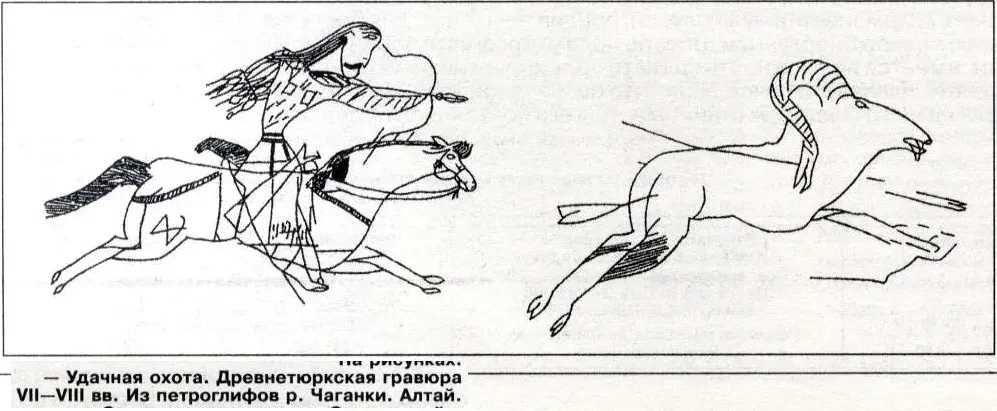
Unknown artist, 5th-6th century CE, Chaganki, Altai, Public domain, via Wikimedia Commons
A hunting Turk.
A more familiar name to us would probably be the Göktürks...! This Göktürk Empire was probably the most successful and largest nomadic empire before the full-fledged rise of the Mongols...!! The various khanates appearing in the late 9th century are essentially all descendants of this Göktürk Empire...! It was a truly massive nomadic empire whose influence stretched from the far north of the Korean Peninsula all the way to the Aral Sea, and even to the Black Sea over here...!!!
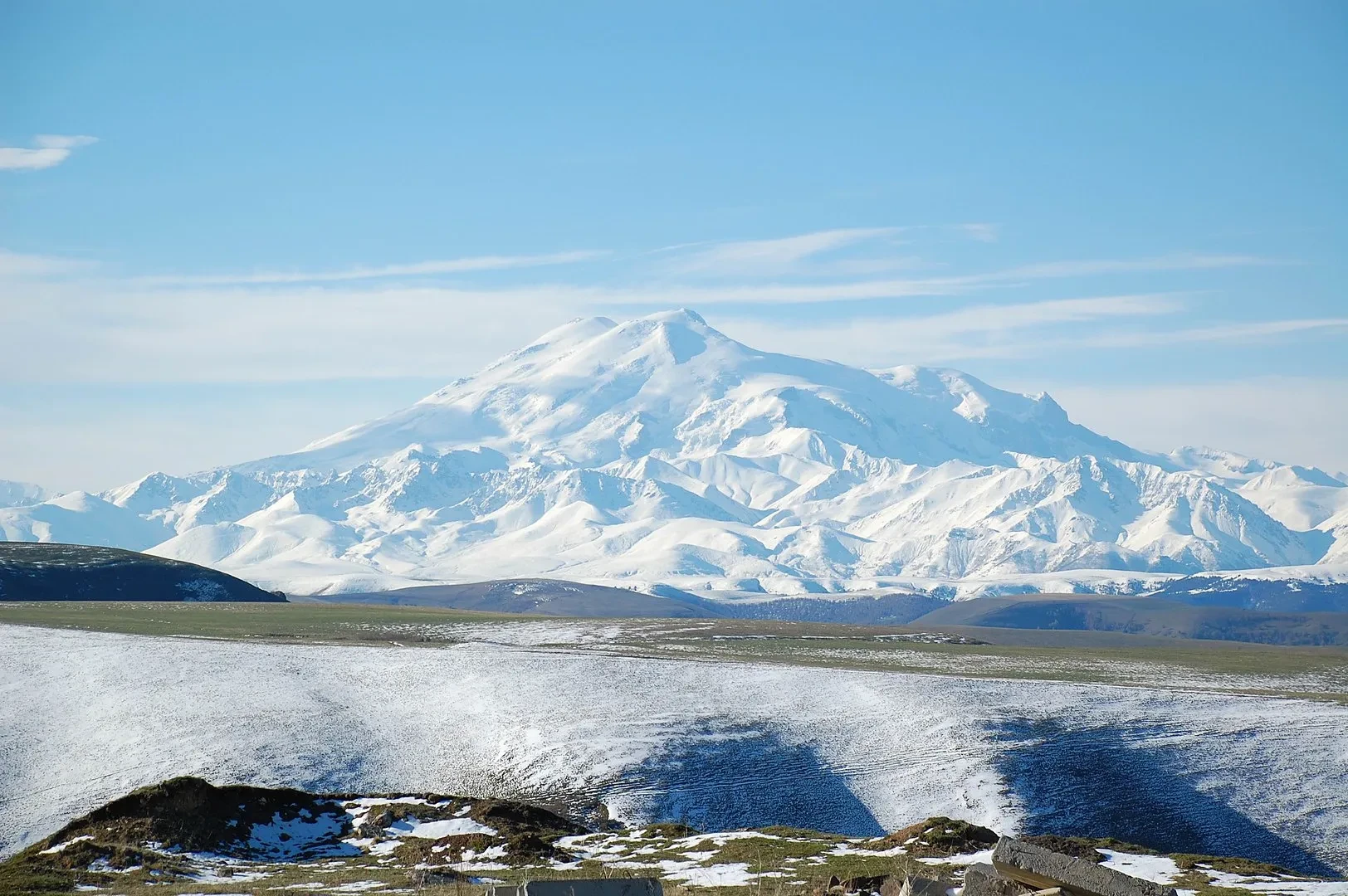
JukoFF, Public domain, via Wikimedia Commons
Where the Alan people of the Caucasus Mountains live. Mount Elbrus.
By this period (the end of the 9th century), it had been some time since the Alans had been driven from the steppe to start living among the mountain range...! And from this period, the Eastern Roman Empire began constantly poking the Alan tribe in the side, which would eventually lead them to split from the Khazar Khaganate...!
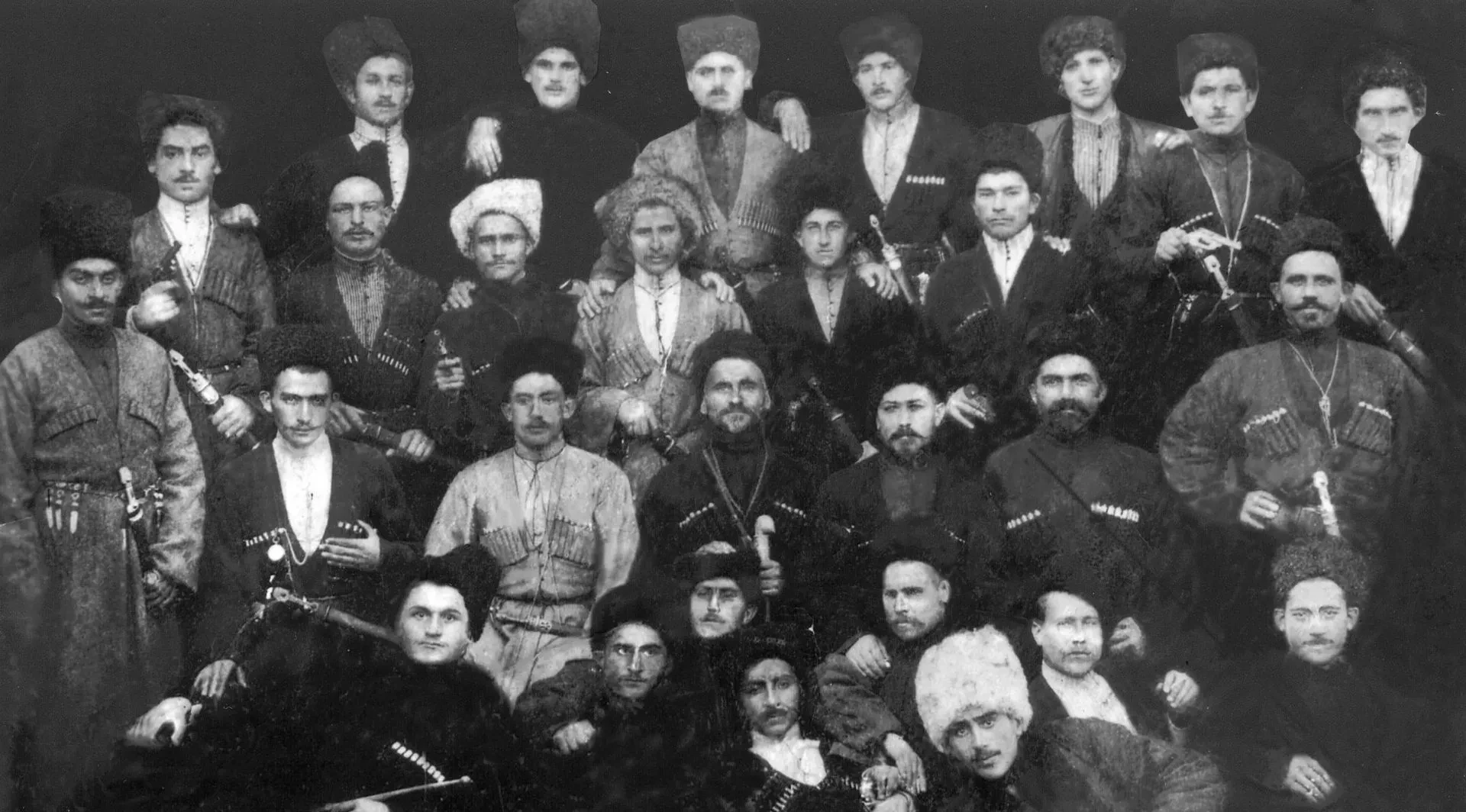
See page for author, Public domain, via Wikimedia Commons
The author is Anna, but it seems the identity is unknown...!
The photo above is of the Ossetians, said to be descendants of the Alan tribe! Ossetians
I can't confirm for certain if they are direct descendants, but it is certain that their genetics have mixed in... lol
As you can see from the name, the Alans were a nomadic people of Aryan stock. They are Iranian in origin...!!! Aryan bloodline...? This is totally—
The Alans, alongside their Germanic friends, already have a track record of ravaging the territory of the Western Roman Empire. lol. They say they made a tour around Spain and even reached Carthage in North Africa. lol lol