
258. The Helm of Awe (4).
Finding it would be the difficult part, but once found, occupying it wouldn't be so hard. Iceland. A land that currently bore no name at all, and there could be no force there capable of stopping a single longship full of North Sea warriors—fifty-odd men.
They said people were the most terrifying thing, but in this case, the most terrifying thing was nature itself. Iceland served as roughly the second stepping-stone on the hop-hop crossing to the New World.
I didn't know exactly what the average temperature was like, but given that people had lived there even into the 21st century, it couldn't be an utterly impossible place to survive. Yet the fact that it was called 'Ice'-land suggested it was cold as all hell.
Would there be people willing to settle that land, full of ice and volcanoes?
The people of Árós, with their full bellies and warm backs, didn't seem likely to move much. In my estimation, it would be the folk of Scandinavia's western coast—those who still, knowingly or not, followed the old ways and the old gods—who might show a bit of interest...
Well, it would be fine either way. If no one wanted to go, we'd simply leave it be, and if there were those who wished to go, we'd look after them as best we could. The concept of filing a civil complaint at a community office simply didn't exist in this age. These were hardy people who held at their core the belief that survival was one's own responsibility; give them generous support and they'd manage well enough on their own.
"When the ice melts after this winter passes, assemble a proper expedition centered on Flóki. Jarl Rognvald. I shall spare no support, so let us see if we can find it. This thing called a new land."
[pluck-]
I plucked a single olive from among the wine and various side dishes laid upon the table and tossed it into my mouth. With a little [pop-] sensation, the olive delivered a subtly flavored, soft texture before vanishing beyond my throat.
This was the very olive I had been pushing ever since the day I returned from Eastern Rome, but the benighted masses of the North Sea failed to grasp my sacred intent for a balanced diet and ruthlessly maligned the olive, refusing to eat it at all.
Why don't they eat this? It's perfectly edible.
"Before the Fylkir's boundless grace, I can do naught but bow my head."
[slide- tremble tremble- pluck- clench-]
Look, even now. Jarl Rognvald had glanced at my expression, slyly reached for the olives, popped the smallest one into his mouth, closed his eyes, and brutally pulverized the olive, his jaw muscles bulging as he ground his teeth together.
"Mmm— de-licious. It is delicious, my Fylkir!"
Enough, already. It wasn't as if he were drinking some death potion; how could a man be so grimly resolute?
[gurgle-]
I maintained a satisfied smile on my face, but inwardly I let out a quiet sigh. I poured wine and handed it to Rognvald, then immediately poured a cup for myself and drank.
The faint fragrance left by the olive, a lingering scent imperceptible to any but a gourmand of my caliber, mingled with the sensation of the wine as it disappeared into my stomach. Its flavor.
"Ah— these Miklagarðr folk truly possess astonishing skill in making drink! It would be wonderful if we could produce much wine of this kind ourselves, but it is a pity. My Fylkir!"
I had yet to see a Northman who disliked drink, and Jarl Rognvald was likewise a man who could appreciate the true taste of good liquor. He emptied in an instant a cup scarcely a finger's breadth wider than his large palm, then smacked his lips.
Had the olive been such a shockingly offensive food to him? Truly, personal preference toward unfamiliar food existed regardless of the age. The Northmen's diet—they knew how to roast, smoke, and ferment—even encompassed cow's milk and mare's milk and was surprisingly diverse, with meat, fish, wild berries, and honey. Yet I remained constantly hungry.
With a resolve to pursue dietary diversification and globalization as quickly as possible, my thoughts drifted to grapevines.
The soil of the North Sea, especially here in Árós where I resided, was such that scholars of Eastern Rome clicked their tongues in amazement, and it was renowned for yielding particularly fine crops even within the northern lands. So what if we tried cultivating grapevines here? Would even Hel's blessing prove insufficient to overcome such high latitude? It might not be a great success, but at least a middling one, perhaps?
The wine in this cup was delicious chiefly because Bithynia, the pride of Eastern Rome, was one of the finest wine-producing regions of this age. Even if it all went completely to ruin, the loss would be small, so it was worth a try.
"Then let us now make our way out to the hall. I wager Flóki's adventure tales will be made into songs before long."
"Hahaha! The children of Orkney already sing the song of Flóki's conquest of the Faroe Islands! My Fylkir!"
I led Rognvald, who rose from his seat with a bright laugh, out of the cozy inner chamber and into the splendid audience hall.
We walked through the cool corridor lined with marble colonnades, drawing closer to an ever-growing din, until the vast heat produced by the braziers scattered throughout the hall, the throng of countless people, and their human revelry soon greeted the two of us.
*****
"Ölr ek varð varð ofrölvi!"
"I got drunk! Thoroughly drunk!"
[diring- diring-diring- boom- boom- boom-]
"Beneath the Fylkir's roof! This is a place of the greatest festival!"
"Where the finest drink is found!"
Had this been the famous Palace of the Bull and Lion in Constantinople of Eastern Rome, the scene would have differed from this somewhat greatly, I suspected.
How to put it? It would have been more refined? Or more solemn? No. The accurate expression would be: it would have been far duller and more tedious.
Astoundingly, Basilikinos was entertaining such thoughts in the heart of this fledgling empire.
Of course, when viewed as a member of the Roman Empire—an empire that, counting from the Republic, had far surpassed a thousand years—this North Sea still had many deficiencies, and its future problems lay piled high.
But there was a power here that the Empire lacked, Basilikinos thought.
What could it be? Was it the bellicosity that made every man, save those wearing the faintly green-glowing meteor sword—that sword of which even our Roman Emperor had received one—set aside their full-sized weapons at the entrance, yet gave no heed to daggers? Their manliness?
Or was it the headlong drive that, in less than five years, had drawn together even the lords of lands beyond the sea and laid down buildings and roads suspiciously similar to Rome's everywhere?
Perhaps it was their innate capacity for drink and stamina, having already feasted and drunk madly for four full days without ever showing a hint of fatigue?
Regrettably, Basilikinos knew all of the above amusing hypotheses to be false.
Rome itself was an empire raised by sword and shield. No Roman was unaware that these men of the North Sea were extraordinary warriors. But the fearsome reputation they now possessed had once wholly belonged to the Roman Empire, and even now the Emperor's cavalry ruled through the terror of their neighbors.
In the end, all these miracles had begun at a single man's fingertips. That man striding now into this hall of overpowering majesty.
Helgi Ragnarsson. Are you truly a descendant of a god? From Kyrillos to the architects, jurists, merchants, and farmers of Rome. The point of origin for all these miracles, about which everyone could only shake their heads and report to the Emperor again and again that they could neither understand nor believe it.
These days, not only Constantinople but also Hellas to the west and Anatolia to the east were said to be seeing a marked increase in the circulation of icons of Heracles and the goddess Hera. A black-haired hero and a black-haired goddess.
Once he had purchased three sets, giving one to his wife, one to his eldest son, and keeping one for himself, Basiliskianos suspected that every Roman soldier who had ever stood on the battlefield with this Fylkir of the North Sea probably also carried one of those icons.
Because when you witnessed a man leap over a mounted rider and single-handedly crush Roman heavy infantry, naturally, faith would blossom where none had existed before.
However, this was neither the place to expound upon Basiliskianos's personal impressions nor to savor the beauty of the North Sea, so the Strategos of Eastern Rome took a sip of Bithynian wine, sampled here in the Fylkir's palace, leaned back slightly in his chair, and addressed the person beside him.
"Lord Chamberlain. Have you met with the people from Lotharingia?"
"Strategos. How many times must I tell you, I am no longer the Chamberlain? Do cease tormenting an old man. I have had warm conversations with the envoys from Lotharingia. In this strange and savage place, should not we outsiders rely upon one another?"
Seated to Basiliskianos's left, humming along to the incomprehensible lyrics of the Northmen with a perfectly peaceful smile, was none other than Damian.
The former emperor's trusted confidant and the current emperor's heart and soul. An aged monster of Eastern Rome before whom even figures like Basiliskianos himself, the Emperor's treasurer, or the capable General Niketas had to yield a step.
Basiliskianos had long since cleanly erased the option of letting his guard down around this man.
Damian, who with an air of complete indifference to Basiliskianos's wariness, cupped a few olives in his hand and rolled them about, looked at first glance like a kindly grandfather watching his young grandchildren's antics.
Grandfather? A viper's venom grows more potent with age, so just how many rivals had died from this man's poison?
For such a man to call this place savage—had Basiliskianos perhaps overlooked something within this very palace at Árós?
He subtly turned his head away from Damian and studied the North Sea nobles who were belting out songs on the other side of the long central fire pit.
White hair, brown hair, red hair, golden hair, and occasionally, black. Every single one of them possessed a sturdy build, and in each hand, a cup filled with ale, mead, or wine—the greedier ones held two.
There were those exchanging furtive glances with the servants moving through the laughter and song-filled hall, and others already deep in their cups and arrived at Elysium.
Wherever you looked, the scene was more comical than it was savage, wasn't it?
When he turned his head back to look at Damian, this time, Damian's brown eyes were fixed sharply upon Basiliskianos himself.
That gaze felt like staring into the slit-pupiled eyes of a viper in mid-strike, and Basiliskianos felt the pleasant intoxication slowly creeping up his neck evaporate in an instant.
"Basiliskianos. Though they host such a grand festival, not a single one of the Northmen harbors any thought beyond enjoying the celebration. The furthest extent of it is that Drottning Áslaug is concerning herself with marriage prospects for her grandchildren. Beyond that, I tell you, there is truly no movement whatsoever."
Amid the singing and instrumental music of the Northmen, the flames, and the fragrant aroma of food, Basiliskianos's entire attention was seized by Damian's Greek.
"Considering the strength they already possess and the lands they have seized, even the most colossal predator would naturally think to catch its breath and rest. The lords of the North Sea have no such inclination. In their minds, there is only one single thought: to follow the Fylkir's command... Basiliskianos. What we are now facing is an Alexandros who charges forward without the rebellion of occupied territories, without internal dissent."
Damian's voice quivered slightly as he reached the end. The two Romans turned their heads in unison, as if by some prior agreement, and looked at the Northmen beyond the flames.
They were still the same drunken people, laughing and chattering loudly. Yet, as they looked a little longer, they began to notice things that had previously escaped their attention.
That these people, who threw their arms over each other's shoulders like men who had seen each other's crotches since childhood and sang and danced in loud voices together, were nonetheless stealing glances toward one particular spot.
In the place these valiant people were so fiercely conscious of, a family that was almost impossible to believe breathed the same air as this world sat together, laughing.
When viewed from behind, the Fylkir, who resembled a giant bear, and the beautiful Drottning Inga, and the Fylkir's son, the heir of the North Sea, Sigmarr, who quietly surveyed the banquet hall with green eyes just like his father's.
Suddenly, those eyes shifted and met Basiliskianos's own, and he felt an emotion that defied all description in words.
Only after those green eyes had turned their attention elsewhere did Basiliskianos, released from his bonds, slowly turn his head to look at Damian.
"The Empress—"
"I heard that she is with child. It is an auspicious event for Constantinople."
Basiliskianos had not even finished speaking, but Damian nodded as if he understood what he meant.
For the current Emperor Michael and Empress Eudokia already had two sons, and the happily married imperial couple was met with one blessing after another.
Damian and Basiliskianos downed their wine at the same moment.
☆☆☆☆☆Reference☆☆☆☆☆
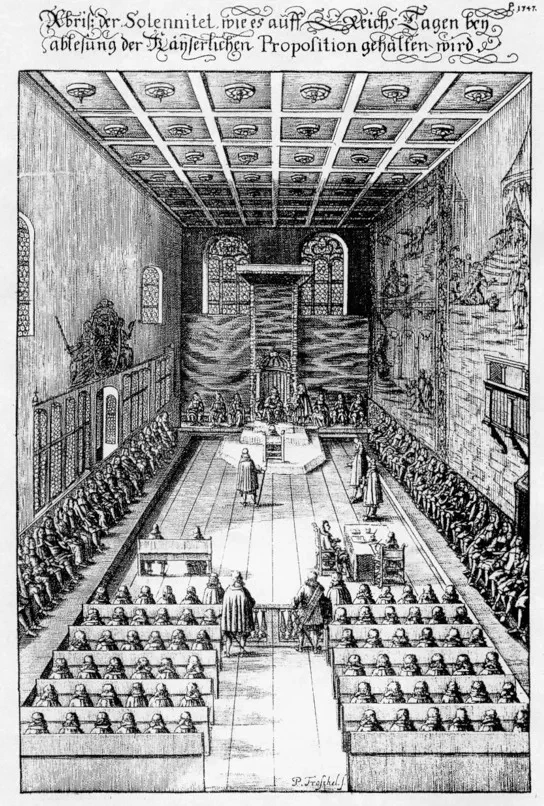
Public domain. Wikipedia.
This is an illustration I thought resembled the Fylkir's palace, the audience chamber!!! It's originally from the 17th century? The Imperial Diet of the Holy Roman Empire—no, not dieting, just diet as in assembly...! A gathering where the emperor and prince-electors got together and laughed and played?!
I'm picturing a beautiful scene in my head where the audience chamber of Árós, on Fylkir's Hill, has pillars that are a bit more Greco-Roman, with tapestries bearing the symbols of Hel hung here and there, and a long flame rising in the center...
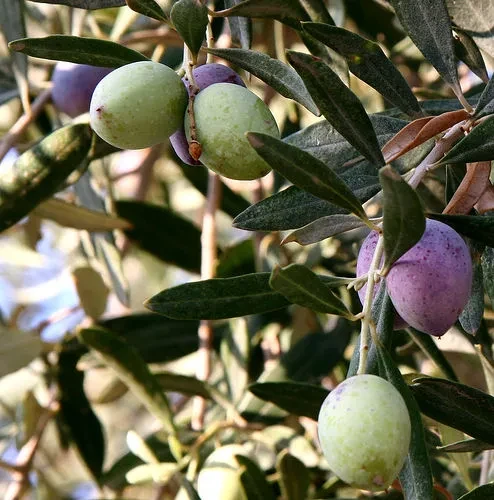
en:User:Nickfraser, CC BY-SA 3.0 <http://creativecommons.org/licenses/by-sa/3.0/>, via Wikimedia Commons
Cute li'l olive~.
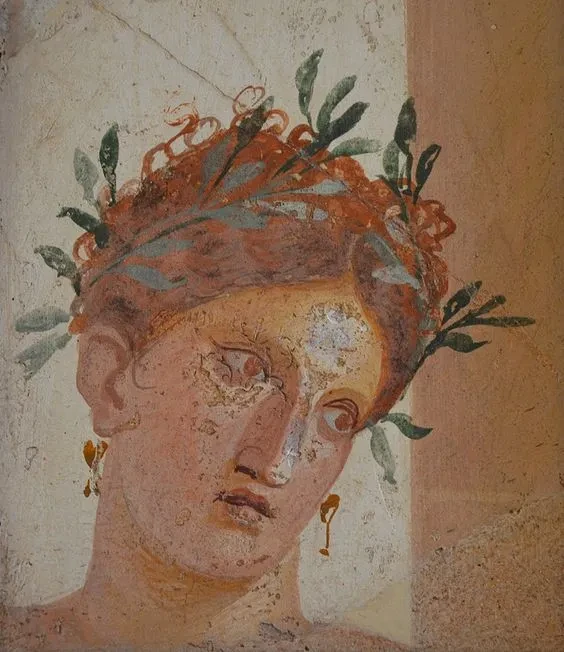
Ancient Roman artist, Public domain, via Wikimedia Commons
Roman fresco. Woman wearing an olive wreath.
The city where this was painted was buried under volcanic ash when Mount Vesuvius erupted...
Olives are a very important fruit for Mediterranean civilizations...! They're not yet popular in the North Sea...!