
The Move (1)
The settlement went through exactly as Chae-rin had planned.
The very next morning after the complaint Chae-rin had filed reached Hye-jeong, a call came in from Hye-jeong's lawyer. I heard the news from Chae-rin and got in touch with my own attorney.
And so my lawyer, Chae-rin's lawyer, and Hye-jeong's lawyer all gathered, and a three-way conference was held. They conducted the settlement over video call, while Chae-rin, Hye-jeong, and I sat in as unseen observers, reserving the final say for ourselves.
Pure coincidence had it that all three of us had retained young, forward-thinking attorneys, which was what allowed such a progressive settlement process in the first place. It helped, too, that all three of us were racing a clock, in no state to endure the wait until our court dates.
At first, Hye-jeong wouldn't give an inch. Her position—relayed through her lawyer—was that she would not withdraw the suit she had filed against me, even if it meant paying the other woman's settlement money out of her own pocket.
But then Chae-rin hung out an unexpected additional condition: she would help track down the author of a certain post on a workplace community site, so that a lawsuit could be brought against them.
It was the fatal post that had cunningly knotted together Kim Jung-hye of the novel Human Guilty and the flesh-and-blood Kim Hye-jeong, gutting Hye-jeong's image in the process—one titled "The No. 1 Masturbator of the 5th-Floor Ladies' Room Has Been Exposed."
Not only would she cover every incidental cost of unmasking the post's author; she would fund the entire retainer for the legal team the suit would require. It was an outrageous offer.
Only then did Hye-jeong finally agree to withdraw her lawsuit.
"Um, one last thing... Our Ms. Hye-jeong is insisting that we put this one question to you."
Hye-jeong's female attorney ventured the words cautiously.
Chae-rin's lawyer flashed her a signal asking whether the question might be permitted. Chae-rin's answer came back as a message:
"...We can't help wondering why you're going to such lengths. Why you would do all of this for... that husband of yours..."
Hye-jeong's lawyer's tone grew even more careful. Apparently she had tried her best to skirt around Hye-jeong's original phrasing—"that trash of a husband"—and failed.
Chae-rin left her lawyer with nothing but a terse reply:
Having read it, Chae-rin's lawyer said, "My client would rather not answer, so let's bring the settlement to a close here."
The moment the video settlement ended, Chae-rin and I closed our respective laptop screens at exactly the same instant, as if we'd rehearsed it.
After a brief pause to catch our breath, I asked, carefully.
"Seriously... why did you go this far for me?"
I was every bit as curious myself. Why would anyone do this much for a piece of trash like me?
To Hye-jeong, Chae-rin had refused an answer to the very end. To me, she gave one.
"That novel had our Ttikka in it, too. It said that after we sent Ttikka up to heaven, the Han Jae-yu in the story was struggling terribly—because I was the one who'd pushed him, saying I wanted to get pregnant again."
She wasn't wrong. Every bit of it was rooted in real events. I had been fragile for exactly that reason—and when Hye-jeong's temptation came my way at just that moment, I fell into it without the slightest resistance.
"Compared to everything you did wrong, mine doesn't even amount to a fingernail's worth. Still, I came to carry a debt of my own. And now I've cleared even that, clean. It feels wonderful. Truly wonderful."
That wasn't even a wrongdoing. Back then, Chae-rin had been in a far more fragile state than I was. She had pressed me, yes—but she had never made a practice of betraying basic human decency the way I had.
And it was obvious she hadn't put up money measured in the hundreds of millions of won for that reason alone.
Then there was, perhaps, an even bigger reason—the one Chae-rin never managed to say out loud. I know what it was.
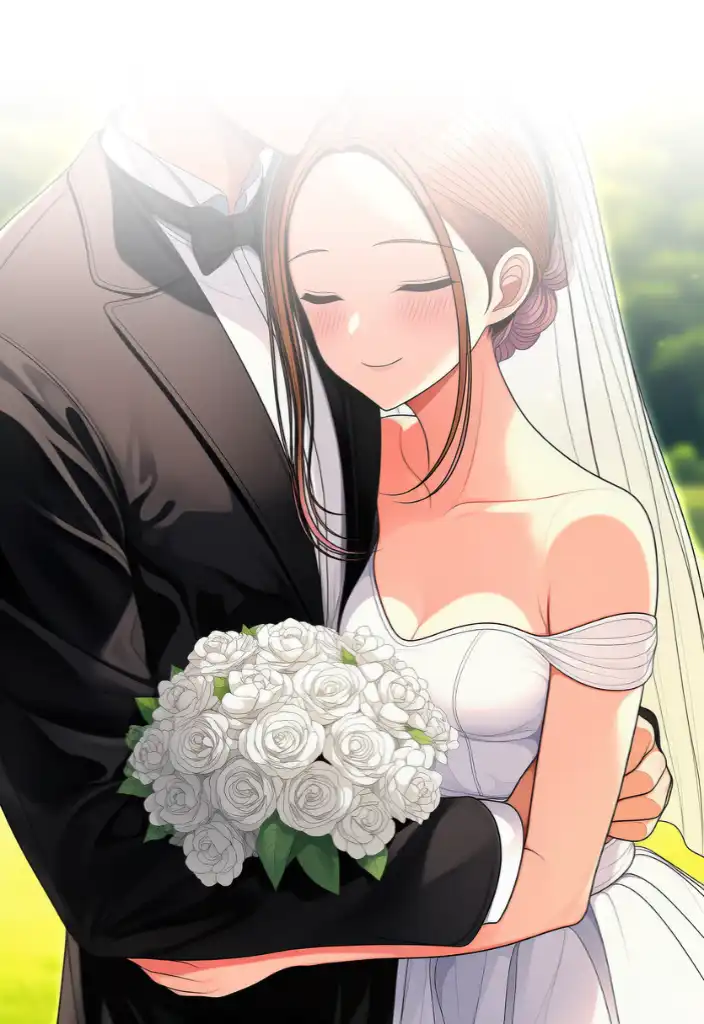
Love.
I had failed at love. I had, perhaps, betrayed the one person in my entire life who loved me as no one ever would again.
My atonement wasn't over. It seemed it wasn't something I was permitted to end on my own terms.
Once the settlement was done, Chae-rin packed up every last stitch of clothing and left straight for her parents' home without a backward glance. Just like that, I was left alone in the big, empty house.
Of course, even that jeonse house—a home secured with a fat lump-sum deposit instead of monthly rent—had been funded down to the last won by my in-laws. That fact alone was enough to drive me into insomnia.
No—maybe it wasn't the money at all. Maybe it was the absence of the woman who had slept on my arm every night for the past three years.
Except for the occasional trash run, I shut myself away from the world. I sealed myself inside the study and threw everything into serializing the novel.
Just as I had promised Chae-rin, Han Jae-yu, protagonist of Human Guilty, had to meet an ending in which he paid the full price of his sins. I wrote out episode after episode, each one a stepping stone toward that tragic conclusion.
I was grateful, even, for the faint sense that my soul was still clinging on. I made that gratitude my fuel and kept the serial going.
That was how I lived for a month. Why a month? Because the expiration date on the jeonse contract had come due.
That's right. Now I had to move out alone. No more hunting for a house to share with Chae-rin; from here on, I would be searching for a place to live all by myself.
I opened a real estate listings site on my laptop.
I had been born in Seoul and had never lived anywhere else. Maybe that was why a vague compulsion wound itself around me—the conviction that from now on, too, I was meant to live in Seoul and only Seoul.
The old, long-cherished dream of the Han Yu-jae of the past: a house with a spacious living room and two bedrooms. The reason it had come to feel like a distant fantasy was that same compulsion, the one binding me to Seoul and Seoul alone.
To rent a three-bedroom like that in Seoul, 800,000 won a month plus a 100-million-won deposit was the bare minimum. Jeonse ran 280 million, and some places were even asking 1.6 million a month flat.
Who even lives in a place like that at my age? Some Gen Z gangster running a baccarat den? Was I supposed to hit the crypto jackpot first? The world really had gone to the dogs, I thought, and a sigh escaped me before I knew it.
But widen the search to the provinces, and the story changed entirely. There, listed in plain sight, was the exact property of my dreams—just 400,000 won a month with a 20-million-won deposit.
Hayeon City. A name I felt like I'd heard somewhere before, in passing. So it was down in Chungcheong.
I opened a map site, set the house where my mother and sister lived as the starting point and the Hayeon listing as the destination, and hit the "Get Directions" button. One hour and thirty minutes by car. A mere thirty minutes by KTX.
Oh? That's actually workable.
I combed through the surrounding infrastructure, too. Within a ten-minute walk of the listing sat a Livso, an AllDiYoung—everything a person could need. As for convenience stores, five different chains were scattered within three minutes' walk alone.
Better yet, about twelve minutes on foot brought me to a subway station—Line 1, no less. It took a while, but the line connected all the way into Seoul.
Who knew Line 1 stretched this far?
The more I looked, the more one thought kept returning.
I could actually live here.
I grabbed a change of clothes and my laptop and boarded the KTX. Even on the ride down to Hayeon City, I wrote the novel in whatever gaps I could find.
Once I arrived, I shuttled between real estate offices to see the ten listings I'd shortlisted, then walked the neighborhood myself, inspecting the nearby infrastructure piece by piece. A cinema, a department store, a big-box mart, a traditional market—with my own two feet, I confirmed the area lacked for nothing.
37-20, Gap-dong, Hayeon City, South Chungcheong Province. Road address: 32 Sangyeon-ro. Postal code: 231003. Monthly rent 450,000 won, deposit 10 million. Three bedrooms.
In the end, I chose that place and signed the contract.
The installment I wrote on the ride back to Seoul would become the final chapter of Human Guilty.
In it, the protagonist Han Jae-yu's wife finally discovers the affair. Cornered, he drives off as though fleeing, and an accident no one saw coming leaves him paralyzed from head to toe.
His wife then tracks down the countless women Jae-yu has been with over the years and arranges for them to nurse him at his bedside, one after another.
The women pour out everything they've long wanted to say to him. Jae-yu's ears hear it all, but his mouth never moves; all he can do is weep in his torment.
With its lens fixed on Jae-yu's anguish—the grief of a man who longs to atone and cannot—the novel comes to a close.
Once the final chapter was uploaded, I reread Human Guilty from the first episode to the last. With every episode I turned, it felt as though I were recalling another one of my sins.
Only then did I understand what Chae-rin had intended. If I had simply deleted it, the way Hye-jeong wanted, I might have let all those sins fade clean from my memory.
Even after that, I kept marathoning Human Guilty whenever I could. People, as a rule, unfurl every defense mechanism they possess to shake off guilt. To keep myself from doing the same, I read that novel like a man lashing his own back.
In the end, Chae-rin and I divorced by mutual consent.
Even though the fault was plainly mine, Chae-rin never once filed suit. All she did was call me and ask:
"Found a place to move to yet?"
It was ten days before the jeonse contract's expiration and three days before our family court date for the divorce.
This was my answer.
"Yeah. Signed the contract, too."
"And you checked it over properly, right?"
Chae-rin's voice was heavy with worry, and my chest went tight without warning. Even a worry like that was more than I deserved.
I made a point of answering in a flat, brusque tone.
"I did. Checked it inside and out."
So you've got nothing to worry about.
"Where is it?"
"...Hayeon City."
At that, Chae-rin hesitated for a moment. Then she spoke, low.
"...You're going somewhere far."
It wasn't all that far, and still that was how she put it. I didn't bother to argue.
That it wasn't far. That we could see each other again whenever we wanted. I couldn't bring myself to say a word of it.
The long-awaited moving day.
I sent the moving truck, loaded to the brim, on ahead, then took the KTX down myself. I wanted to reach the new place before the movers did.
This once, I didn't write on the way down. Thanks to that, the scenery outside poured into my eyes undistorted.
The midday sun plunged straight down and scattered itself across the grassland and the rice paddies. Only then did it truly sink in that I was leaving Seoul behind.
That's right. I'm starting over. Still—don't forget the wrongs of the past.
Such were the resolutions I held in my heart—and at the same time, ten thousand emotions came crashing in all at once.
While I was captive to regret and debt, a complicated, bittersweet lightness would come trailing after, late as ever. And the moment it struck me that this was no position to feel light about—that I had no right to such a feeling—I would plunge into a savage self-loathing.
The train, for its part, pressed onward with perfect indifference.
What ordeal, I wondered, was waiting for me at that final stop? But there was no room in my heart for ominous premonitions like that.