
Episode 3 - A Fantastical Vacation
"How's the work going? I worry about you researchers pushing yourselves so hard these days. I hope you're not wearing yourselves out."
"Thank you for your concern, but none of us are so fragile that we'd collapse after a week of all-nighters. No need to worry. And yes, the tests are proceeding smoothly."
The lead researcher smiled quietly in response. For all her words, everyone looked pale with dark circles under their eyes, but if they said they were fine, there wasn't much I could say.
I nodded and scanned Geoda Bianchi from head to toe. After a moment's thought, I put on an innocent expression and spoke up.
"Lead Researcher. Once the tests are done, would you join me for a meal?"
"A meal?"
"Yes. There's something I'd like to discuss."
She beamed back. "May I ask why?"
"A few questions, and some curiosity on my part."
Geoda Bianchi hummed thoughtfully for a second, then nodded affirmatively. "Sure."
"Thank you."
"No problem."
The lead researcher who accepted my invitation followed another researcher calling for her toward the testing area. I watched her retreating figure, then turned in the opposite direction.
Thud. Thud. Thud.
The sound of my combat boots echoed through the waiting room. I glanced around, set a timer, and slipped out as naturally as possible.
"…Hoo."
I had a little over an hour. Everything had to be wrapped up in that time.
The moment I stepped into the corridor, I bolted for the stairs, shouting as I ran.
"Fifty minutes until test end. Report positions!"
The response was immediate.
"Not yet."
I quickened my pace, hopped on the prepped tram after descending the stairs. Anxiety made me stare out the window, but unlike my nerves, the tram shot forward smoothly at max speed.
Research Block 1, 2, 3, Admin Block, Medical Center. The non-stop tram covered hundreds of meters in the blink of an eye.
How much time passed? After what felt like forever, the tram slowed and pulled into the platform. No announcement, but I knew this was the living block.
Clunk.
I dashed out as the metal doors opened, crossing the platform faster than ever and hitting the stairs—no elevator. Stairs were quicker for me.
Floor 1, 2, 3, 4, 5. I cleared five floors in one go and flung open the metal door.
Bang!
The crash echoed down the stairwell. Panting hard, I scanned the corridor. There, at the far end, a familiar face waved.
Captain Gordon waved with a gloved hand.
"Status?"
"Motion detectors and bugs installed. Just the search left."
"Gloves, gloves."
I snatched the gloves he offered—plain white cotton ones, like from a dollar store. Fingerprints weren't a huge issue, but better safe.
I shoved my sweaty hands into them and told the captain, "Don't stand watch. Just come in and search."
"Got it."
"Check bookshelves and drawers thoroughly—could be one-time pads. Personal accounts, radios, MOUs, contracts, orders, reports, any research data that shouldn't leave."
"Got it."
"No anomalies yet?"
"Nothing from upstairs either."
I flexed my gloved hands open and shut, then shut the door to the personal quarters. The sergeant was yanking storage from gadgets; the captain started pulling books from the shelf one by one.
I checked my watch en route to the drawers. About 45 minutes left. Had to find something.
My grandfather, once a chief investigator for the Grand Duke of the Interior, had searched countless houses, apartments, and offices for evidence. Suspect spy or not, people believe their most frequented spots are safest. Intelligence agents are no different—they're human. Even after vowing a hundred times to scrutinize loved ones and never let go, human error slips through. That's why Grandpa always said, "Decisive evidence always turns up in homes or offices, and arrests happen there too." Following his worn wisdom, I warmed my hands first.
"…Haa."
Cold hands dull sensation. Searches rely on touch; numb senses miss evidence. Not sure if it's scientifically proven, but ignoring experience is folly. I got my hands nice and toasty before diving in.
First up: the drawers. I carefully laid contents on the floor in order. Then cracked open Geoda Bianchi's favored cosmetics one by one. Lipsticks and powders got full internals checked; mirrors tilted under light for hidden compartments.
Next, pens and fountain pens. Shook each for hidden innards. Nothing suspicious yet.
Photos, notebooks—all mundane. Thorough check, no evidence. Anxiously, I pulled all drawers and inspected every nook.
Then the captain searching the bookshelf spoke up. "Cash here."
He approached with a thin wad of bills and a fistful of coins.
"What money is this?"
"Reals. Emergency fund, probably."
Bills and coins totaled less than half a citizen's average monthly wage. Not insignificant, but peanuts for high-paid Geoda Bianchi. Too small for spy stipend.
And it was kingdom currency only. Agencies use foreign cash for assets—key currencies like dollars.
Continent's top: Church's denarius. South differs religiously, but still dominant.
Kien Empire's tacron. Abbas's real. Magic Tower's minat. Patalia Republic's escuna. Lushan Federation Kingdom's ducat.
Tacron and real circulate, but in a religion-heavy continent, denarius edges out. Agencies mix local and denarius routinely.
Sergeant eyed the cash similarly. "No denarius?"
"Just this from the shelf."
"Feels like pocket change…."
He twisted and shook coins, then shook his head and moved on. I scrutinized coins and shelf—nope.
"Put it back."
Captain sighed, repocketed cash, reshelved books.
"Unchecked spots?"
"Shelves and drawers done. Closet, desk, bed."
Voice from under desk: "I'm on this. Search elsewhere."
Sergeant waved a screwdriver. When'd he get in there?
Captain took closet; I got bed. Watch check: low time.
Sergeant unscrewed for internals; captain rummaged clothes.
Ziiiip.
White mattress revealed. I knelt, hands probing like a blind man reading braille.
"……?"
"What?"
"Something off. Everyone, here."
I flipped bedding, called them over, stripped cover. Three of us yanked it off easy.
Boot up on mattress, probed surface. Fingertip caught odd texture mid-sweep.
Stitch line. Eyed it, drew knife from left sleeve—
Shriiiip!
Sliced seam clean. Captain and sergeant jumped, horrified.
"What the hell? She'll notice!"
"…Doubt it."
"Pardon?"
Hand in gash, pulled everything snaggy.
Thud.
Thick vinyl package hit floor. I crouched, sliced wrapping.
Vinyl, cloth, padding, vinyl. Four layers. Room hushed with each peel.
Final vinyl torn, contents spilled: dozens of real coins clattering.
Agents' faces hardened, scooped coins. Each split perfect half, one hollow.
I fitted halves: seamless click. Jackpot.
Disguised coins.
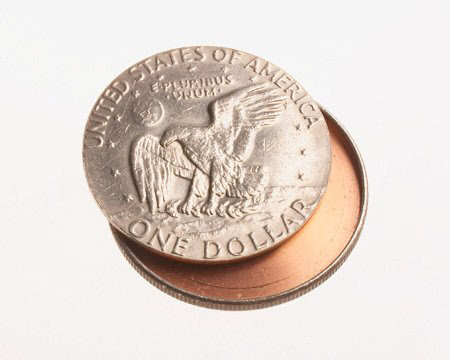
This is the real-world model for the disguised coins in the story. U.S. coins are surprisingly thick, so Cold War spies often used them for microfilm transport. Letters hid microfilm in ink too—German specialty, I recall. Microfilm typically holds orders, reports, dead drops, times.
Storage form/size doesn't matter much. Cold War saw cig packs, chocolate boxes, cookie tins, pizza boxes, milk cartons, wooden barrels, envelopes, even USBs in espionage.
Tech's advanced now—steganography via cyber dead drops and USBs is standard. Jeffrey Delisle, busted in '07 as Russian spy, and North Korea's 225th Bureau cell in '21 both loved stego and cyber drops.
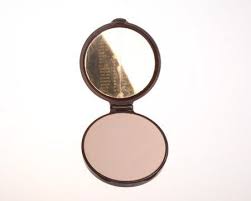
Protagonist checked mirrors for ciphered messages. Fitting for a '60s-era agency that invented motion detectors—cutting-edge then. Obsolete now.